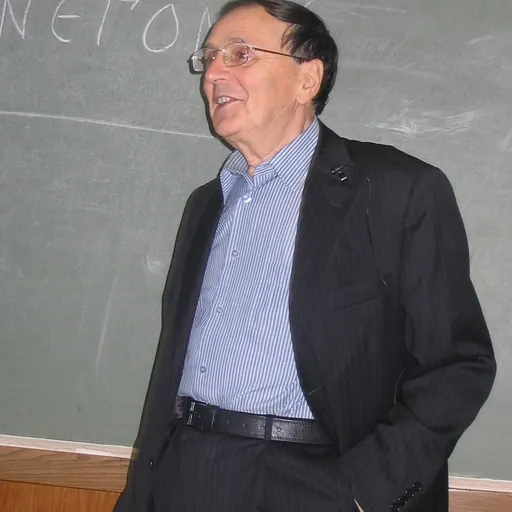
About Andrey Zaliznyak
Lived 1935 – 2017 (aged 82). Andrey Zaliznyak was a Russian linguist, dialectologist, university teacher, philologist and translator.
Andrey Anatolyevich Zaliznyak (; 29 April 1935 – 24 December 2017) was a Russian linguist who specialized in historical linguistics, morphology, accentology, and dialectology. He served as the leading researcher on medieval Novgorod birchbark documents and proved the authenticity of The Tale of Igor's Campaign. His Grammatical Dictionary of the Russian Language remains the standard reference for Russian inflection and forms the basis for most Russian language processing algorithms.
Biography Andrey Zaliznyak was born in Moscow on 29 April 1935 to Anatoly Andreyevich Zaliznyak, an engineer, and Tatiana Konstantinovna Krapivina, a chemist. During World War II, the family was in evacuation. There, Andrey joined a German language class, but his teacher called him incapable of learning languages; his mother was advised not to waste time in teaching him German. Instead of repeating phrases after the teacher, Zaliznyak composed a table of German words for six colors. After the war, Zaliznyak was sent to relatives to Pruzhany in Western Belarus; his relatives had a lot of Polish-language books, and he met a priest who knew Latin. He became fascinated by languages and bought multiple grammar books. Several years later, he had a head injury while playing football and spent four days unconscious; bedridden, he spent two weeks with a French grammar book. As a teenager he learned Polish, Latin, English, Italian, and Spanish to a various degree of proficiency.
In 1951 Zaliznyak participated in the first Language and Literature Olympiad organized by the philology department at Moscow State University, where he met his future wife, Yelena Paducheva, for the first time. He took first place, and she took third; in the following year, the two came joint first. Paducheva later became his classmate at MSU.
Zaliznyak began studying linguistics at MSU in 1952, focusing on English and Swedish. He attended courses by the Indologist Louis Renou and the Iranist Émile Benveniste, and followed both Michel Lejeune's lectures on Mycenean linguistics and the course of André Martinet, whose book ('Economy of Phonetic Changes') he later translated into Russian.
In 1958, he graduated from the Department of Romance and Germanic Languages at Moscow State University. His advisor was Vyacheslav Ivanov; in the same year, Ivanov was fired from the university for his support of Boris Pasternak and connections with Roman Jakobson.
In 1960, Zaliznyak was invited to the Institute for Slavic Studies of the Soviet Academy of Sciences to Samuil Bernstein's group, and was assigned to study "Slavic–Iranian language contacts". He soon became interested in other topics, but published two papers on it before switching to Russian language studies. Zaliznyak collected words on thin paper cards in four wooden boxes taken from a bakery. The dictionary became heavily used in the 1990s on the Russian Internet for web search, spell checkers, and online translators. It is still the definitive description of Russian inflection patterns.
Zaliznyak also developed a theory of Russian accentology, starting with the analysis of Old Russian book Merilo Pravednoye. Together with Yanin, he published four volumes on the Novgorod birchbark letters.
Zaliznyak established that these documents used a graphic system different from Church Slavonic and contained few errors, contrary to previous beliefs that they represented barely literate writing.
The Tale of Igor's Campaign
In 2004, Zaliznyak published a linguistic analysis of The Tale of Igor's Campaign that examined arguments concerning its authenticity. The Tale of Igor's Campaign was found in 1795 by Aleksei Musin-Pushkin; the manuscript was destroyed in a fire in 1812. Since its first publication, the question of its authenticity became a theme of a two-hundred-years-long debate; multiple noted linguists and writers, including Alexander Pushkin and Leo Tolstoy, participated in it. Zaliznyak demonstrated that the relationship between the 12th-century Tale and the later 14th-century supported the Tale authenticity: passages in with counterparts in the Tale differed linguistically from the rest of that text, while the Tale showed no such inconsistencies. Zaliznyak argued that no 18th-century forger could have reproduced the grammatical subtleties of 12th-century language.
Linguistic education and olympiads In 1963, Zaliznyak published "Linguistic Problems", introducing self-contained for introductory linguistics courses. These problems tested structuralist principles by requiring students to deduce grammatical patterns from limited data.
Zaliznyak had a heart attack in 1984, 2007: Solzhenitsyn Prize 2007: Lomonosov Gold Medal 2015:
Selected publications Zaliznyak published several hundreds of articles, see a partial bibliography 1958-2010 and the list of papers in the MSU database.
Below is a list of Zaliznyak's books and dictionaries, arranged by date. Further editions are in parentheses. All books are in Russian.
Краткий русско-французский учебный словарь 1961 (1964, 1969, 1978) Русское именное словоизменение, 1967 Грамматический словарь русского языка, 1977 (1980, 1987, 2003, 2008) Грамматический очерк санскрита, 1978 (1987, 1996, 2005, 2019, 2022) От праславянской акцентуации к русской, 1985 Зализняк А. А., Янин В. Л. Новгородские грамоты на бересте (Из раскопок 1977—1983 гг.). Комментарии и словоуказатель к берестяным грамотам (Из раскопок 1951—1983 гг.), 1986 «Мерило Праведное» XIV века как акцентологический источник, 1990 Зализняк А. А., Янин В. Л. Новгородские грамоты на бересте (Из раскопок 1984—1989 гг.), 1993 Древненовгородский диалект, 1995 (2004) Зализняк А. А., Янин В. Л. Новгородские грамоты на бересте (Из раскопок 1990—1996 гг.). Палеография берестяных грамот и их внестратиграфическое датирование. — Том X, 2000 «Русское именное словоизменение» с приложением избранных работ по современному русскому языку и общему языкознанию, 2002 Гиппиус А. А., Зализняк А. А., Янин В. Л. Новгородские грамоты на бересте (Из раскопок 1997—2000 гг.). — Том XI, 2004. «Слово о полку Игореве»: взгляд лингвиста, 2004 (2008, 2024) Древнерусские энклитики, 2008 Из заметок о любительской лингвистике, 2010 (2023) Труды по акцентологии Том I, 2010 Том II. Древнерусский и старовеликорусский акцентологический словарь-указатель (XIV—XVII вв), 2011 Лингвистические задачи, 2013 (2016, 2018) Древнерусское ударение: Общие сведения и словарь, 2014 Прогулки по Европе, 2018
Don’t just read it —
keep it.
Full-length biographies made to live with: read them, listen on the way to work, watch them tonight.
- E-book
- Audio
- Video
Instant download · yours to keep · every purchase keeps this site free
Important facts
People in Andrey Zaliznyak's life
Named in this biography and alive at the same time




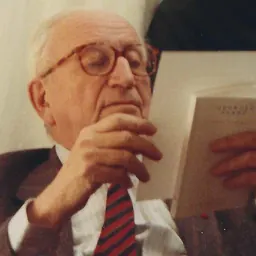



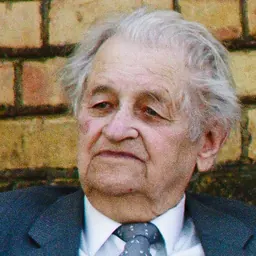
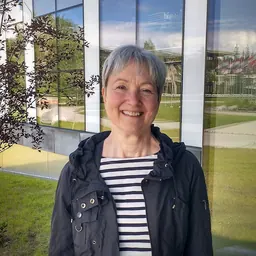
Related people
Same field, nearest in time
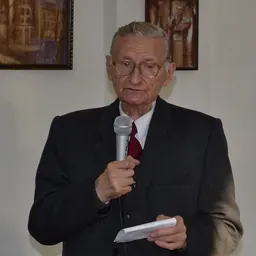
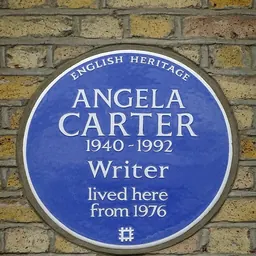


Contemporaries
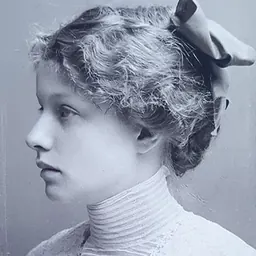
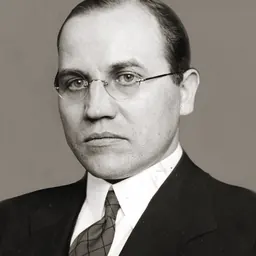
People whose lives overlapped Andrey Zaliznyak's



Frequently asked questions
Who was Andrey Zaliznyak?
Russian linguist (1935-2017)
When was Andrey Zaliznyak born?
Andrey Zaliznyak was born on 29 April 1935 in Moscow.
When did Andrey Zaliznyak die?
Andrey Zaliznyak died on 24 December 2017 in Moscow.
What was Andrey Zaliznyak's occupation?
Andrey Zaliznyak was a linguist, dialectologist, university teacher, philologist and translator.
What nationality was Andrey Zaliznyak?
Andrey Zaliznyak was Russian.
Sources & further reading
Cite this page
APA: Biography.guide. (2026). Andrey Zaliznyak. https://biography.guide/andrey-zaliznyak/
MLA: "Andrey Zaliznyak." Biography.guide, https://biography.guide/andrey-zaliznyak/.
Chicago: "Andrey Zaliznyak." Biography.guide. https://biography.guide/andrey-zaliznyak/.
Data last updated: 2026-09-22 · Spot an error? Report a correction.
Portrait: Wikimedia Commons · author & licence
Page generated 2026-09-27 05:03 UTC