
About Andrew Wakefield
Born 1956. Andrew Wakefield is a British physician, anti-vaccine activist, film producer, film director and screenwriter, known for Lancet MMR autism fraud.
Early life and education
Andrew Jeremy Wakefield was born on 3 September 1956 to Graham Wakefield, a neurologist, and Bridget d'Estouteville Matthews, a general practitioner, at the Canadian Red Cross Memorial Hospital in Taplow, Buckinghamshire, England. Wakefield attended sixth form at Kingswood School Bath before going on to study medicine at St Mary's Hospital Medical School (now Imperial College School of Medicine), fully qualifying in 1981. He became a Fellow of the Royal College of Surgeons in 1985.
Career
At the University of Toronto from 1986 to 1989, he was a member of a team that studied tissue rejection problems with small intestine transplantation, using animal models. He continued his studies of small intestine transplantation under a Wellcome Trust travelling fellowship at University of Toronto in Canada.
Following his resignation from Royal Free, Wakefield moved to the United States, where he co-founded the Thoughtful House research centre in Austin, Texas. He served as the executive director of Thoughtful House, which studies autism, and continued to promote the theory of a link between the MMR vaccine and autism, despite admitting it was "not proved."
In February 2010, Wakefield resigned as the executive director of Thoughtful House after the British General Medical Council (GMC) concluded that he had engaged in unethical and dishonest conduct during his research. The GMC found that he had been "dishonest and irresponsible" in conducting his earlier autism research in England.
The Times reported in May 2010 that he was a medical advisor for Visceral, a UK charity that "researches bowel disease and developmental disorders". Subsequently, social media platforms provided Wakefield with a fresh avenue to promote his anti-vaccination campaign, resulting in global repercussions, despite the fact that he has never directly treated a patient.
According to a 2020 article in The Telegraph, Wakefield had become prominent in the anti-vaccine movement and, during the COVID-19 pandemic, promoted his discredited claims about vaccine safety. He appeared at summits warning that vaccines "will kill us" and called for widespread protests against their use.
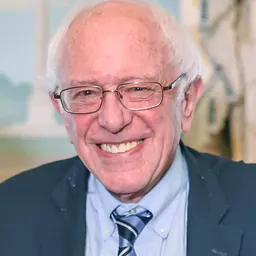
In a 2025 interview with Democracy Now, the investigative journalist Brian Deer identified Robert F. Kennedy Jr., Andrew Wakefield, and Del Bigtree as the core leaders of the anti-vaccine movement. During the interview, Deer offered his perspective on the Senate confirmation hearings for Kennedy Jr., specifically addressing the questioning by senators Bernie Sanders and Bill Cassidy regarding Kennedy's alignment with Wakefield's discredited theory linking vaccines to autism.
Claims of measles virus–Crohn's disease link
Back in the UK, he worked on the liver transplant programme at the Royal Free Hospital in London. and two years later he published a paper in The Lancet proposing a link between the measles vaccine and Crohn's disease. Subsequent research failed to confirm this hypothesis, with a group of experts in Britain reviewing a number of peer-reviewed studies in 1998 and concluding that the measles virus did not cause Crohn's disease, and neither did the MMR vaccine.
Later, in 1995, while conducting research into Crohn's disease, he was approached by Rosemary Kessick, the parent of a child with autism, who was seeking help with her son's bowel problems and autism; Kessick ran a group called Allergy Induced Autism. In 1996, Wakefield turned his attention to researching possible connections between the MMR vaccine and autism. (or 2004, by another account). He was reportedly asked to leave the Royal Free Hospital after refusing a request to validate his 1998 Lancet paper with a controlled study. He lives in the US where he has a following, including the anti-vaccinationist Jenny McCarthy, According to Deer, , Wakefield lives near Austin with his family.
The Lancet fraud
On 28 February 1998, Wakefield was the lead author of a study of twelve children with autism that was published in The Lancet. The study proposed a new syndrome called autistic enterocolitis, and raised the possibility of a link between a novel form of bowel disease, autism, and the MMR vaccine. The authors said that the parents of eight of the twelve children linked what were described as "behavioural symptoms" with MMR, and reported that the onset of these symptoms began within two weeks of MMR vaccination.
These possible triggers were reported as MMR in eight cases, and measles infection in one. The paper was instantly controversial, leading to widespread publicity in the UK and the convening of a special panel of the UK's Medical Research Council the following month. One 2005 study in Japan found that there was no causal relationship between the MMR vaccine and autism in groups of children given the triple MMR vaccine and children who received individual measles, mumps and rubella vaccinations. In Japan, the MMR vaccine had been replaced with individual vaccinations in 1993.
Although the paper said that no causal connection had been proven, before it was published, Wakefield made statements at a press conference and in a video news release issued by the hospital, calling for suspension of the triple MMR vaccine until more research could be done. This was later criticised as 'science by press conference'. According to BBC News, it was this press conference, rather than the paper in The Lancet, that fuelled the MMR vaccination scare. He said "If you give three viruses together, three live viruses, then you potentially increase the risk of an adverse event occurring, particularly when one of those viruses influences the immune system in the way that measles does."
In November 2001, Wakefield resigned from the Royal Free Hospital, saying, "I have been asked to go because my research results are unpopular." The medical school said that he had left "by mutual agreement". In February 2002, Wakefield stated: "What precipitated this crisis was the removal of the single vaccine, the removal of choice, and that is what has caused the furore—because the doctors, the gurus, are treating the public as though they are some kind of moronic mass who cannot make an informed decision for themselves."
Aftermath of initial controversy Wakefield continued to conduct clinical research in the United States after leaving the Royal Free Hospital in December 2001. He joined a controversial American researcher, Jeff Bradstreet, at the International Child Development Resource Center, to conduct further studies on the possible relationship between the MMR vaccine and autism.
In 2004, Wakefield began working at the Thoughtful House research centre in Austin, Texas. Wakefield served as executive director of Thoughtful House until February 2010, when he resigned in the wake of findings against him by the British General Medical Council.
In February 2004, the controversy resurfaced when Wakefield was accused of a conflict of interest. In The Sunday Times, Brian Deer reported that some of the parents of the 12 children in the study in The Lancet were recruited via a UK lawyer preparing a lawsuit against MMR manufacturers, and that the Royal Free Hospital had received £55,000 from the UK's Legal Aid Board (now the Legal Services Commission) to pay for the research. Previously, in October 2003, the board had cut off public funding for the litigation against MMR manufacturers. Following an investigation of the allegations in The Sunday Times by the UK General Medical Council, Wakefield was charged with serious professional misconduct, including dishonesty. In December 2006, Deer, writing in The Sunday Times, further reported that in addition to the money they donated to the Royal Free Hospital, the lawyers responsible for the MMR lawsuit had paid Wakefield personally more than £400,000, which he had not previously disclosed.
Twenty-four hours before the 2004 Sunday Times report by Deer, The Lancets editor Richard Horton responded to the investigation in a public statement, describing Wakefield's research as "fatally flawed" and said he believed the paper would have been rejected as biased if the peer reviewers had been aware of Wakefield's conflict of interest. Ten of Wakefield's twelve co-authors of the paper in The Lancet later published a retraction of an interpretation. The section of the paper retracted read as follows:
The retraction stated:
Wakefield v Channel 4 Television and Others In November 2004, Channel 4 broadcast a one-hour Dispatches investigation by reporter Brian Deer; the Toronto Star said Deer had "produced documentary evidence that Wakefield applied for a patent on a single-jab measles vaccine before his campaign against the MMR vaccine, raising questions about his motives".
In addition to Wakefield's unpublished initial patent submission, On page 1, the first paragraph of this stated:
Before describing the research in Wakefield's 1998 paper in The Lancet, at the same page this patent explicitly states that the use of the MMR vaccine causes autism:
According to Deer, a letter from Wakefield's lawyers to him dated 31 January 2005 said: "Dr Wakefield did not plan a rival vaccine."
In January 2005, Wakefield initiated libel proceedings against Channel 4, the independent production company Twenty Twenty and Brian Deer, The Sunday Times, and against Deer personally along with his website briandeer.com in the case Wakefield v Channel Four Television and Others EWHC 3289 (QB); 94 BMLR 1. Within weeks of issuing his claims, however, Wakefield sought to have the action frozen until after the conclusion of General Medical Council proceedings against him. Channel 4 and Deer sought a High Court order compelling Wakefield to continue with his action, or discontinue it. After a hearing on 27 and 28 October 2005, Justice David Eady ruled against a stay of proceedings:
The judgment identified Channel 4's "very lengthy extracts" summarising Deer's allegations against Wakefield: Those payments, The Sunday Times reported, had begun two years before publication of Wakefield's paper in The Lancet. and was ordered to pay all defendants' legal costs.
Other concerns
Wakefield's data were also questioned;
In June 2005, the BBC programme Horizon reported on an unnamed and unpublished study of blood samples from a group of 100 autistic children and 200 children without autism. They reported finding 99% of the samples contained no trace of the measles virus, and the samples that did contain the virus were just as likely to be from non-autistic children, i.e., only three samples contained the measles virus, one from an autistic child and two from a typically developing child. The study's authors found no evidence of any link between MMR and autism.
The Institute of Medicine (IOM) of the United States National Academy of Sciences, along with the CDC and the UK National Health Service, have found no link between vaccines and autism. Reviews in the medical literature have also found no link between the MMR vaccine and autism or with bowel disease, which Wakefield called "autistic enterocolitis".
General Medical Council hearings
Between July 2007 and May 2010, a 217-day "fitness to practise" hearing of the UK General Medical Council examined charges of professional misconduct against Wakefield and two colleagues involved in the paper in The Lancet. The charges included that he: "Was being paid to conduct the study by solicitors representing parents who believed their children had been harmed by MMR". "Conduct[ed] the study on a basis not approved by the hospital's ethics committee." on 28 January 2010, the GMC ruled against Wakefield on all issues, stating that he had "failed in his duties as a responsible consultant", On the same day, Wakefield's autobiography, Callous Disregard, was published, using the same words as one of the charges against him ("he showed callous disregard for any distress or pain the children might suffer").
Fraud and conflict of interest allegations
In February 2009, The Sunday Times reported that a further investigation by the newspaper had revealed that Wakefield "changed and misreported results in his research, creating the appearance of a possible link with autism", citing evidence obtained by the newspaper from medical records and interviews with witnesses, and supported by evidence presented to the GMC.
In April 2010, Deer expanded on laboratory aspects of his findings in a report in the BMJ, recounting how normal clinical histopathology results (obtained from the Royal Free hospital) had been subjected to wholesale changes, from normal to abnormal, in the medical school and published in The Lancet. On 2 January 2011, Deer provided two tables comparing the data on the twelve children, showing the original hospital data and the data with the wholesale changes as used in the 1998 The Lancet article.
On 5 January 2011, BMJ published an article by Brian Deer entitled "How the case against the MMR vaccine was fixed".
The paper in The Lancet was a case series of 12 child patients; it reported a proposed "new syndrome" of enterocolitis and regressive autism and associated this with MMR as an "apparent precipitating event." But in fact:
Three of nine children reported with regressive autism did not have autism diagnosed at all. Only one child clearly had regressive autism;
Despite the paper claiming that all 12 children were "previously normal", five had documented pre-existing developmental concerns;
Some children were reported to have experienced first behavioural symptoms within days of MMR, but the records documented these as starting some months after vaccination;
In nine cases, unremarkable colonic histopathology results—noting no or minimal fluctuations in inflammatory cell populations—were changed after a medical school "research review" to "non-specific colitis";
The parents of eight children were reported as blaming MMR, but 11 families made this allegation at the hospital. The exclusion of three allegations—all giving times to onset of problems in months—helped to create the appearance of a 14-day temporal link;
Patients were recruited through anti-MMR campaigners, and the study was commissioned and funded for planned litigation.
In a BMJ follow-up article on 11 January 2011, Deer stated that Wakefield had planned to capitalise on the MMR vaccination scare provoked by his paper. He said that based upon documents he had obtained under Freedom of information legislation, Wakefield—in partnership with the father of one of the boys in the study—had planned to launch a venture on the back of an MMR vaccination scare that would profit from new medical tests and "litigation driven testing".
In October 2012, research published in PNAS, the Proceedings of the National Academy of Sciences, identified Wakefield's 1998 paper as the most cited retracted scientific paper, with 758 citations, and gave the "reason for retraction" as "fraud".
Journal retractions On 2 February 2010, The Lancet formally retracted Wakefield's 1998 paper. The retraction states: "The claims in the original paper that children were 'consecutively referred' and that investigations were 'approved' by the local ethics committee have been proven to be false."
In May 2010, The American Journal of Gastroenterology retracted a paper of Wakefield's that used data from the 12 patients of the article in The Lancet.
On 5 January 2011, British Medical Journal editors recommended that Wakefield's other publications be scrutinised and retracted if need be.
Wakefield response As of January 2011, Wakefield continued to maintain his innocence. In a press release, he stated,
In an Internet radio interview, Wakefield said the BMJ series "was utter nonsense" and denied "that he used the cases of the 12 children in his study to promote his business venture". Deer has filed financial disclosure forms and rejects Wakefield's claim that he is funded by the pharmaceutical industry.
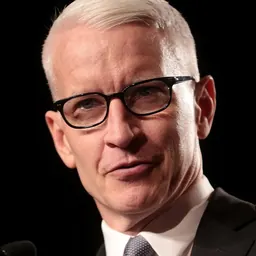
Wakefield says that Deer is a "hit man who was brought in to take [him] down" and that other scientists have simply taken Deer at his word. While on Anderson Cooper 360°, he said that he had not read the BMJ articles yet, but he denied their validity and denied that Deer had interviewed the families of the children in the study. He also urged viewers to read his book, Callous Disregard, which he said would explain why he was being targeted, to which Anderson Cooper replied: "But sir, if you're lying, then your book is also a lie. If your study is a lie, your book is a lie."
Wakefield later implied that there is a conspiracy by public health officials and pharmaceutical companies to discredit him, including suggesting they pay bloggers to post rumours about him on websites or that they artificially inflated reports of deaths from measles.
Deer counter-response Deer responded to Wakefield's charge by challenging Wakefield to sue him: 1=If it is true that Andrew Wakefield is not guilty as charged, he has the remedy of bringing a libel action against myself, The Sunday Times of London, against the medical journal here, and he would be the richest man in America. and cited the "Texas Long-Arm Statute" as justification for initiating the proceeding in Texas. The BMJ responded that it stood by its reports and would "defend the claim vigorously". In August 2012 District Court Judge Amy Meachum dismissed Wakefield's suit for lack of jurisdiction. Her ruling was upheld on appeal in September 2014 and Wakefield was ordered to pay all parties' costs.
On 5 April 2011, Deer was named the UK's specialist journalist of the year in the British Press Awards, organised by the Society of Editors. The judges said that Deer's investigation of Wakefield was a "tremendous righting of a wrong".
Epidemics, effects, and reception
Physicians, medical journals, and editors have made statements tying Wakefield's fraudulent actions to various epidemics and deaths. Michael J. Smith, a professor of pediatrics at the University of Louisville, an "infectious diseases expert who has studied the autism controversy's effect on immunization rates", said, "Clearly, the results of this [Wakefield] study have had repercussions."
Wakefield's study and his claim that the MMR vaccine might cause autism led to a decline in vaccination rates in the United States, the United Kingdom, and Ireland, and a corresponding rise in measles and mumps infections, resulting in serious illness and deaths. His continued claims that the vaccine is harmful have contributed to a climate of distrust of all vaccines and the reemergence of other previously controlled diseases.
The Associated Press said:
On 1 April 2011, the James Randi Educational Foundation awarded Wakefield the Pigasus Award for "refusal to face reality".
A 2011 journal article described the vaccine-autism connection as "the most damaging medical hoax of the last 100 years".
In 2011, Wakefield was at the top of the list of the worst doctors of 2011 in Medscape's list of "Physicians of the Year: Best and Worst". In January 2012, Time magazine named Wakefield in a list of "Great Science Frauds". In 2012 he was awarded the Lifetime Achievement in Quackery award by the Good Thinking Society.
A writer from The New York Times, who was covering a 2011 event in Tomball, Texas where Wakefield spoke, was threatened by its organiser, Michelle Guppy: "Be nice to him, or we will hurt you." Guppy is the coordinator of the Houston Autism Disability Network. On 13 February 2015, the decision was overturned by a Court of Appeals in Bologna.
In February 2015, Wakefield denied that he bore any responsibility for the measles epidemic that started at Disneyland. He also reaffirmed his discredited belief that "MMR contributes to the current autism epidemic".
Filmmaker Miranda Bailey followed Wakefield and his wife Carmel and their children for five years filming a documentary about Wakefield as a person, The Pathological Optimist. According to Robert Ladendorf writing for Skeptical Inquirer magazine, Bailey attempted to remain neutral and add a "human touch", which Ladendorf says was successful. Wakefield is shown "as a soft-spoken but beleaguered family man trying to resurrect his reputation and raising money for his legal fund."
In 2018, The Skeptic awarded Wakefield the Rusty Razor award "for pseudoscience and bad critical thinking." The award is decided annually by readers' votes. Editor Deborah Hyde said, "Our contributors clearly felt that anti-vaccination damage is still a current issue, despite Mr. Wakefield first having come to public attention so long ago. These childhood diseases can do real damage, so we're proud to be an organisation that gets the good news out there. The evidence is overwhelming that vaccination is safe. Protect your children and your community by using it."
In 2022, Wakefield's fraudulent study was included on a list of "11 of the biggest lies in history".
Political activism
Wakefield was scheduled to testify before the Oregon Senate Health Care Committee on 9 March 2015, in opposition to Senate Bill 442, "a bill that would eliminate nonmedical exemptions from Oregon's school immunization law". The Oregon Chiropractic Association had invited him. The chairman of the committee then canceled the meeting "after it became clear that" Wakefield planned to testify. She denied that her decision had anything to do with Wakefield's plans.
On 24 April 2015, Wakefield received two standing ovations from the students at Life Chiropractic College West when he told them to oppose Senate Bill 277 (SB 277), a bill that proposes elimination of non-medical vaccine exemptions. Wakefield had previously been a featured speaker at a 2014 "California Jam" gathering of chiropractors, as well as a 2015 "California Jam" seminar, with continuing education credits, sponsored by Life Chiropractic College West. On 3 July 2015, Wakefield participated in a protest held in Santa Monica, California, against SB 277, a recently enacted bill which removed the personal belief exemption to school vaccine requirements in California state law.
Regarding his anti-vaccine advocacy, Wakefield has been described as a conspiracy theorist by ThinkProgress, The Washington Post, The Guardian, Wired, the Johns Hopkins Bloomberg School of Public Health, Steven Salzberg, and Paul Offit.
Vaxxed film
In 2016, Wakefield directed the anti-vaccination propaganda film Vaxxed: From Cover-Up to Catastrophe. The film purports to show "an appalling cover-up committed by the government agency charged with protecting the health of American citizens [the US Centers for Disease Control and Prevention (CDC)] ... an alarming deception that has contributed to the skyrocketing increase of autism and potentially the most catastrophic epidemic of our lifetime." The film was withdrawn from New York's 2016 Tribeca Film Festival after the festival's founder Robert De Niro (who has a child with autism) reversed his decision to include it. The film was also scheduled to be screened at the Mairie de Paris but was then moved to a small private cinema. Wakefield called this action censorship.
Ian Lipkin, professor of epidemiology and director of the Center for Infection and Immunity at the Columbia University Mailman School of Public Health, writing in The Wall Street Journal, said: "If Vaxxed had been submitted as science fiction, it would merit attention for its story line, character development and dialogue. But as a documentary it misrepresents what science knows about autism, undermines public confidence in the safety and efficacy of vaccines, and attacks the integrity of legitimate scientists and public-health officials".
Selected works
Books
Journal articles
Withdrawn: Retracted: Retracted:
Films Wakefield has directed the following films: Who Killed Alex Spourdalakis?, 2015 Vaxxed, 2016 1986: The Act, 2020 Protocol 7, 2024
Don’t just read it —
keep it.
Full-length biographies made to live with: read them, listen on the way to work, watch them tonight.
- E-book
- Audio
- Video
Instant download · yours to keep · every purchase keeps this site free
Important facts
Family & relationships
People in Andrew Wakefield's life
Named in this biography and alive at the same time



Related people
Same field, nearest in time



Contemporaries
People whose lives overlapped Andrew Wakefield's

Frequently asked questions
Who is Andrew Wakefield?
British former doctor
When was Andrew Wakefield born?
Andrew Wakefield was born on 3 September 1956 in Eton.
What is Andrew Wakefield's occupation?
Andrew Wakefield is a physician, anti-vaccine activist, film producer, film director and screenwriter.
What is Andrew Wakefield known for?
Andrew Wakefield is known for Lancet MMR autism fraud.
What nationality is Andrew Wakefield?
Andrew Wakefield is British.
Sources & further reading
Cite this page
APA: Biography.guide. (2026). Andrew Wakefield. https://biography.guide/andrew-wakefield/
MLA: "Andrew Wakefield." Biography.guide, https://biography.guide/andrew-wakefield/.
Chicago: "Andrew Wakefield." Biography.guide. https://biography.guide/andrew-wakefield/.
Data last updated: 2026-09-22 · Spot an error? Report a correction.
Page generated 2026-09-27 05:17 UTC