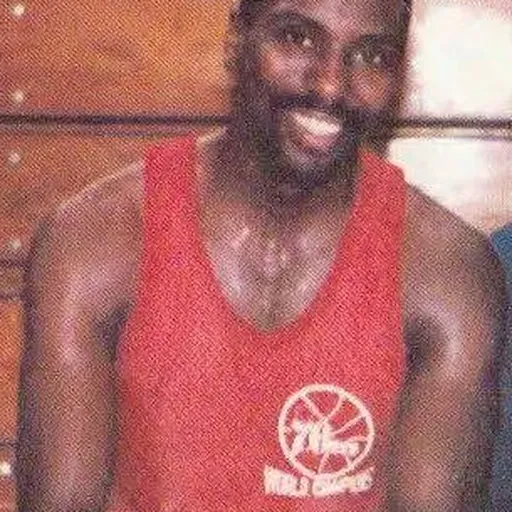
About Andrew Toney
Born 1957. Andrew Toney is an American basketball player.
Andrew Toney (born November 23, 1957) is an American former professional basketball player in the National Basketball Association (NBA). Bob Ryan of The Boston Globe called Toney "the most forgotten great player in NBA history". Toney played for the NBA's Philadelphia 76ers from 1980 to 1988. He was selected by the 76ers with the eighth overall pick in the 1980 NBA draft. He was known as "the Boston Strangler" for his exceptional play in the playoffs against the Boston Celtics. A two-time NBA All-Star, he won an NBA championship with the 76ers in 1983. His NBA career field goal percentage of 50 percent is remarkable for a guard often shooting from distance.
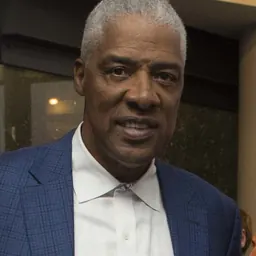
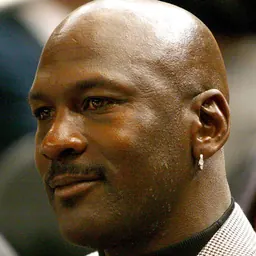
Contemporary basketball greats Larry Bird and Sidney Moncrief put Toney on par with Michael Jordan offensively. But for career ending chronic foot injuries, it was widely believed by his contemporaries that he would have been selected to the Naismith Basketball Hall of Fame. Teammate Julius Erving said after Toney led the 76ers to a Game 7 win over the Boston Celtics in the 1982 NBA Eastern Conference finals, "'There is no legal way to stop Andrew Toney'".
Toney was an All-American as a junior and senior at Glenn High School in Birmingham, Alabama; averaging over 30 points per game both years. As a senior, he was selected as Alabama's "Mr. Basketball". He was team captain his senior year, and agreed to Sandra Murray’s joining the boys' basketball team. She sometimes started with him in the backcourt.
Toney attended the University of Southwestern Louisiana (now the University of Louisiana at Lafayette). He averaged 23.6 points per game during his college career. He led the team to the 1977 Southland Conference championship. Toney was twice named the Southland Conference Player of the Year (1978, 1980). He was selected first-team All-Southland Conference in 1978, 1979, and 1980; leading the conference in scoring average all three of those seasons. As a senior, he led Southwestern Louisiana to a 21–9 record, reaching the National Invitation Tournament quarterfinals. Toney set nine school records at Southwestern Louisiana and scored 46 points in a game three times. He had 2,526 total career points, 13th highest in NCAA history at the time his college career ended. Toney obtained his undergraduate degree after 3½ years, and immediately began graduate studies.
In 2015, Toney was honored by the Georgia State Senate for his community work as a lead program coordinator in the Gwinnett County Public School system's academic support department, playing a major role in its mentoring program pairing African American middle and high school boys with male mentors.
Early life Toney was born on November 23, 1957, in Birmingham, Alabama, where his father Earnest James Toney, from whom Toney learned dedication, was a steelworker. His parents always preached academics over athletics to him.
Toney attended Birmingham’s Glenn High School. On the basketball team, he averaged 31 points per game as a junior and 37 points per game as a senior. He once scored 68 points in a regional tournament game. He was named Alabama's “Mr. Basketball” as a senior, and was named to All-America teams as a junior and a senior. He was also All-Southern, All-State, All-City and All-District as a junior and senior. The team was 80–14 with Toney. He also played baseball and participated in track. As a youth, he idolized future teammate Julius "Dr. J." Erving.
Toney averaged 21 points per game as a freshman, leading the team in scoring and ranking third in the Southland Conference. Toney averaged 24.5 points per game as a sophomore, leading the Southland Conference. He also led the conference in total points (661), field goal attempts (468), free throws attempted (179), and free throws made (137). He was named Southland Conference Player of the Year in 1977–78. As a junior (1978–79), Toney led the Southland Conference in scoring average again (23.3 points per game). He averaged 26.1 points as a senior (1979–80), leading the Southland Conference for a third consecutive season; and was named Southland Conference Player of the Year for the second time.
In 1977, Toney led Southwestern Louisiana to the Southland Conference title. As a senior, he led Southwestern Louisiana to a 21–9 record, going as far as the National Invitation Tournament quarterfinals. He was first-team All-Southland Conference in 1978, 1979, and 1980. He set nine school records, and scored 46 points in a game three times, including a game against Auburn to win the Bayou Class Championship. He finished his college career with 2,526 points, 13th highest in NCAA history at the time. Foreshadowing his reputation in the NBA, after winning a game during his junior year against University of Nevada-Reno, 73–71, by making two free throws with only seconds left, Toney said "'I like pressure situations. ... They build up my blood'".
As a rookie (1980–81), Toney averaged 12.9 points and 3.6 assists per game in only 23.6 minutes per game. Toney had a .495 field goal percentage and was seventh in rookie of the year voting. In early November, only 12 games into the season, starting shooting guard Doug Collins suffered a recurrent stress fracture in his foot (and would never play again in the NBA). The same condition would end Toney's career eight years later.
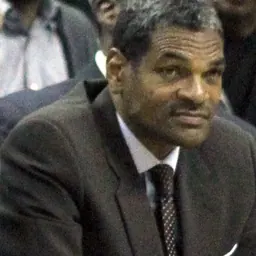
Toney then became the starter at shooting guard as a rookie, starting in 57 games that year playing next to point guard Maurice Cheeks (with Lionel Hollins also playing significant amounts of time at guard that season). In the 76ers seven game series win over the Milwaukee Bucks in the 1981 Eastern Conference semifinals, he only averaged 18.7 minutes per game, while Hollins played 30.3 minutes per game.
Toney's vaunted play against the Boston Celtics began in his rookie season. In the final regular season game of 1981, Toney came off the bench against the Celtics to play 33 minutes and score 35 points. In the first game of the 1981 Eastern Conference finals between the 76ers and the Celtics, he had 26 points. After that game, Dick Weiss of the Philadelphia Daily News referred to Toney taking over Lloyd Free's role as the "Boston strangler". Toney then scored 35 points in Game 2; both of which games were played in Boston. The Sixers were up 3–1 in the series, but the Celtics held Toney to only 17 points in the final two games and took the series. Overall in the series against the Celtics, Toney averaged 19.1 points, 3.7 rebounds, and three assists per game in only 25.6 minutes per game.
In the 1981–82 season, the 76ers started two point guards, Cheeks and Hollins, with Toney coming off the bench. Toney averaged 24.8 minutes, 16.5 points, and 3.7 assists per game during the regular season. In a nationally televised game on March 7, 1982, coming into the game off the bench and playing 35 minutes, Toney scored 46 points against the Los Angeles Lakers and Hall of Fame defensive specialist Michael Cooper. The 76ers swept the Atlanta Hawks in two games during the first round of the 1982 NBA playoffs. Toney averaged 27.5 minutes, 14.5 points, three assists and two rebounds per game. Toney's playing time increased during the ensuing playoff series that year after Hollins broke his own hand punching the Hawks' Wayne "Tree" Rollins in Game 2. Toney had been taken out of the game with a sprained ankle, but had to return after Hollins was injured. He had 26 points in the 76ers Game 1 victory, and 31 points in the 76ers Game 2 win. The 76ers then went on to play the Boston Celtics in the 1982 Eastern Conference finals, winning that series in seven games. Toney led the 76ers in scoring against the Celtics, averaging 22.1 points in 33.7 minutes per game. Toney had 30 points in the 76ers Game 2 win, and 39 points in the 76ers Game 4 win.
Toney was dubbed "the Boston Strangler" by Boston sportswriters during the 76ers' and Celtics' rivalry in the early 1980s because of his ability to single-handedly dominate games against the Celtics. While his playoff career points per game average was 17.4 overall, against the Celtics it was 19.8.
The 76ers had a 3–1 series lead in 1982, but lost Games 5 and 6, with Toney playing poorly in Game 6 (scoring only three points). The 76ers and Toney came into Game 7 determined to prove they were not "chokers". His teammates made efforts before the game to affirm Toney's usual confidence in his abilities. Toney scored 13 of his 34 points in the fourth quarter, despite being unsuccessfully double- and triple-teamed, physically hit by the Celtics, and covered by a variety of Celtics (including even Larry Bird). Toney also resisted the temptation to be drawn into retaliation or a fight by the Celtics' physical tactics; and played 43 minutes in the game. Game 7 ended with the Celtics crowd shockingly chanting for the rival 76ers to "Beat L.A."
Celtic guard M. L. Carr, who had to play against Toney during the teams' rivalry, said Toney's passing made him even more impossible to guard, Carr called Toney "'the best when it came to undressing a defensive player'". He added "There was only one way I ever found to stop him. You got him away from the ball, made sure no referee was looking, then laid a forearm to his face'". Toney had 36 points in a Game 3 loss, 28 points, 11 assists, and five rebounds in a Game 4 loss; 31 points and eight assists in a Game 5 win; and 29 points and six assists in Game 6.
The following season (1982–83), the 76ers won the NBA championship. Toney was an integral part of the 1982–83 76ers championship team, alongside teammates Julius Erving, Moses Malone, Bobby Jones and Maurice Cheeks, all Hall of Famers. Toney started 81 regular season games, playing 30.5 minutes per game. He averaged 19.7 points, 4.5 assists, and 2.8 rebounds per game. The 76ers swept the New York Knicks in four games in the 1983 Eastern Conference semifinals. Toney had a thigh injury that limited his play during that series; appearing in only three games and averaging only 20 minutes per game.
Toney played in all five games of the 1983 Eastern Conference finals against the Milwaukee Bucks. The 76ers won the series in five games, with Toney as the team's leading scorer in the series (22.2 points per game). He had 30 points, seven assists, and five rebounds in the series clinching Game 5. The 76ers then swept the Lakers in four games in the 1983 NBA finals. Toney averaged 22 points, 5.8 assists, and 2.3 rebounds per game in the championship series. 76ers coach Billy Cunningham said about the 1983 championship team that Toney "just had unlimited abilities . . . Of all the players on that team, Andrew Toney sacrificed more than anyone. Winning was the most important thing to him so therefore he would do whatever was necessary'".
Toney was named an All-Star again in 1984. During the 1983–84 season, he averaged 32.8 minutes, 20.4 points, 4.8 assists, and 2.5 rebounds per game. The 76ers lost to the New Jersey Nets in five games in the first round of the 1984 NBA playoffs; though Toney averaged 20.6 points per game. In 1984–85, Toney appeared in the fewest regular season games of his NBA career up to that time (70), while averaging 32 minutes, 17.8 points, 5.2 assists, and 2.5 rebounds per game. His 76ers teammates that season included rookie Charles Barkley. In April 1985, late in the season, he was placed on the injured list with a sprained left ankle. Toney had also complained of pain in his feet during the 1984–85 season, and later stated that the team lacked due concern in allowing Toney to keep playing without addressing the pain in his feet. It has been stated that the 76ers' doctors cleared Toney to play, despite his expressions of pain. In November of 1985, he was finally diagnosed with stress fractures in both feet. The 76ers swept the Bucks in the next round (4–0), with Toney averaging 34.5 minutes, 15.3 points, 7.3 assists, and 2.5 rebounds per game. The 76ers lost to the Celtics in the Eastern Confrence finals in five games. Toney averaged 34.4 minutes, 17.6 points, 4.4 assists, and 2.4 rebounds per game. Toney was less aggressive as a scorer in that series compared to past series against the Celtics, and Naismith Basketball Hall of Fame Philadelphia Daily News sportswriter Phil Jasner wrote an article during the series entitled "Boston Strangler Might Be Only a Memory".
After the 1984–85 season ended, Toney was subjected to the indignity of having two NBA employees camp outside his house all night, and then come to his door at 7:00 a.m. to insist he take a drug test, based on unsubstantiated rumors. Toney passed the test but believed the 76ers were behind it, which both the 76ers and NBA denied. The relationship between Toney and the 76ers continued to deteriorate in the ensuing years. He played in the season's first three games, respectively playing 22, 14, and seven minutes in those games. After the first two games, he was described as limping around on two sprained ankles.
In early November Toney was diagnosed with a stress fracture in his right foot. He was ultimately diagnosed that November with stress fractures of the tarsal navicular bones in both his right and left feet. Toney also had surgery for bone spurs in his left ankle in late November 1985.
After undergoing surgeries on his broken feet, and a number of ongoing conflicts with 76ers management, Toney played in only 81 games over his last two seasons. The 76ers lost in the first round of the 1987 Eastern Conference playoffs to the Bucks in five games. Toney played in all five games, averaging 20.8 minutes, 5.6 points, and 5.4 assists per game. He played 29 games for the 76ers the following season (1987–88) from November 13, 1987 to February 27, 1988; averaging only 18 minutes per game. Toney did not report to training camp before the 1988–89 season, was suspended by the 76ers, and then retired in February 1989, unable to play on his damaged feet. Toney's Celtic nemesis M.L. Carr said in 1991, "'It never should have happened like this . . . Andrew should have had a 12-year career, should have been a Hall of Famer'". He ranked second in the NBA in three-point field goal percentage in 1981–82 (.424) and sixth in 1984–85 (.371). believed Toney would have been in the Hall of Fame but for his injuries, and that Toney and backcourt mate Cheeks had just started to grow into their potential together.
Hall of Fame Celtics opponent Larry Bird, a member of the NBA 75th Anniversary Team, praised Toney as one of two shooting guards of whom he was most afraid. The other was Michael Jordan. Hall of Fame Milwaukee Bucks guard Sidney Moncrief, who won the very first Defensive Player of the Year Award in 1983, and who had to defend Toney, said "'Toney was un-guardable . . . he could do everything . . . I studied him, and it’s nothing you could do that could stop him from scoring, beyond double-teaming him and getting the ball out of his hands'". He also found Toney very smart, with a counter for whatever the defender tried. Moncrief "'always put [Toney] right there with Michael [Jordan]'". After the 1983 championship series with the Lakers, Hall of Fame Laker coach Pat Riley said "'Toney is probably the toughest clutch shooter in the league today .... He is just impervious to pressure'".
Pat Williams, the 76ers general manager during the 1982–83 championship season and later vice president of basketball operations for the Orlando Magic, shared an anecdote with Tony Rizzo while being interviewed on The Really Big Show on ESPN850 WKNR in Cleveland on February 11, 2010. Williams said that when he was a general manager back in the days of the Celtics' great rivalry with the Lakers and 76ers (c. 1980–1983), he asked Danny Ainge, the Celtics guard, what player he worried about the most come playoff time. "Not Magic or Dr. J, it's Andrew Toney that keeps me awake at night!" said Ainge. Williams went on to say that were it not for injuries Toney would have been a Hall of Famer. Ainge later said the Celtics as a team feared Toney more than Erving or Malone, and that "'I wouldn’t say he had as good a career as the Isiah Thomases and the Magic Johnsons or the Michael Jordans or the guys like that, but you certainly prepared for him equally, because he was capable of having a special game against you at any time'".
Honors In 1992, Toney was inducted into the Louisiana Sports Hall of Fame. In 2016, Toney was inducted into the Alabama Sports Hall of Fame.
In September 1983, the city of Lafayette, Louisiana held an Andrew Toney Day, and the University of Southwestern Louisiana established a scholarship in his name.
NBA career statistics
Regular season
Playoffs
Personal life Toney lives outside of Atlanta and worked as an elementary-school teacher, and he then took on positions as instructional coach for the Gwinnett County Schools' Community-Based Mentoring Program and with Project Reconnect. Toney's wife Priscilla Toney (who died in 2016) also attended Southwestern Louisiana and worked as a public elementary school teacher in Gwinnett County for over 25 years, and as an assistant principal. She was named Teacher of the Year in 2004, and had a profound impact on thousands of children and their parents.
Toney has a son and two daughters. He also won the second-tier Finnish Division I championship with Bisons Loimaa.
Toney served as a part-time scout for Billy Cunningham and the Miami Heat in the early 1990s.
Don’t just read it —
keep it.
Full-length biographies made to live with: read them, listen on the way to work, watch them tonight.
- E-book
- Audio
- Video
Instant download · yours to keep · every purchase keeps this site free
Important facts
People in Andrew Toney's life
Named in this biography and alive at the same time



Related people
Same field, nearest in time


Contemporaries
People whose lives overlapped Andrew Toney's

Frequently asked questions
Who is Andrew Toney?
American basketball player (born 1957)
When was Andrew Toney born?
Andrew Toney was born on 23 November 1957 in Birmingham.
What is Andrew Toney's occupation?
Andrew Toney is a basketball player.
What nationality is Andrew Toney?
Andrew Toney is American.
Sources & further reading
Cite this page
APA: Biography.guide. (2026). Andrew Toney. https://biography.guide/andrew-toney/
MLA: "Andrew Toney." Biography.guide, https://biography.guide/andrew-toney/.
Chicago: "Andrew Toney." Biography.guide. https://biography.guide/andrew-toney/.
Data last updated: 2026-09-22 · Spot an error? Report a correction.
Portrait: Wikimedia Commons · author & licence
Page generated 2026-09-27 05:02 UTC