
About Andrew Devane
Lived 1917 – 2000 (aged 82). Andrew Devane was an Irish architect.
Andrew Devane (3 November 1917 – 15 January 2000) was an Irish architect, born at 3 Pery Square Limerick. He studied architecture at University College Dublin under Rudolf Maximilian Butler where he graduated in 1941. In 1946 he was awarded the Taliesin Fellowship and he left Ireland for the United States to study under Frank Lloyd Wright until 1948. In 1948 he re-joined Paddy Robinson and Cyril Keefe of the architectural practice of Robinson & Keefe as a partner.
Among his best known works were Stephen Court and the Irish Life Centre in Dublin. Stephen Court was highly recommended in the European Architectural Heritage Year awards for its sympathy with its Georgian surroundings.
Career After Devane graduated from UCD, he began working in the architecture practice of Robinson & Keefe. After a short time, Devane was offered a partnership with the practice, but decided to postpone any agreement. Around this time Devane made contact with American Architect, Frank Wright Lloyd. In his letter to Wright, Devane said: "I cannot make up my mind whether you are in truth a great architect – or just another phony." to which Wright replied: "Come along and see."
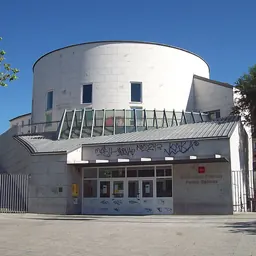
On his return to Ireland in 1948 he took up Paddy Robinson and Cyril Keefe of Robinson & Keefe on their partnership offer and formed the Robinson, Keefe & Devane architecture practice (Now known as RKD Architects). He was married to Maureen Ashe in 1950 and had three sons, Richard, Martin and Tony. Maureen died in 1977. Later on in life Devane spent much of his time devoted to charity work, especially for Mother Teresa's cause in Calcutta, India. St. Patrick's Training College, Drumcondra. Church, gymnasium, dining hall, residential accommodation, library, teaching facilities. Urological Unit, Meath Hospital, Dublin. Stephen Court, Dublin for Irish life. A.I.B. Bankcentre, Ballsbridge, Dublin. Office complex and computer centre. Irish Life Centre, Lower Abbey Street. Includes swimming pool, theatre, and second floor gardens, with later extension onto Talbot Street. St. Lelia's Church at Killeely Road, Ballynantybeg, Limerick. St. Fintan's Church, atrium, campanile, parish centre, and parochial house, Sutton, County Dublin. Irish Pavilion, New York Worlds Fair. Temporary building demolished.
Don’t just read it —
keep it.
Full-length biographies made to live with: read them, listen on the way to work, watch them tonight.
- E-book
- Audio
- Video
Instant download · yours to keep · every purchase keeps this site free
Important facts
People in Andrew Devane's life
Named in this biography and alive at the same time




Related people
Same field, nearest in time

Contemporaries
People whose lives overlapped Andrew Devane's



Frequently asked questions
Who was Andrew Devane?
Irish architect
When was Andrew Devane born?
Andrew Devane was born on 3 November 1917 in Limerick, Republic of Ireland.
When did Andrew Devane die?
Andrew Devane died on 15 January 2000 in Calcutta.
What was Andrew Devane's occupation?
Andrew Devane was an architect.
What nationality was Andrew Devane?
Andrew Devane was Irish.
Sources & further reading
Cite this page
APA: Biography.guide. (2026). Andrew Devane. https://biography.guide/andrew-devane/
MLA: "Andrew Devane." Biography.guide, https://biography.guide/andrew-devane/.
Chicago: "Andrew Devane." Biography.guide. https://biography.guide/andrew-devane/.
Data last updated: 2026-09-20 · Spot an error? Report a correction.
Page generated 2026-09-27 05:32 UTC