
About Andrés Rivero Agüero
Lived 1905 – 1996 (aged 91). Andrés Rivero Agüero was a Cuban politician and lawyer.
Andrés Rivero Agüero (4 February 1905 – 11 November 1997) was a Cuban politician who served as the 12th Prime Minister of Cuba and was elected president of Cuba in the falsified 1958 Cuban presidential election.
Early life and education Rivero was born to extremely poor parents in San Luis, Oriente Province (now Santiago de Cuba Province) on 4 February 1905. He taught himself to read when he was 15. Rivero managed to secure a high school education by his own efforts, and obtained a law degree from Havana University (1934).
Political career Elected a city councilman in Santiago de Cuba, he quickly became a leader of the Liberal Party, and was befriended by Fulgencio Batista. During Batista's first administration (1940–1944), Rivero served as Minister of Agriculture, and implemented Batista's plan for resettling landless peasants in Oriente Province.
During General Batista's exile in the United States from 1944–1952, Rivero practised law in Cuba and wrote political commentary for several periodicals. When Batista returned to run for President of Cuba in 1952, Rivero helped to organise Batista's United Action Party. He supported Batista's military coup on 10 March 1952, and thereafter served as Minister of Education (1952-1955) in Batista's second administration (1952–1959). Elected a Senator from Pinar del Río Province in 1954, Rivero became Cuba's prime minister (1957–1958), and participated in several reconciliation conferences as Batista's representative.
Rivero resigned his premiership in 1958 to run for President of Cuba. He received the support of Batista's Progressive Action Party, and three other pro-government parties. Rivero was declared the winner of the elections, which were speculated by many to have been rigged with the support of the United States government in an effort to repel the ongoing Cuban Revolution. After the election, Rivero entered into conversations with U.S. Ambassador Earl E. T. Smith, and with leading Cuban politicians, to resolve the crisis caused by the ongoing rebellion led by Fidel Castro. He apparently wished to convene a Constituent Assembly shortly after taking office, to bring about a restoration of constitutional rule. However, the success of the revolution frustrated Rivero's plans, and he fled with General Batista into exile in the Dominican Republic on 1 January 1959.
Later life Rivero eventually settled in the United States, living in extremely modest circumstances. He lived to be a great-grandfather. Rivero died in Miami, Florida in 1997.
Don’t just read it —
keep it.
Full-length biographies made to live with: read them, listen on the way to work, watch them tonight.
- E-book
- Audio
- Video
Instant download · yours to keep · every purchase keeps this site free
Important facts
People in Andrés Rivero Agüero's life
Named in this biography and alive at the same time
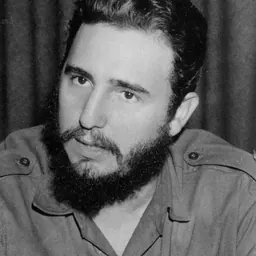
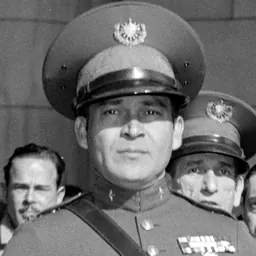
Related people
Same field, nearest in time






Contemporaries
People whose lives overlapped Andrés Rivero Agüero's
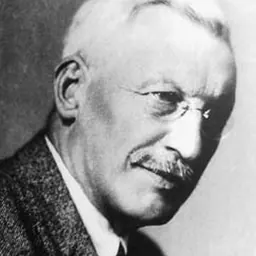


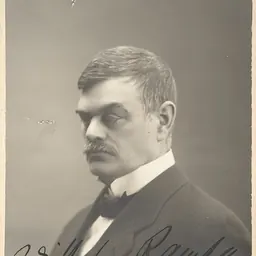

Frequently asked questions
Who was Andrés Rivero Agüero?
Cuban politician (1905-1996)
When was Andrés Rivero Agüero born?
Andrés Rivero Agüero was born on 4 February 1905 in San Luis.
When did Andrés Rivero Agüero die?
Andrés Rivero Agüero died on 8 November 1996 in Miami.
What was Andrés Rivero Agüero's occupation?
Andrés Rivero Agüero was a politician and lawyer.
What nationality was Andrés Rivero Agüero?
Andrés Rivero Agüero was Cuban.
Sources & further reading
· Wikipedia: Andrés Rivero Agüero
· DBpedia: Andrés Rivero Agüero
Cite this page
APA: Biography.guide. (2026). Andrés Rivero Agüero. https://biography.guide/andres-rivero-aguero/
MLA: "Andrés Rivero Agüero." Biography.guide, https://biography.guide/andres-rivero-aguero/.
Chicago: "Andrés Rivero Agüero." Biography.guide. https://biography.guide/andres-rivero-aguero/.
Data last updated: 2026-09-20 · Spot an error? Report a correction.
Page generated 2026-09-27 05:30 UTC