
About Andrei Zelevinsky
Lived 1953 – 2013 (aged 60). Andrei Zelevinsky was a Russian and American mathematician, known for Bernstein–Zelevinsky classification and Cluster algebra.
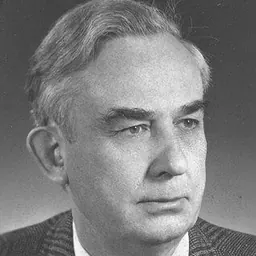
Andrei Vladlenovich Zelevinsky (; 30 January 1953 – 10 April 2013) was a Russian-American mathematician who made important contributions to algebra, combinatorics, and representation theory, among other areas.
Biography Zelevinsky graduated in 1969 from the Moscow Mathematical School No. 2. After winning a silver medal as a member of the USSR team at the International Mathematical Olympiad he was admitted without examination to the mathematics department of Moscow State University where he obtained his PhD in 1978 under the mentorship of Joseph Bernstein, Alexandre Kirillov and Israel Gelfand.
He worked in the mathematical laboratory of Vladimir Keilis-Borok at the Institute of Earth Science (1977–85), and at the Council for Cybernetics of the Soviet Academy of Sciences (1985–90). In the early 1980s, at a great personal risk, he taught at the Jewish People's University, an unofficial organization offering first-class mathematics education to talented students denied admission to Moscow State University's math department.
In 1990–91, Zelevinsky was a visiting professor at Cornell University, and from 1991 until his death was on faculty at Northeastern University, Boston. With his wife, Galina, he had a son and a daughter; he also had several grandchildren.
Zelevinsky is a relative of the physicists Vladimir Zelevinsky and Tanya Zelevinsky.
Research Zelevinsky's most notable achievement is the discovery (with Sergey Fomin) of cluster algebras. His other contributions include:
Bernstein–Zelevinsky classification of representations of p-adic groups; Introduction (jointly with Israel Gelfand and Mikhail Kapranov) of A-systems of hypergeometric equations (also known as GKZ-systems) and development of the theory of hyperdeterminants; generalization of the Littlewood–Richardson rule and Robinson–Schensted correspondence using the combinatorics of "pictures"; work (jointly with Arkady Berenstein and Sergey Fomin) on total positivity; work (with Sergey Fomin) on the Laurent phenomenon, including its applications to Somos sequences.
Awards and recognition Invited lecture at the International Congress of Mathematicians (Berlin, 1998) Humboldt Research Award (2004) Fellow (2012) of the American Mathematical Society University Distinguished Professorship (2013) at Northeastern University Steele Prize for Seminal Contribution to Research (2018)
Don’t just read it —
keep it.
Full-length biographies made to live with: read them, listen on the way to work, watch them tonight.
- E-book
- Audio
- Video
Instant download · yours to keep · every purchase keeps this site free
Important facts
People in Andrei Zelevinsky's life
Named in this biography and alive at the same time



Related people
Same field, nearest in time


Contemporaries
People whose lives overlapped Andrei Zelevinsky's


Frequently asked questions
Who was Andrei Zelevinsky?
Russian mathematician (1953-2013)
When was Andrei Zelevinsky born?
Andrei Zelevinsky was born on 30 January 1953 in Moscow.
When did Andrei Zelevinsky die?
Andrei Zelevinsky died on 10 April 2013 in Boston.
What was Andrei Zelevinsky's occupation?
Andrei Zelevinsky was a mathematician.
What was Andrei Zelevinsky known for?
Andrei Zelevinsky was known for Bernstein–Zelevinsky classification and Cluster algebra.
What nationality was Andrei Zelevinsky?
Andrei Zelevinsky was Russian and American.
Sources & further reading
· Wikipedia: Andrei Zelevinsky
Cite this page
APA: Biography.guide. (2026). Andrei Zelevinsky. https://biography.guide/andrei-zelevinsky/
MLA: "Andrei Zelevinsky." Biography.guide, https://biography.guide/andrei-zelevinsky/.
Chicago: "Andrei Zelevinsky." Biography.guide. https://biography.guide/andrei-zelevinsky/.
Data last updated: 2026-09-20 · Spot an error? Report a correction.
Page generated 2026-09-27 05:20 UTC