
About Andrei Roiter
Lived 1937 – 2006 (aged 68). Andrei Roiter was a Ukrainian mathematician.
Andrei Vladimirovich Roiter (Russian: Андрей Владимирович Ройтер; Ukrainian: Андрій Володимирович Ройтер, November 30, 1937, Dnipro – July 26, 2006, Riga, Latvia) was a Ukrainian mathematician, specializing in algebra.
A. V. Roiter's father was the Ukrainian physical chemist V. A. Roiter, a leading expert on catalysis. In 1955 Andrei V. Roiter matriculated at Taras Shevchenko National University of Kyiv, where he met a fellow mathematics major Lyudmyla Nazarova. In 1958 he and Nazarova transferred to Saint Petersburg State University (then named Leningrad State University). They married and began a lifelong collaboration on representation theory. He received in 1960 his Diploma (M.S.) and in 1963 his Candidate of Sciences degree (PhD). His PhD thesis was supervised by Dmitry Konstantinovich Faddeev, who also supervised Ludmila Nazarova's PhD. A. V. Roiter was hired in 1961 as a researcher at the Institute of Mathematics of the Academy of Sciences of Ukraine, where he worked until his death in 2006 and since 1991 was Head of the Department of Algebra. He received his Doctor of Sciences degree (habilitation) in 1969.
In his first published paper, Roiter in 1960 proved an important result that eventually led several other mathematicians to establish that a finite group has finitely many non-isomorphic indecomposable integral representations if and only if, for each prime p, its Sylow p-subgroup is cyclic of order at most p2. he proved an important theorem in the theory of the integral representation of rings. he proved the first Brauer-Thrall conjecture. Auslander and Smalø's paper and its follow-ups by several researchers introduced, among other things, covariantly and contravariantly finite subcategories of the category of finitely generated modules over an Artin algebra, which led to the theory of almost split sequences in subcategories.
According to Auslander and Smalø: ... it is perhaps surprising that the original impetus for our work did not come from the theory of hereditary artin algebras or those stably equivalent to hereditary artin algebras. Rather, the research came from an effort to explain a much older result of Gabriel and Roiter ... concerning artin algebras of finite representation type in terms of the technics and ideas developed by Auslander and Reiten in connection with almost split sequences and irreducible morphisms ... and the Drozd-Roiter criterion for a commutative order to have finitely many non-isomorphic indecomposable representations. An important tool in this research was his theory of divisibility of modules.
In 1972 Nazarova and Roiter introduced representations of partially ordered sets, an important class of matrix problems with many applications in mathematics, such as the representation theory of finite-dimensional algebras. (In 2005 they with M. N. Smirnova proved a theorem about antimonotone quadratic forms and partially ordered sets. ) Also in the 1970s Roiter in three papers, two of which were joint work with Mark Kleiner, introduced representations of bocses, a very large class of matrix problems. There is a 1997 reprint of the English translation.
In the years shortly before his death, Roiter did research on representations in Hilbert spaces. In two papers, he with his wife and Stanislav A. Kruglyak introduced the notion of locally scalar representations of quivers (i.e. directed multigraphs) in Hilbert spaces. In their 2006 paper they constructed for such representations Coxeter functors analogous to Bernstein-Gelfand-Ponomarev functors and applied the new functors to the study of locally scalar representations. In particular, they proved that a graph has only finitely many indecomposable locally scalar representations (up to unitary isomorphism) if and only if it is a Dynkin graph. Their result is analogous to that of Gabriel for the “usual” representations of quivers.
In 1961 Roiter started in Kyiv a seminar on the theory of representations. The seminar became the foundation of the highly esteemed Kyiv school of the representation theory. He was the supervisor for 13 Candidate of Sciences degrees (PhDs). In 2007 A. V. Roiter was posthumously awarded the State Prize of Ukraine in Science and Technology for his research on representation theory.
Don’t just read it —
keep it.
Full-length biographies made to live with: read them, listen on the way to work, watch them tonight.
- E-book
- Audio
- Video
Instant download · yours to keep · every purchase keeps this site free
Important facts
People in Andrei Roiter's life
Named in this biography and alive at the same time

Related people
Same field, nearest in time
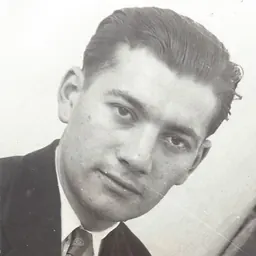

Contemporaries
People whose lives overlapped Andrei Roiter's




Frequently asked questions
Who was Andrei Roiter?
Ukrainian algebraist
When was Andrei Roiter born?
Andrei Roiter was born on 30 November 1937 in Dnipro.
When did Andrei Roiter die?
Andrei Roiter died on 26 July 2006 in Riga.
What was Andrei Roiter's occupation?
Andrei Roiter was a mathematician.
What nationality was Andrei Roiter?
Andrei Roiter was Ukrainian.
Sources & further reading
Cite this page
APA: Biography.guide. (2026). Andrei Roiter. https://biography.guide/andrei-roiter/
MLA: "Andrei Roiter." Biography.guide, https://biography.guide/andrei-roiter/.
Chicago: "Andrei Roiter." Biography.guide. https://biography.guide/andrei-roiter/.
Data last updated: 2026-09-20 · Spot an error? Report a correction.
Page generated 2026-09-27 05:20 UTC