
About Andrei Bolibrukh
Lived 1950 – 2003 (aged 53). Andrei Bolibrukh was a Russian mathematician and university teacher, known for Hilbert's twenty-first problem.
Andrei Andreevich Bolibrukh (30 January 1950 – 11 November 2003) was a Soviet and Russian mathematician. He was known for his work on ordinary differential equations especially Hilbert's twenty-first problem (Riemann–Hilbert problem). Bolibrukh was the author of about a hundred research articles on theory of ordinary differential equations including Riemann–Hilbert problem and Fuchsian system.
Work Bolibrukh was born on 30 January 1950 in Moscow and studied at the 45th Physics-Mathematics School in Saint Petersburg. After receiving his mathematical education at the Lomonosov Moscow State University, with Mikhail Mikhailovich Postnikov and Alexey Chernavskii as thesis advisers, he started working on the proof of the existence of linear differential equations having a prescribed monodromic group. He applied modern methods of complex analytic geometry to classical problems about ordinary differential equations and was an expert on Hilbert's twenty-first problem. In 1989, Bolibrukh produced his famous counterexamples which invalidated the Josip Plemelj's 1908 solution of Hilbert's twenty-first problem. Bolibrukh dedicated much of his efforts to the Riemann-Hilbert problem in order to find full necessary and sufficient conditions for given monodromy data to be those of a Fuchsian system.
During his short career he served as Deputy Director of the Steklov Institute of Mathematics and professor at the Moscow Institute of Physics and Technology.
Honours and awards In 1994 Bolibrukh was elected to the Russian Academy of Sciences. He was an Invited Speaker at the ICM in Zürich in 1994. He was awarded the Lyapunov Prize from the Academy of Sciences, Russia in 1995. In 2001 Bolibrukh received the State Prize of the Russian Federation.
Don’t just read it —
keep it.
Full-length biographies made to live with: read them, listen on the way to work, watch them tonight.
- E-book
- Audio
- Video
Instant download · yours to keep · every purchase keeps this site free
Important facts
People in Andrei Bolibrukh's life
Named in this biography and alive at the same time
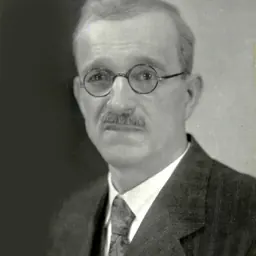
Related people
Same field, nearest in time


Contemporaries
People whose lives overlapped Andrei Bolibrukh's

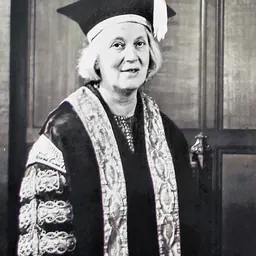

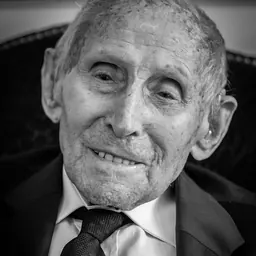
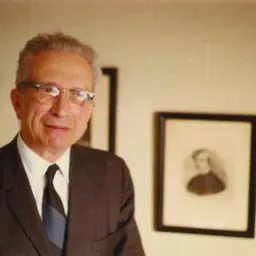

Frequently asked questions
Who was Andrei Bolibrukh?
Russian mathematician (1950–2003)
When was Andrei Bolibrukh born?
Andrei Bolibrukh was born on 30 January 1950 in Moscow.
When did Andrei Bolibrukh die?
Andrei Bolibrukh died on 11 November 2003 in 13th arrondissement of Paris.
What was Andrei Bolibrukh's occupation?
Andrei Bolibrukh was a mathematician and university teacher.
What was Andrei Bolibrukh known for?
Andrei Bolibrukh was known for Hilbert's twenty-first problem.
What nationality was Andrei Bolibrukh?
Andrei Bolibrukh was Russian.
Sources & further reading
Cite this page
APA: Biography.guide. (2026). Andrei Bolibrukh. https://biography.guide/andrei-bolibrukh/
MLA: "Andrei Bolibrukh." Biography.guide, https://biography.guide/andrei-bolibrukh/.
Chicago: "Andrei Bolibrukh." Biography.guide. https://biography.guide/andrei-bolibrukh/.
Data last updated: 2026-09-20 · Spot an error? Report a correction.
Page generated 2026-09-27 05:05 UTC