
About Andreas Pfaltz
Born 1948. Andreas Pfaltz is a Swiss chemist and university teacher, known for Catalysis, Chiral ligand and Coordination chemistry.
Andreas Pfaltz (born 10 May 1948) is a Swiss chemist known for his work in the area of coordination chemistry and catalysis.
Education and professional life Andreas Pfaltz studied at ETH Zurich, completing his undergraduate diploma in natural sciences in 1972 and his PhD in organic chemistry in 1978. His doctoral supervisor was Albert Eschenmoser, whose research into vitamin B12 and other corrin rings would influence Pfaltz's early research. Following a two-year postdoctoral position at Columbia University (early 1978 – late 1979), working for Gilbert Stork on the synthesis of Rifamycin, he returned to ETH Zurich as a lecturer and began his own research. In 1990 he was appointed as an associate professor at the University of Basel, becoming a full professor in 1993. Between 1995 and 1998 he was a director of the prestigious Max Planck Institute for Coal Research, afterwards returning to the University of Basel, where he has remained till the present day.
Research Pfaltz's early research was influenced by his PhD supervisor Albert Eschenmoser and was largely based around the synthesis of corrins, porphyrins and other macrocycles. During the second half of the 1980s he began to use fragments of these macrocycles as novel ligands for asymmetric catalysis, with chiral C2-symmetric semicorrins being the most successful example. Following the development of structurally related bis(oxazoline)s Pfaltz began using and developing various oxazoline based ligands, making significant contributions to the known chemistry of phosphinooxazolines. His current research activities remain focused on ligand development, asymmetric catalysis and catalyst screening.
Professional appointments Scientific staff member, ETH Zürich, 1980–1986 Privatdozent (lecturer), ETH Zürich, 1987–1990 Associate professor, University of Basel, 1990–1993 Professor of organic chemistry, University of Basel, 1993–1995 Head of the Homogeneous Catalysis Section, Max Planck Institute for Coal Research, 1995–1998 Professor of chemistry, University of Basel, 1999–2015 Professor emeritus, University of Basel, 2015–present
Awards Werner Prize of the Swiss Chemical Society, 1989 Wilhelm Manchot Research Professorship, Technical University of Munich, 2002 Horst-Pracejus-Prize of the German Chemical Society, 2003 Prelog Medal of the ETH Zurich, 2003 Ryoji Noyori Prize, The Society of Synthetic Organic Chemistry, Japan, 2008 Heilbronner-Hückel Lecturer, Swiss Chemical Society and German Chemical Society, 2011 Member of The German Academy of Sciences "Leopoldina", 2011 Yamada-Koga Prize, Japan Research Foundation of Optically Active Compounds, 2011 President of the Bürgenstock conference, 2012 Chirality Medal, (2016)
Don’t just read it —
keep it.
Full-length biographies made to live with: read them, listen on the way to work, watch them tonight.
- E-book
- Audio
- Video
Instant download · yours to keep · every purchase keeps this site free
Important facts
People in Andreas Pfaltz's life
Named in this biography and alive at the same time
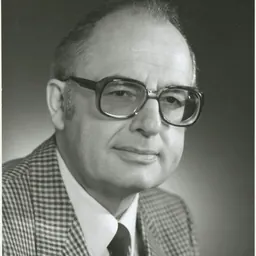

Related people
Same field, nearest in time

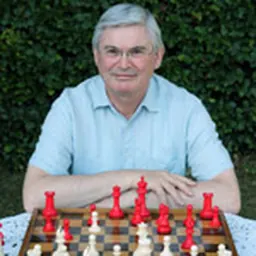
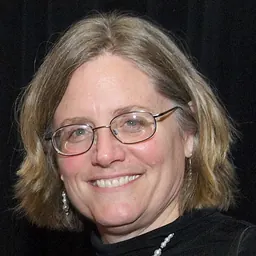



Contemporaries
People whose lives overlapped Andreas Pfaltz's

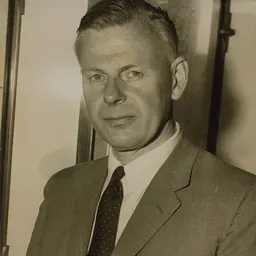


Frequently asked questions
Who is Andreas Pfaltz?
Swiss chemist
When was Andreas Pfaltz born?
Andreas Pfaltz was born on 10 May 1948 in Basel.
What is Andreas Pfaltz's occupation?
Andreas Pfaltz is a chemist and university teacher.
What is Andreas Pfaltz known for?
Andreas Pfaltz is known for Catalysis, Chiral ligand and Coordination chemistry.
What nationality is Andreas Pfaltz?
Andreas Pfaltz is Swiss.
Sources & further reading
Cite this page
APA: Biography.guide. (2026). Andreas Pfaltz. https://biography.guide/andreas-pfaltz/
MLA: "Andreas Pfaltz." Biography.guide, https://biography.guide/andreas-pfaltz/.
Chicago: "Andreas Pfaltz." Biography.guide. https://biography.guide/andreas-pfaltz/.
Data last updated: 2026-09-20 · Spot an error? Report a correction.
Page generated 2026-09-27 05:33 UTC