
About Gilbert Stork
Lived 1921 – 2017 (aged 95). Gilbert Stork was an American and Belgian chemist and university teacher.
Gilbert Stork (December 31, 1921 – October 21, 2017) was a Belgian-American organic chemist. For a quarter of a century he was the Eugene Higgins Professor of Chemistry Emeritus at Columbia University. He is known for making significant contributions to the total synthesis of natural products, including a lifelong fascination with the synthesis of quinine. In so doing he also made a number of contributions to mechanistic understanding of reactions, and performed pioneering work on enamine chemistry, leading to development of the Stork enamine alkylation. It is believed he was responsible for the first planned stereocontrolled synthesis as well as the first natural product to be synthesised with high stereoselectivity.
Stork was also a mentor of young chemists with many of his students going on to make significant contributions in their own right.
Early life Gilbert Stork was born in the Ixelles municipality of Brussels, Belgium on December 31, 1921. The oldest of 3 children, his middle brother Michel died in infancy, but he remained close with his younger sister Monique his whole life. His family had Jewish origins, although Gilbert himself didn't recall them being religiously active. While at Wisconsin he met Carl Djerassi, with whom he would go on to form a lasting friendship.
Career 1946 Harvard University: Instructor; 1948 Assistant Professor 1953 Columbia University: Associate Professor; 1955 Professor; 1967–1993 Eugene Higgins Professor; *1993 Professor Emeritus
Elected to U.S. National Academy of Sciences, 1961 American Academy of Arts and Sciences, 1962 Foreign Member of the French Academy of Sciences, 1989 American Philosophical Society, 1995 The Royal Society, UK 1999
Incidents
The explosive steak During his time at the University of Wisconsin, Stork kept a steak on his windowsill in the winter in order to keep it refrigerated. The steak began to degrade and to dispose of it Stork put it in a hot acid bath used to clean glassware which contained nitric and sulphuric acids. He was then concerned he would produce nitroglycerine due to the glycerine in the steak and the presence of nitric and sulphuric acids. However, due to the high temperature of the bath, the oxidation of glycerol was much faster than the nitration of glycerin thus preventing the formation of explosives. Chairman Organic Division of the American Chemical Society, 1966–1967
1957 Award in Pure Chemistry of the American Chemical Society 1959 Guggenheim Foundation Fellow 1961 Baekeland Medal, North Jersey ACS 1962 Harrison Howe Award 1966 Edward Curtis Franklin Memorial Award, Stanford University 1967 ACS Award for Creative Work in Synthetic Organic Chemistry 1971 Synthetic Organic Chemical Manufacturers Association Gold Medal 1973 Nebraska Award 1978 Roussel Prize, Paris 1980 Nichols Medal, New York ACS, Arthur C. Cope Award, ACS 1982 Edgar Fahs Smith Award, Philadelphia ACS 1982 Willard Gibbs Medal, Chicago ACS 1982 National Academy of Sciences Award in Chemical Sciences 1982 National Medal of Science from Ronald Reagan; 1986 Cliff S. Hamilton Award 1987 Monie A Ferst Award and Medal, Georgia Tech. 1991 Roger Adams Award 1992 George Kenner Award, Liverpool 1992 Robert Robinson Lectureship, University of Manchester 1992 Chemical Pioneer Award, American Institute of Chemists 1993 Welch Award in Chemistry, Robert A. Welch Foundation 1994 Allan R. Day Award, Philadelphia Organic Chemists Club 1995 Wolf Prize, Israel 2002 Sir Derek Barton Gold medal, Royal Society of Chemistry 2005 Herbert C. Brown Award, American Chemical Society
The inaugural Gilbert Stork Lecture was held in his honor in 2014 at his alma mater, the University of Wisconsin-Madison. Gilbert Stork named lecture series are also held at other institutions, including Columbia University and the University of Pennsylvania, as a result of his endowments.
He was fêted for his sense of humor and colorful personality by historian of chemistry Jeffrey I. Seeman who published a collection of "Storkisms".
Don’t just read it —
keep it.
Full-length biographies made to live with: read them, listen on the way to work, watch them tonight.
- E-book
- Audio
- Video
Instant download · yours to keep · every purchase keeps this site free
Important facts
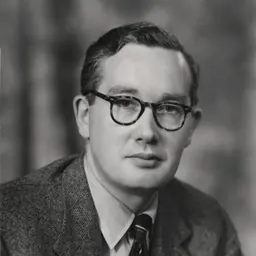
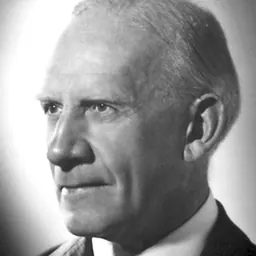
People in Gilbert Stork's life
Named in this biography and alive at the same time



Related people
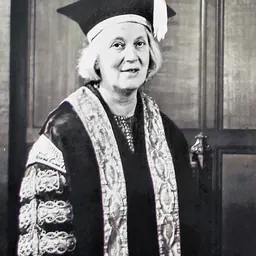
Same field, nearest in time



Contemporaries
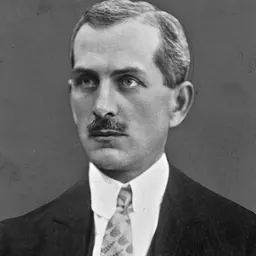
People whose lives overlapped Gilbert Stork's




Frequently asked questions
Who was Gilbert Stork?
Belgian American chemist (1921-2017)
When was Gilbert Stork born?
Gilbert Stork was born on 31 December 1921 in Belgium, Brussels.
When did Gilbert Stork die?
Gilbert Stork died on 23 October 2017 in Manhattan.
What was Gilbert Stork's occupation?
Gilbert Stork was a chemist and university teacher.
What nationality was Gilbert Stork?
Gilbert Stork was American and Belgian.
Sources & further reading
Cite this page
APA: Biography.guide. (2026). Gilbert Stork. https://biography.guide/gilbert-stork/
MLA: "Gilbert Stork." Biography.guide, https://biography.guide/gilbert-stork/.
Chicago: "Gilbert Stork." Biography.guide. https://biography.guide/gilbert-stork/.
Data last updated: 2026-09-20 · Spot an error? Report a correction.
Page generated 2026-09-27 05:27 UTC