
About Andreas Franz Wilhelm Schimper
Lived 1856 – 1901 (aged 45). Andreas Franz Wilhelm Schimper was a German and French botanist, university teacher, ecologist and botanical collector.
Andreas Franz Wilhelm Schimper (12 May 1856 – 9 September 1901) was a German botanist and phytogeographer who made major contributions in the fields of histology, ecology and plant geography. He travelled to South East Asia and the Caribbean as part of the 1899 deep-sea expedition. He coined the terms tropical rainforest and sclerophyll and is commemorated in numerous specific names.
Biography
Schimper was born in Strassburg, (present day Strasbourg, France), into a family of eminent scientists. His father Wilhelm Philippe Schimper (1808–1880) was Director of the Natural History Museum in the same town, Professor of Geology, and a leading bryologist. His father's cousin was Georg Wilhelm Schimper (1804–1878), prominent collector and explorer in Arabia and North Africa; the naturalist Karl Friedrich Schimper was also a relative.
Schimper studied at the University of Strassburg from 1874 to 1878, acquiring a Ph.D. He then worked in Lyon, and in 1880 travelled to the United States, becoming a Fellow at Johns Hopkins University.
In 1882, he moved back to the University of Bonn working with Eduard Strasburger, becoming a private docent. In 1883, Schimper postulated the endosymbiotic origin of chloroplasts and paved the way to the symbiogenesis theory of Konstantin Mereschkowski and Lynn Margulis. In 1886, he was appointed Extraordinary Professor at the University of Bonn, and worked largely on cell histology, chromatophores and starch metabolism. He had become interested in phytogeography and plant ecology, undertaking expeditions to the West Indies and Venezuela in 1882–1883. In 1886, he stayed with Fritz Müller in Brazil, and in 1889–1890 in Ceylon, the Malaya and Botanical Garden in Buitenzorg (Bogor, Java), concentrating on mangroves, epiphytes and littoral vegetation. This resulted in his account of the Rhizophoraceae in Engler & Prantl's Natürliche Pflanzenfamilien.
In 1898, he became Professor of Botany at the University of Basel and the same year joined the German Valdivia-Expedition. This was a deep-sea expedition aboard the SS Valdivia led by Professor Carl Chun. The trip lasted 9 months, during which they visited the Canary Islands, Cameroon, Cape Town, (where he joined Rudolf Marloth on collecting trips in the southern Cape), Kerguelen, New Amsterdam and Cocos Islands, Sumatra, the Maldives, Ceylon, the Seychelles and the Red Sea.
Schimper was the first to give a clear and proper definition of plastid and also explained its types. In 1899, he became Professor of Botany at the University of Basel. His health had been seriously affected by malaria contracted in Cameroon and Dar-es-Salaam, and he died of complications of malaria at the age of 45 in 1901.
Publications Schimper is best known for Pflanzengeographie auf physiologischer Grundlage, published at the University of Jena in 1898 where he aimed to explain the expansion and ecology of plants based on the ecological knowledge of the time. In this book he coined the terms tropical rainforest and sclerophyll. He wrote in the preface: "Nur wenn sie in engster Fühlung mit der experimentellen Physiologie verbleibt, wird die Ökologie der Pflanzengeographie neue Bahnen eröffnen können, denn sie setzt eine genaue Kenntnis der Lebensbedingungen der Pflanze voraus, welche nur das Experiment verschaffen kann" (1898: IV). His classification of plant formations was important for the development of the botanical sciences: „Nach dem Vorhergehenden sind zwei ökologische Formationsgruppen zu unterscheiden, die klimatischen oder Gebietsformationen, deren Vegetationscharakter durch die Hydrometeore beherrscht, und die edaphischen oder Standortsformationen, wo derselbe in erster Linie durch die Bodenbeschaffenheit bedingt ist“
Rudolf Marloth wrote an account of the Cape floral region for Chun's proposed Wissenschaftliche Ergebnisse der deutschen Tiefsee-Expedition auf dem Dampfer Valdivia 1898-1899. and Schimper contributed two chapters on "Gebiet der Hartlaubgehölze" (Region of hardwood trees) and "Der Knysnawald".
Honours and distinctions
Schimper is commemorated in specific names such as Acokanthera schimperi and Harpachne schimperi. In 1892, he was voted a member of the Deutsche Akademie der Naturforscher Leopoldina.
Don’t just read it —
keep it.
Full-length biographies made to live with: read them, listen on the way to work, watch them tonight.
- E-book
- Audio
- Video
Instant download · yours to keep · every purchase keeps this site free
Important facts
People in Andreas Franz Wilhelm Schimper's life
Named in this biography and alive at the same time
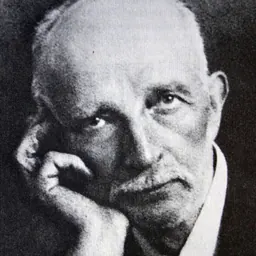



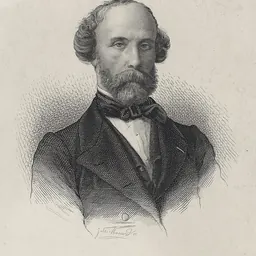


Related people
Same field, nearest in time

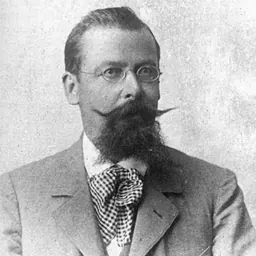
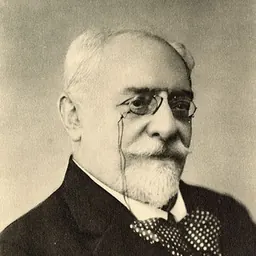

Contemporaries
People whose lives overlapped Andreas Franz Wilhelm Schimper's



Frequently asked questions
Who was Andreas Franz Wilhelm Schimper?
German botanist (1856–1901)
When was Andreas Franz Wilhelm Schimper born?
Andreas Franz Wilhelm Schimper was born on 12 May 1856 in Strasbourg.
When did Andreas Franz Wilhelm Schimper die?
Andreas Franz Wilhelm Schimper died on 9 September 1901 in Basel.
What was Andreas Franz Wilhelm Schimper's occupation?
Andreas Franz Wilhelm Schimper was a botanist, university teacher, ecologist and botanical collector.
What nationality was Andreas Franz Wilhelm Schimper?
Andreas Franz Wilhelm Schimper was German and French.
Sources & further reading
· Wikipedia: Andreas Franz Wilhelm Schimper
· DBpedia: Andreas Franz Wilhelm Schimper
Cite this page
APA: Biography.guide. (2026). Andreas Franz Wilhelm Schimper. https://biography.guide/andreas-franz-wilhelm-schimper/
MLA: "Andreas Franz Wilhelm Schimper." Biography.guide, https://biography.guide/andreas-franz-wilhelm-schimper/.
Chicago: "Andreas Franz Wilhelm Schimper." Biography.guide. https://biography.guide/andreas-franz-wilhelm-schimper/.
Data last updated: 2026-09-25 · Spot an error? Report a correction.
Page generated 2026-09-27 05:12 UTC