
Andreas Acrivos
Greek–American physicist, fluid dynamicist, and chemical engineer
About Andreas Acrivos
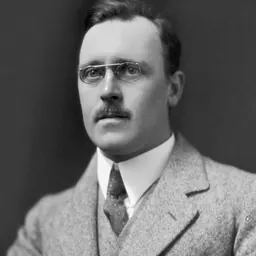
Lived 1928 – 2025 (aged 96). Andreas Acrivos was an American and Greek physicist, chemical engineer, university teacher and fluid dynamicist.
Andreas Acrivos (13 June 1928 – 17 February 2025) was a Greek-American physicist who was the Albert Einstein Professor of Science and Engineering at the City College of New York. He was also the director of the Benjamin Levich Institute for Physicochemical Hydrodynamics.
Life and career
Born in Athens, Greece, Acrivos moved to the United States to pursue an engineering education. He received a bachelor's degree from Syracuse University in 1950; a master's degree from the University of Minnesota in 1951; and a Ph.D. from the University of Minnesota in 1954, all in chemical engineering.
Acrivos is considered to be one of the leading fluid dynamicists of the 20th century. In 1954, Acrivos joined the faculty at the University of California, Berkeley. In 1962, he moved to Stanford University, where he worked with Professor David Mason to build chemical engineering programs. In 1977, he was elected as a member into the National Academy of Engineering for contributions in the application of mathematical analysis to the understanding of fundamental phenomena in chemical engineering processes. In 1987, Acrivos joined as the Albert Einstein Professor of Science and Engineering at The City College of the City University of New York, succeeding Veniamin Levich.
From 1982 to 1997, Acrivos served as the editor-in-chief of Physics of Fluids.
Acrivos died in Stanford, California, on 17 February 2025, at the age of 96.
Awards and honors National Medal of Science, 2001 Fellow of the American Academy of Arts and Sciences, 1993 Fluid Dynamics Prize, 1991 G. I. Taylor Medal, Society of Engineering Science, 1988 Elected as a member into the National Academy of Engineering, 1977 Acrivos has been listed as an ISI Highly Cited Author in Engineering by the ISI Web of Knowledge, Thomson Scientific Company.
Don’t just read it —
keep it.
Full-length biographies made to live with: read them, listen on the way to work, watch them tonight.
- E-book
- Audio
- Video
Instant download · yours to keep · every purchase keeps this site free
Important facts
People in Andreas Acrivos's life
Named in this biography and alive at the same time


Related people
Same field, nearest in time



Contemporaries
People whose lives overlapped Andreas Acrivos's



Frequently asked questions
Who was Andreas Acrivos?
Greek–American physicist, fluid dynamicist, and chemical engineer (1928–2025)
When was Andreas Acrivos born?
Andreas Acrivos was born on 13 June 1928 in Athens.
When did Andreas Acrivos die?
Andreas Acrivos died on 17 February 2025 in Stanford.
What was Andreas Acrivos's occupation?
Andreas Acrivos was a physicist, chemical engineer, university teacher and fluid dynamicist.
What nationality was Andreas Acrivos?
Andreas Acrivos was American and Greek.
Sources & further reading
Cite this page
APA: Biography.guide. (2026). Andreas Acrivos. https://biography.guide/andreas-acrivos/
MLA: "Andreas Acrivos." Biography.guide, https://biography.guide/andreas-acrivos/.
Chicago: "Andreas Acrivos." Biography.guide. https://biography.guide/andreas-acrivos/.
Data last updated: 2026-09-20 · Spot an error? Report a correction.
Page generated 2026-09-27 05:31 UTC