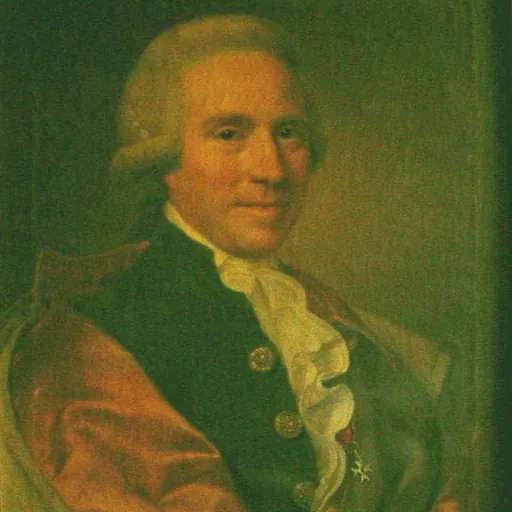
About Andrea Vici
Lived 1743 – 1817 (aged 73–74). Andrea Vici was an Italian architect.
Andrea Vici (1743–1817) was an Italian architect and engineer, active in a Neoclassical style. He was a pupil of Luigi Vanvitelli, and active in the Papal States comprising parts of Lazio, Umbria, and Marche.
Biography Andrea was born in Arcevia in the Marche, the brother of Arcangelo, who was also an architect of note, leaving behind works at Jesi, Arcevia, Fano, Corinaldo, and Cupramontana. At the age of 14, Andrea was given a classical education in mathematics, letters and design by Francesco Appiani at Perugia. At the age of 17 he joined the studio of the painter Cesare Pozzi in Rome, then studied architecture under Carlo Murena. At the age of 26 years, he was recruited by the eminent architect Luigi Vanvitelli to work at the Reggia di Caserta and in the church of the Santissima Annunziata in Naples.
Moving to the Papal states, he became an important architect and engineer. He was named Count and later palatine prince, president of the Pontifical Academy of St Luke in Rome in 1802. In 1804, he was named a member of the Academy of the Arcadia, along with the architect Metastasio of the Sacra Congregazione Lauretana nel 1783. In Rome, he befriended Antonio Canova and was ultimately buried in Santa Maria in Vallicella, Rome.
Among his many designs and contributions include works for:
Chiesa del Sacramento, Offagna Treia Cathedral Villa Votalarca, Treia Collegio Campana, Osimo Villa Bonaccorsi, Osimo Chapel of the Basilica of Loreto Monastery of Santa Caterina, Cingoli Portal and Chapel of the Castle of Rocca Priora, Falconara Marittima Grand staircase (Scalone) of Palazzo Lolli-Benigni, Fabriano Fossombrone Cathedral Camerino Cathedral Hospital of Pergola City Hall of Poggio San Marcello City Hall of Bevagna Palazzo Porta, Gubbio San Francesco, Foligno Palazzo Connestabile della Staffa, Perugia Palazzo e la Cappella Gozzoli, Terni Casino Venuti, Cortona Reliefs for Villa Lante, Bagnaia Church of Sant’Ariano, Velletri Church and Monastery of Città della Pieve Cascata delle Marmore, Terni Hydraulic works in the Val di Chiana in the Romagna, Pontine marshes, Port of Fano, Aqueducts in Loreto, Perugia, and Rome
Don’t just read it —
keep it.
Full-length biographies made to live with: read them, listen on the way to work, watch them tonight.
- E-book
- Audio
- Video
Instant download · yours to keep · every purchase keeps this site free
Important facts
People in Andrea Vici's life
Named in this biography and alive at the same time



Related people
Same field, nearest in time
Contemporaries
People whose lives overlapped Andrea Vici's






Frequently asked questions
Who was Andrea Vici?
Italian architect
When was Andrea Vici born?
Andrea Vici was born on 9 November 1743 in Arcevia.
When did Andrea Vici die?
Andrea Vici died in 1817 in Rome.
What was Andrea Vici's occupation?
Andrea Vici was an architect.
What nationality was Andrea Vici?
Andrea Vici was Italian.
Sources & further reading
Cite this page
APA: Biography.guide. (2026). Andrea Vici. https://biography.guide/andrea-vici/
MLA: "Andrea Vici." Biography.guide, https://biography.guide/andrea-vici/.
Chicago: "Andrea Vici." Biography.guide. https://biography.guide/andrea-vici/.
Data last updated: 2026-09-21 · Spot an error? Report a correction.
Portrait: Wikimedia Commons · author & licence
Page generated 2026-09-27 05:01 UTC