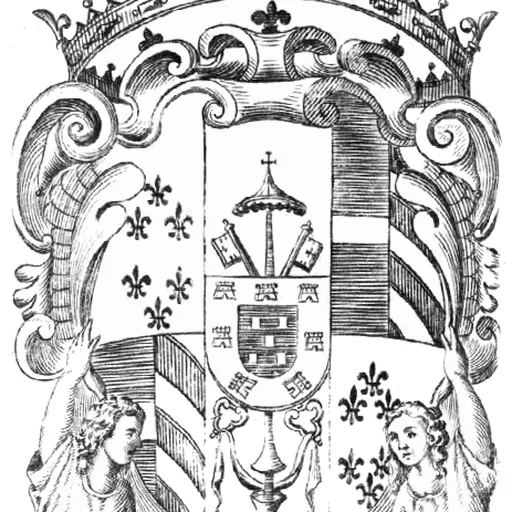
About Andrea Adolfati
Lived 1721 – 1760 (aged 38–39). Andrea Adolfati was an Italian composer.
Andrea Adolfati (1721 or 1722, Venice – 28 October 1760, Padua) was an Italian composer who is particularly remembered for his output in the opera seria genre. His works are generally conventional and stylistically similar to the operas of his teacher Baldassare Galuppi. Although his music largely followed the fashion of his time, he did compose two tunes with unusual time signatures for his day: an air in meter and another in meter.
Adolfati studied music composition in Venice with composer Galuppi. After completing his studies, he became the maestro di cappella at the Santa Maria della Salute, a position he held until 1745. He then worked in the same capacity at the court in Modena, where his divertimento da camera La pace fra la virtù e la bellezza premiered in 1746. Around the same time, he composed some songs and arias for Johann Adolph Hasse's Lo starnuto di Ercole, which was given at the Teatro San Girolamo (a small theatre located in the Palazzo Labia) in 1745 and during Carnival 1746.
In 1748, Adolfati became maestro di cappella at the Basilica della Santissima Annunziata del Vastato in Genoa. On 30 May 1760, he became maestro di cappella of the Padua Cathedral, succeeding Giacomo Rampini, who had died three days earlier, in that post. He remained there for only a short period, as he also died just five months later.
Operas Artaserse (opera seria, libretto by Metastasio, 1741, Verona; in collaboration with Pietro Chiarini) La pace fra la virtù e la bellezza (divertimento da camera, libretto by Liborati, Metastasio, 1746, Modena) Didone abbandonata (dramma, libretto by Metastasio, 1747, Venice) Il corsaro punito (dramma giocoso, 1750, Pavia) Arianna (dramma, libretto by Pietro Pariati, 1750, Genoa) La gloria e il piacere (introduction to music on the ball, 1751, Genoa) Adriano in Siria (dramma, libretto by Metastasio, 1751, Genoa) Il giuoco dei matti (commedia per musica, 1751, Genoa) Ifigenia (dramma per musica, 1751, Genoa) Ipermestra (dramma, libretto by Metastasio, 1752, Modena) Vologeso (dramma, basato su Lucio Vero by Apostolo Zeno, 1752, Genoa) La clemenza di Tito (dramma, libretto by Metastasio, 1753, Vienna) Sesostri re d'Egitto (dramma, libretto by Apostolo Zeno, 1755, Genoa)
Other works Miserere for 4 voices and instruments Nisi Dominus for 1 voice, basso continuo Laudate for 4 voices In exitu for 5 voices and instruments Domine ne in furore for 4 voices and instruments 6 cantatas for soprano and instruments Già la notte s'avvicina (text by Metastasio) Filen, crudo Fileno Perdono amata Nice (text by Metastasio) Ingratissimo Tirsi No, non turbarti, o Nice (text by Metastasio) Cantata for 2 Various arias 6 sonatas for 2 violins, 2 flutes, 2 horns, bassoon, and contrabassoon Sinfonia in F major Overture in D major
Don’t just read it —
keep it.
Full-length biographies made to live with: read them, listen on the way to work, watch them tonight.
- E-book
- Audio
- Video
Instant download · yours to keep · every purchase keeps this site free
Important facts
People in Andrea Adolfati's life
Named in this biography and alive at the same time


Related people
Same field, nearest in time
Contemporaries
People whose lives overlapped Andrea Adolfati's




Frequently asked questions
Who was Andrea Adolfati?
18th century Italian composer
When was Andrea Adolfati born?
Andrea Adolfati was born in 1721 in Venice.
When did Andrea Adolfati die?
Andrea Adolfati died on 28 October 1760 in Padua.
What was Andrea Adolfati's occupation?
Andrea Adolfati was a composer.
What nationality was Andrea Adolfati?
Andrea Adolfati was Italian.
Sources & further reading
Cite this page
APA: Biography.guide. (2026). Andrea Adolfati. https://biography.guide/andrea-adolfati/
MLA: "Andrea Adolfati." Biography.guide, https://biography.guide/andrea-adolfati/.
Chicago: "Andrea Adolfati." Biography.guide. https://biography.guide/andrea-adolfati/.
Data last updated: 2026-09-23 · Spot an error? Report a correction.
Portrait: Wikimedia Commons · author & licence
Page generated 2026-09-27 05:05 UTC