
About André Salmon
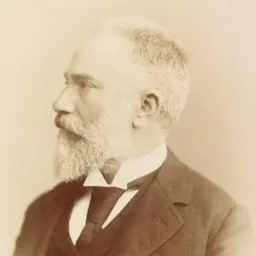
Lived 1881 – 1969 (aged 87). André Salmon was a French poet, writer, journalist, art critic and novelist.
André Salmon (4 October 1881, Paris – 12 March 1969, Sanary-sur-Mer) was a French poet, art critic and writer. He was one of the early defenders of Cubism, with Guillaume Apollinaire and Maurice Raynal.
Biography André Salmon was born in Paris, in the XI arrondissement, the fourth child of Émile-Frédéric Salmon, a sculptor and etcher, and Sophie-Julie Cattiaux, daughter of a founder of the Radical Socialist Party. Often assumed to come from a Jewish family, they were in fact secular Republicans, frequently in financial difficulty, and moved several times. André Salmon claimed in a letter to the editor of Le Crapouillot, now in a private collection, that his family descended from the Renaissance poet Jean Salmon Macrin, whose position in the court of Francis I may have indicated that his forebears were not Jewish. However, there were Jews in France at this time.
Salmon's education was neglected, although he received some tuition from the Parnassian poet Gaston de Raisme, a friend of François Coppée. From 1897 to 1902 he stayed in St-Petersburg, first with his parents and then as an assistant in the chancellery of the French consulate.
In 1902 Salmon returned to France for military service but was dismissed after a few months due to his weak physical condition. In the first decade of the 20th century, he mixed with literary circles of Paris' Latin Quarter. Then he met a young, then unknown poet Guillaume Apollinaire, and with a group of young artists, they formed an artistic group. In 1904 he moved into the Bateau-Lavoir and lived there with Picasso, Max Jacob, and Apollinaire. He lived a Bohemian life for several years until he fell in love with Jeanne Blazy-Escarpette. He found work as a journalist with L'Intransigeant and also contributed to Le Soleil. He married Jeanne on 13 July 1909 and settled with her on rue Rousselet in the 7th arrondissement of Paris.
During World War I (1914–18) Salmon enlisted in the army as a volunteer and served in the trenches. He was invalided in 1916 and returned to Paris where he became a factotum on the journal L'Éveil of Jacques Dhur. Salmon organized the exhibition L'Art Moderne en France from 16 to 31 July 1916 for the wealthy fashion designer Paul Poiret. Salmon gave "26 Avenue d'Antin" as the address and called the exhibition the "Salon d'Antin". Artists included Pablo Picasso, who showed Les Demoiselles d'Avignon for the first time, Amedeo Modigliani, Moïse Kisling, Manuel Ortíz de Zárate and Marie Vassilieff. Another of Poiret's exhibitions, also organized by Salmon, was La Collection particulière de M. Paul Poiret, from 26 April to 12 May 1923.
In the following years, Salmon continued to work as a journalist for works such as L'Europe nouvelle and La Paix sociale, while publishing poems, short stories, critiques, and essays. From 1928 Salmon worked for Le Petit Parisien as a court reporter. In the 1930s he ran into financial difficulties, while his wife became increasingly dependent on opium and he was forced publish in such lesser periodicals as Paris Sex-Appeal. Salmon was sent to Spain by the Petit Parisien to report on the Spanish Civil War (1936–39) from the Francoist side. His reports, deeply critical of the Fascists, were censored by the paper.
During World War II (1939–45) he was sent to Beirut as a war correspondent. After the fall of France, he made his way back via Marseille to Paris, where he found his wife struggling to survive. He rejoined Le Petit Parisien, but avoided any controversial subjects, and was forced to defend himself against attacks from the far-Right who accused him of being a Jew and a supporter of "degenerate art".
After the Liberation of France Salmon was sentenced to five years of "national indignity" for his work as a journalist in occupied France and had to publish under a pseudonym.
His wife died on 1 January 1949. On 29 October 1953, he remarried. In November 1961 he moved from Paris to Sanary, where he had built a small house in 1937. In 1964 Salmon was awarded the Grand Prix for poetry by the French Academy.
He died on 12 March 1969 at his home in Provence.
Works
Poetry Poèmes, Vers et prose, 1905 Féeries, Vers et prose, 1907 Le Calumet, Falque, 1910 Prikaz, Paris, Éditions de La Sirène, 1919 C'est une belle fille! Chronique du vingtième siècle, Albin Michel, 1920 Le Livre et la Bouteille, Camille Bloch éditeur, 1920 L'Âge de l'Humanité, Paris, Gallimard, 1921 Ventes d'Amour, Paris, À la Belle Édition, chez François Bernouard, 1922 Peindre, Paris, Éditions de la Sirène, 1921 Créances 1905–1910 (Les Clés ardentes. Féeries. Le Calumet). Paris, Gallimard, 1926 Métamorphoses de la harpe et de la harpiste, Éditions des Cahiers Libres, 1926 Vénus dans la balance, Éditions des Quatre Chemins, 1926 Tout l'or du monde, Paris, Aux éditions du Sagittaire, chez Simon Kra, coll. Les Cahiers nouveaux, n. 36, 1927 Carreaux 1918–1921 (Prikaz. Peindre. L'Âge de l'Humanité. Le Livre et la Bouteille), Paris, Gallimard, 1928 Saints de glace, Paris, Gallimard, 1930 Troubles en Chine, René Debresse éditeur, 1935 Saint André, Paris, Gallimard, 1936 Odeur de poésie, Marseille, Robert Laffont, 1944 Les Étoiles dans l'encrier, Paris, Gallimard, 1952 Vocalises, Paris, Pierre Seghers, 1957 Créances, 1905–1910, followed by Carreaux 1918–1921, Paris, Gallimard, 1968 Carreaux et autres poèmes, preface by Serge Fauchereau, Paris, Poésie/Gallimard, 1986
Books and short stories Tendres canailles, Paris, Librairie Ollendorff, 1913, and Paris, Gallimard, 1921 Monstres choisis, Paris, Gallimard, 1918 Mœurs de la Famille Poivre, Geneva, Éditions Kundig, 1919 Le Manuscrit trouvé dans un chapeau, Société littéraire de France, 1919, and Paris, Stock, 1924 La Négresse du Sacré-Cœur, Paris, Gallimard, 1920, 2009, inspired by Aïcha Goblet. Bob et Bobette en ménage, Paris, Albin Michel, 1920 C'est une belle fille, Paris, Albin Michel, 1920 L'Entrepreneur d'illuminations, Paris, Gallimard, 1921 L'Amant des Amazones, Éditions de la Banderole, 1921 Archives du Club des Onze, Nouvelle Revue Critique, 1924 Une orgie à Saint-Pétersbourg, Paris, Aux éditions du Sagittaire, chez Simon Kra, La Revue européenne, n. 13, 1925 Comme un homme, Eugène Figuière Éditeurs Noces exemplaires de Mie Saucée, Henri Paul Jonquières Le Monocle à deux coups, Paris, Jean-Jacques Pauvert, 1968
Critiques, essays, memoirs La Jeune Peinture française (including Histoire anecdotique du cubisme), Paris, Albert Messein, 1912, Collection des Trente Oluf Hartmann, Dix eaux-fortes, avec une notice biographique de Ernst Goldschmidt Histoires de Boches, with drawings by Guy Dollian. Paris, Société littéraire de France, 1917 La Jeune Sculpture française, Paris, Albert Messein, 1919, Collection des Trente L'Art vivant, Paris, Georges Crès, 1920 Propos d'atelier, Paris, Georges Crès, 1922 La Révélation de Georges Seurat, Brussels, Éditions Sélection, 1921 Cézanne, Paris, Stock, 1923 André Derain, Paris, Gallimard, 1924 Modigliani, Les Quatre chemins, 1926 Kisling, Éditions des Chroniques du Jour, 1927 Henri Rousseau, dit le Douanier, Paris, Georges Crès, 1927 Émile Othon Friesz, Éditions des Chroniques du Jour, 1927 Chagall, Éditions des Chroniques du Jour, 1928 L'Art russe moderne, Éditions Laville, 1928 Léopold-Lévy, Éditions du Triangle Ortíz de Zarate, Éditions du Triangle Picasso, Éditions du Triangle L'érotisme dans l'art contemporain, Éditions Calavas, 1931 Le Drapeau noir, 1927 Léopold Gottlieb, 1927 Voyages au pays des voyantes, Paris, Éditions des Portiques Le Vagabond de Montparnasse: vie et mort du peintre A. Modigliani, 1939 L'Air de la Butte. Souvenirs sans fin, Paris, Les Éditions de la Nouvelle France, 1945 Paris tel qu'on l'aime, préface de Jean Cocteau, collectif, 1949 Souvenirs sans fin, 3 volumes: Première époque (1903–1908), Paris, Gallimard, 1955 Deuxième époque (1908–1920), Paris, Gallimard, 1956 Troisième époque (1920–1940), Paris, Gallimard, 1961 Le Fauvisme, Paris, Éditions Aimery Somogy-Gründ, 1956 La Vie passionnée de Modigliani, 1957 La Terreur noire, Paris, Jean-Jacques Pauvert, 1959. L'Échappée, 2008 Claude Venard, 1962 Henri Rousseau, 1962 Baboulène, 1964 Modigliani le roman de Montparnasse, 1968 À propos de Marc Chagall, 2003
Theatre Natchalo (with René Saunier), mise en scène Henri Burguet, 7 April 1922, Théâtre des Arts Deux hommes, une femme (with R. Saunier) Sang d'Espagne (with R. Saunier)
Don’t just read it —
keep it.
Full-length biographies made to live with: read them, listen on the way to work, watch them tonight.
- E-book
- Audio
- Video
Instant download · yours to keep · every purchase keeps this site free
Important facts
People in André Salmon's life
Named in this biography and alive at the same time




Related people
Same field, nearest in time

Contemporaries
People whose lives overlapped André Salmon's




Frequently asked questions
Who was André Salmon?
French poet (1881–1969)
When was André Salmon born?
André Salmon was born on 4 October 1881 in 11th arrondissement of Paris.
When did André Salmon die?
André Salmon died on 12 March 1969 in Sanary-sur-Mer.
What was André Salmon's occupation?
André Salmon was a poet, writer, journalist, art critic and novelist.
What nationality was André Salmon?
André Salmon was French.
Sources & further reading
Cite this page
APA: Biography.guide. (2026). André Salmon. https://biography.guide/andre-salmon/
MLA: "André Salmon." Biography.guide, https://biography.guide/andre-salmon/.
Chicago: "André Salmon." Biography.guide. https://biography.guide/andre-salmon/.
Data last updated: 2026-09-22 · Spot an error? Report a correction.
Page generated 2026-09-27 05:17 UTC