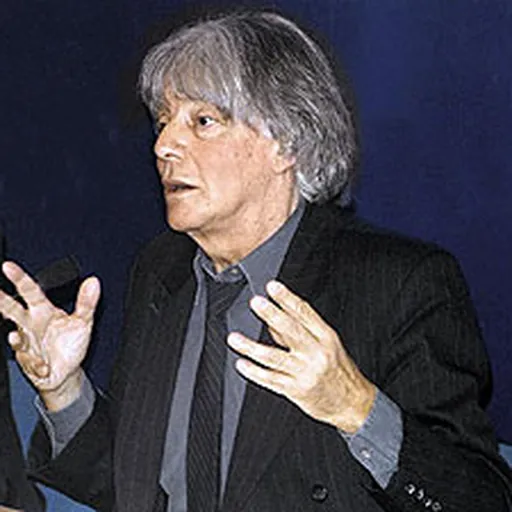
About André Glucksmann
Lived 1937 – 2015 (aged 78). André Glucksmann was a French philosopher, political scientist, writer, essayist and thinker.
André Glucksmann (; 19 June 1937 – 10 November 2015) was a French philosopher, activist, and writer. He was a leading figure of the new philosophers. Glucksmann began his career as a Marxist, who went on to reject Marxism–Leninism and "real-existing socialism" in the popular book La Cuisinière et le Mangeur d'Hommes, and later positioned himself on the Chinese side of the Sino-Soviet split, becoming an outspoken critic of the Soviet Union and post-Soviet Russian foreign policy. He was a strong supporter of human rights. In later years, he opposed the claim that Islamic terrorism is the product of the clash of civilizations between Islam and the Western world.
Early years André Glucksmann was born in 1937 in Boulogne-Billancourt, the son of Ashkenazi Jewish parents from Austria-Hungary. His father was from Czernowitz in northern Bukovina, which later became part of Romania and is now in Ukraine, and his mother from Prague, which later became the capital of Czechoslovakia.
Glucksmann's father, , was a Soviet spy, arrested for espionage on 17 May 1940, and sent to a camp near London. He died on 2 July 1940, in the sinking of the SS Arandora Star, which was taking him to Canada to be interned as an “enemy agent.” His mother and sister were active in the French Resistance. The family "narrowly escaped deportation to the camps" during the Holocaust, which influenced Glucksmann's developing ideas of "the state as the ultimate source of barbarism". In the years after the Vietnam War, Glucksmann rose to national prominence after expressing his support for Vietnamese boat people. Both had formerly been well known Marxists. Shortly afterwards, they became known, along with others of their generation who rejected Marxism, as New Philosophers, a term coined by Lévy. After the fall of the Berlin Wall, Glucksmann became an advocate for the use of nuclear power. He supported the NATO intervention in Serbia in 1999. He also called for Chechnya to become independent.
Philosophy
In his book Dostoyevsky in Manhattan, Glucksmann asserts that nihilism, particularly as depicted by Dostoyevsky in his novels Demons and The Brothers Karamazov, is the 'characteristic form' of modern terrorism. Drawing on Ivan Karamazov's dictum that "If there is no God, everything is permitted", Glucksmann argues: "The inner nature of nihilistic terrorism is that everything is permissible, whether because God exists and I am his representative, or because God does not exist and I take his place."
Glucksmann criticised the notion that Islamic terrorism is a product of the clash of civilizations between Islam and the West, arguing that the first victims of Islamic terrorism are Muslims. He wrote: "Why do the 200,000 slaughtered Muslims of Darfur not arouse even half a quarter of the fury caused by 200-times fewer dead in Lebanon? Must we deduce that Muslims killed by other Muslims don't count – whether in the eyes of Muslim authorities or viewed through the bad conscience of the West?"
Later years Glucksmann supported military action by the West in Afghanistan and Iraq, and was highly critical of Russian foreign policy, supporting for example Chechen independence (for which he was posthumously awarded the Order of Friendship by the Chechen government in exile). He was against the Abkhazian and South Ossetian independence from Georgia, arguing that Georgia is essential to maintaining European Union "energy independence", vis-a-vis Russia, through access to oil and gas reserves in the former Soviet republics, stating: "If Tbilisi falls, there will be no way to get around Gazprom and guarantee autonomous access to the gas and petroleum wealth of Azerbaijan, Turkmenistan, and Kazakhstan." Glucksmann cited this as evidence that the Russian people want to cut off gas to Ukraine and Europe. He wrote: "Consider a popular song performed by a military choir in Moscow. Its chorus depicts the 'radiant future' that Gazprom is preparing: 'Europe has a problem with us? We will cut off its gas...' The Russian public loves the song."
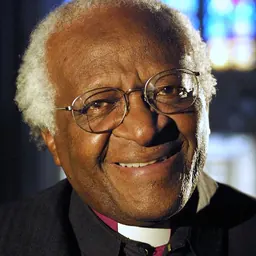
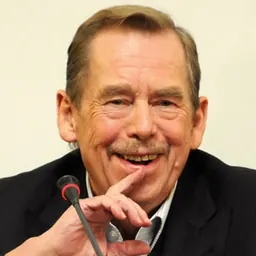
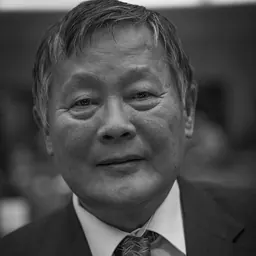
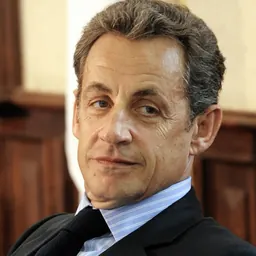
Glucksmann supported Nicolas Sarkozy for the 2007 French presidential election. In August 2008, he co-signed an open letter with Václav Havel, Desmond Tutu, and Wei Jingsheng calling upon the Chinese authorities to respect human rights both during and after the 2008 Summer Olympics. He was also a signatory of the Prague Declaration on European Conscience and Communism.
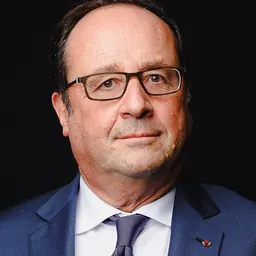
Death Glucksmann died in Paris on 10 November 2015 at the age of 78. In reaction to his death, the-then French president François Hollande said that Glucksmann always "listened to the suffering of peoples". A Child's Rage (Une rage d'enfant) (2006) The Discourse of Hate (Le Discours de la haine) (2004) West Versus West (Ouest contre Ouest) (2003) Dostoevsky in Manhattan (Dostoïevski à Manhattan) (2002) The Third Death of God (La Troisième Mort de Dieu) (2000) Silence, Killing in Process (Silence, on tue) (1986) (with ) Stupidity (La Bêtise) (1985) Cynicism and Passion (Cynisme et passion) (1981/1999) The Force of Vertigo (La Force du vertige) (1983) The Master Thinkers (Les Maîtres penseurs) (1977)
Interviews "An Interview with Andre Glucksman". Telos 33 (Fall 1977). New York: Telos Press. "Solzhenitsyn's Children", from 49:30
Don’t just read it —
keep it.
Full-length biographies made to live with: read them, listen on the way to work, watch them tonight.
- E-book
- Audio
- Video
Instant download · yours to keep · every purchase keeps this site free
Important facts
People in André Glucksmann's life
Named in this biography and alive at the same time
Related people
Same field, nearest in time


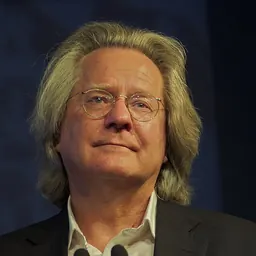
Contemporaries
People whose lives overlapped André Glucksmann's



Frequently asked questions
Who was André Glucksmann?
French philosopher (1937–2015)
When was André Glucksmann born?
André Glucksmann was born on 19 June 1937 in Boulogne-Billancourt.
When did André Glucksmann die?
André Glucksmann died on 10 November 2015 in 10ᵗʰ arrondissement of Paris.
What was André Glucksmann's occupation?
André Glucksmann was a philosopher, political scientist, writer, essayist and thinker.
What nationality was André Glucksmann?
André Glucksmann was French.
Sources & further reading
Cite this page
APA: Biography.guide. (2026). André Glucksmann. https://biography.guide/andre-glucksmann/
MLA: "André Glucksmann." Biography.guide, https://biography.guide/andre-glucksmann/.
Chicago: "André Glucksmann." Biography.guide. https://biography.guide/andre-glucksmann/.
Data last updated: 2026-09-21 · Spot an error? Report a correction.
Portrait: Wikimedia Commons · author & licence
Page generated 2026-09-27 05:00 UTC