
About Anders Åslund
Born 1952. Anders Åslund is a Swedish economist, diplomat and university teacher.
Per Anders Åslund (; born 17 February 1952) is a Swedish economist and former Senior Fellow at the Atlantic Council. He is also a chairman of the International Advisory Council at the Center for Social and Economic Research (CASE).
His work focuses on economic transition from centrally planned to market economies. Åslund served as an economic adviser to the governments of Kyrgyzstan, Russia, and Ukraine and from 2003 was director of the Russian and Eurasian Program at the Carnegie Endowment for International Peace. Åslund was an advocate of early, comprehensive, and radical economic reforms in Russia and Eastern Europe. He worked at the Peterson Institute for International Economics from 2006 to 2015. In 2013, neoconservative David Frum wrote that "Anders Aslund at the Peterson Institute is one of the world's leading experts on the collapse of the planned Soviet economy." From 2010 to 2013 and again in 2022 he contributed to The Moscow Times, an independent English-language newspaper; he is also a long-time contributor to the Kyiv Post.
Anders Åslund lives in Washington, DC, with his wife, Anna, and their two children.
Åslund in Sweden From 1989 to 1994, Åslund worked as a professor of International Economics at the Stockholm School of Economics; and in 1989 he became the founding director of the Stockholm Institute of East European Economics.
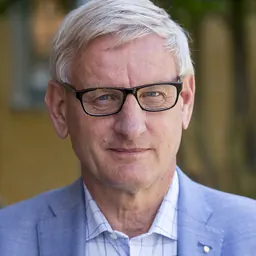
On 22 April 1990 Åslund published a controversial article on Dagens Nyheter, drawing parallels between the collapsing communist regimes in Eastern Europe and the social democratic policies in Sweden. He argued that Sweden had too large a public sector; supported communist dictatorships, such as Cuba, in the Third World; and had excessive state intervention in all areas of life. The ruling Swedish Social Democratic Party opposed the views of Åslund in dozens of articles. In June 1990, Social Democratic Prime Minister Ingvar Carlsson voiced public disagreement with Åslund in the Riksdag. However, opposition leader Carl Bildt (Moderate Party) defended Åslund.
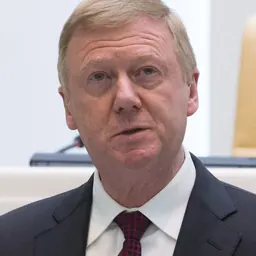
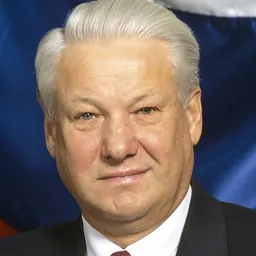
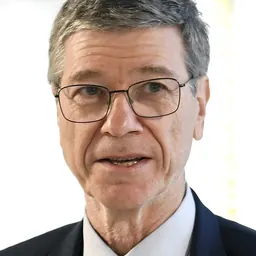
Involvement in Russian economic reform From November 1991 to January 1994, Åslund worked with Jeffrey Sachs and David Lipton as a senior advisor to the Russian reform government under President Boris Yeltsin and Acting Prime Minister Yegor Gaidar. He worked also with Deputy Prime Ministers Anatoly Chubais and Boris Fedorov. Åslund summarized his views in his book How Russia Became a Market Economy.
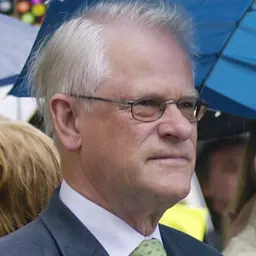
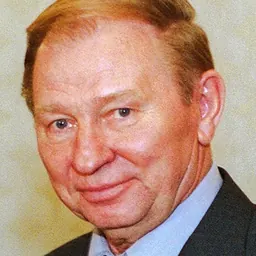
Other work After his experiences in Russia, Åslund worked as an economic advisor to President Leonid Kuchma of Ukraine from 1994 to 1997, and from 1998 to 2004, to President Askar Akayev of Kyrgyzstan. Åslund has also worked substantially with economic policy in the Baltic countries, first as a member of the International Baltic Economic Commission from 1991 to 1993, and later as an informal advisor to Latvian Prime Minister Valdis Dombrovskis from 2009. (Dombrovskis was prime minister until 2014.)
Work in Ukraine
In 2016, Åslund was appointed to the supervisory board of Ukraine's 23rd largest bank, Kredyt Dnipro, owned by Ukrainian oligarch Viktor Pinchuk.
From July 2004-January 2005, Åslund co-chaired a Blue Ribbon Commission on a Reform Program for the Next Ukrainian President, sponsored by the United Nations Development Program. From September 2009-February 2010, he co-chaired an Independent Commission of International Experts on Economic Reform for the Ukrainian Government, sponsored by the Swedish and Dutch governments. From May 2014-April 2016, Åslund worked as an Advisor to the Ukrainian Minister of Economy.
From January 2016-August 2020, Åslund was a non-executive director of Bank Credyt Dnipro, Ukraine, and from June 2018-September 2020, he was a non-executive director of Ukrzaliznytsia (the Ukrainian state railways), Ukraine. He resigned in September 2020, complaining that "I feel neither wanted by the shareholder nor offered viable working conditions, while the legal liability is mine."
Books Gorbachev's Struggle for Economic Reform, Cornell University Press, 1989 Market Socialism or the Restoration of Capitalism?, Cambridge University Press, 1991 Post-communist Economic Revolutions: How Big A Bang?, Routledge, 1992 The Post-Soviet Economy: Soviet and Western Perspectives, Palgrave MacMillan, 1992 Changing the Eco System, Pinter Publishers, 1994 Economic Transformation in Russia, St. Martin's Press, 1994 How Russia Became a Market Economy, Brookings Institution Press, 1995 Russian Economic Reform at Risk, Pinter Publishers, 1995 Russia's Economic Transformation in the 1990s, Pinter Publishers, 1998 Russia After Communism, Carnegie Endowment for International Peace, 1999 Economic Reform in Ukraine: The Unfinished Agenda, Routledge, 2000 Revolution in Orange: The Origins of Ukraine's Democratic Breakthrough, Carnegie Endowment for International Peace, 2006 Russia's Capitalist Revolution: Why Market Reform Succeeded and Democracy Failed, Peterson Institute for International Economics, 2007 Europe After Enlargement, Cambridge University Press, 2007 Building Capitalism: The Transformation of the Former Soviet Bloc, Cambridge University Press, 2008 The Challenges of Globalization: Imbalances and Growth, Peterson Institute for International Economics, 2008 How Ukraine Became a Market Economy and Democracy, Peterson Institute for International Economics, 2009 (with Andrew Kuchins) The Russia Balance Sheet, Peterson Institute for International Economics, 2009 Russia After the Global Economic Crisis, Peterson Institute for International Economics, 2010 The Last Shall Be the First: East European Financial Crisis, 2008–10, Peterson Institute for International Economics, 2010 (with Valdis Dombrovskis) How Latvia Came Through the Financial Crisis, Peterson Institute for International Economics, 2011 (with Gary Clyde Hufbauer) The United States Should Establish Permanent Normal Trade Relations with Russia, Peterson Institute for International Economics, 2012 How Capitalism Was Built: The Transformation of Central and Eastern Europe, Russia, the Caucasus, and Central Asia, Cambridge University Press, 2013 (with Simeon Dyankov)The Great Rebirth: Lessons from the Victory of Capitalism over Communism, Peterson Institute for International Economics, 2014 Ukraine: What Went Wrong and How to Fix It, Peterson Institute for International Economics, 2015 (with Simeon Dyankov) Europe's Growth Challenge, Oxford University Press, 2017 Putin's Economic Policy and Its Consequences, Oxford University Press, 2019 Russia's Crony Capitalism: The Path from Market Economy to Kleptocracy, Yale University Press, 2019
Don’t just read it —
keep it.
Full-length biographies made to live with: read them, listen on the way to work, watch them tonight.
- E-book
- Audio
- Video
Instant download · yours to keep · every purchase keeps this site free
Important facts
People in Anders Åslund's life
Named in this biography and alive at the same time


Related people
Same field, nearest in time



Contemporaries
People whose lives overlapped Anders Åslund's

Frequently asked questions
Who is Anders Åslund?
Swedish economist
When was Anders Åslund born?
Anders Åslund was born on 17 February 1952 in Karlskoga.
What is Anders Åslund's occupation?
Anders Åslund is an economist, diplomat and university teacher.
What nationality is Anders Åslund?
Anders Åslund is Swedish.
Sources & further reading
Cite this page
APA: Biography.guide. (2026). Anders Åslund. https://biography.guide/anders-aslund/
MLA: "Anders Åslund." Biography.guide, https://biography.guide/anders-aslund/.
Chicago: "Anders Åslund." Biography.guide. https://biography.guide/anders-aslund/.
Data last updated: 2026-09-25 · Spot an error? Report a correction.
Page generated 2026-09-27 05:11 UTC