
About Amy Chua
Born 1962. Amy Chua is an American lawyer, writer, university teacher, economist and jurist.
Amy Lynn Chua (Chinese: 蔡美儿; born October 26, 1962) is an American legal scholar, corporate lawyer, and writer. She is the John M. Duff Jr. Professor of Law at Yale Law School with an expertise in international business transactions, law and development, ethnic conflict, and globalization. She joined the Yale faculty in 2001 after teaching at Duke Law School for seven years. Prior to teaching, she was a corporate law associate at Cleary, Gottlieb, Steen & Hamilton.
Chua is also known for her parenting memoir Battle Hymn of the Tiger Mother. In 2011, she was named one of Time magazine's 100 most influential people, one of The Atlantic Brave Thinkers, and one of Foreign Policy Global Thinkers.
Early life and education Chua was born in Champaign, Illinois, to ethnic Chinese parents with Hoklo ancestry who emigrated from the Philippines. Her parents raised her speaking Hokkien. Her father, Leon O. Chua, is a professor of electrical engineering and computer science at the University of California, Berkeley. His ancestral hometown is Quanzhou, Fujian.
Chua's mother was born in China in 1936, before moving to the Philippines at the age of two. When she was 8 years old, her family moved to Berkeley, California.
Chua described herself as an "ugly kid" during her school days; she was bullied in school for her foreign accent (which she has since lost) and was the target of racial slurs from several classmates. She went to El Cerrito High School, in El Cerrito, where she graduated as valedictorian of her class. In college, she graduated Phi Beta Kappa and magna cum laude with a Bachelor of Arts in economics in 1984 from Harvard College, where she was named an Elizabeth Cary Agassiz Scholar and a John Harvard Scholar. She obtained her J.D., cum laude, in 1987 from Harvard Law School. As a law student, she became the first Asian American officer of the Harvard Law Review after becoming the journal's executive editor.
After law school, Chua clerked for Chief Judge Patricia M. Wald of the United States Court of Appeals for the D.C. Circuit. and named by Tony Giddens in The Guardian as one of the "Top Political Reads of 2003", examines how globalization and democratization since 1989 have affected the relationship between market-dominant minorities and the wider population.
Her second book, Day of Empire: How Hyperpowers Rise to Global Dominance – and Why They Fall (2007), examines seven major empires and posits that their success depended on their tolerance of minorities.
Chua's third book, Battle Hymn of the Tiger Mother, published in January 2011, is a memoir about her parenting journey using strict Confucianist child rearing techniques, which she claims is typical for Chinese immigrant parents. Despite being sometimes interpreted as a how-to manual for parenting, the book has been critically viewed as an account "of how children can become rebellious and alienated when one-size-fits-all education philosophies are applied, regardless of their personality or aptitudes." It was an international bestseller in the United States, South Korea, Poland, Israel, Germany, United Kingdom, and China, and has been translated into 30 languages. The book also received a huge backlash and media attention and ignited global debate about different parenting techniques and cultural attitudes that foster such techniques. The uproar provoked by the book included death threats and racial slurs directed at Chua, and calls for her arrest on child-abuse charges. is The Triple Package: How Three Unlikely Traits Explain the Rise and Fall of Cultural Groups in America (published in February 2014). The book received mixed reviews. Lucy Kellaway, writing for Financial Times, called it "the best universal theory of success I've seen." Emma Brockes, writing in The Guardian, commended the book for "draw[ing] on eye-opening studies of the influence of stereotypes and expectations on various ethnic and cultural groups ... The authors' willingness to pursue an intellectual inquiry that others wouldn't is bracing." However, The Guardian also published a satirical review-cum-summary written by John Crace, who used one of the Triple Package traits—impulse control—to tell potential readers to "resist this book." The book was also roundly criticized for cultural stereotyping and ignoring additional factors such as intergenerational wealth transmission. Forbes writer Susan Adams criticized it for racist overtones and said Chua's suggestion that certain cultural groups are more conventionally successful than others given her "three-pronged prescription [for success]" is at best "pop psychology."
In February 2018, Chua's fifth book was published. Titled Political Tribes: Group Instinct and the Fate of Nations, it examines how group loyalty often outweighs any other ideological considerations. She argues that the failure to recognize the place of group loyalty has played a major role in the failure of US foreign policy and the rise of Donald Trump. The book received overwhelmingly positive reviews from across the political spectrum. David Frum, writing for The New York Times, praised Chua for her willingness to approach "the no-go areas around which others usually tiptoe." The Washington Post described the book as "compact, insightful, disquieting, yet ultimately hopeful," and Ezra Klein called the book "fascinating" on his podcast.
The book received a few criticisms. The Guardian called it "a well-intentioned book that never quite comes together." The Financial Times stated that it was "an important book" and supported Chua's argument "that America's liberal elite has contributed to Trump's rise by failing to acknowledge its own sense of tribalism"; it did, however, also state that it left the "crucial question" of how to create a "non-tribal world" unanswered.
Articles by Chua Chua published the article "Why Chinese Mothers Are Superior" on January 8, 2011, discussing the differences between Western and Asian American parenting styles. For instance, she listed things that her daughters are not allowed to do, such as attend sleepovers, engage in playdates, watch TV, play computer games, get grades below A, or be a part of school plays. Throughout her article, she uses the terms "Western" and "Asian" but says that those are loose terms. She explains that there are parents that are not necessarily Chinese, but still have similar parenting techniques. On the other hand, there are also Chinese parents who grew up in the West and choose not to adopt that style of parenting.
Chua is known for mentoring students from marginalized communities and for helping students get judicial clerkships. In 2018, HuffPost and The Guardian alleged that Chua had advised female students to dress "outgoing" when seeking employment. Chua denied this claim. In 2019, Chua agreed not to drink or socialize with students outside of class for a limited time. In 2021, Chua was accused of drunkenly partying with students and federal judges. She agreed to a one-year restriction of her teaching duties as a small group professor.
Chua's elder daughter, Sophia Chua-Rubenfeld Bravo, is a graduate of Harvard University and Yale Law School. Sophia previously served as a clerk for Judge Britt C. Grant, U.S. Court of Appeals, Eleventh Circuit (2018–2019) and clerk for Supreme Court Justice Brett Kavanaugh (2019–2020). She is currently an attorney based in Atlanta, Georgia.
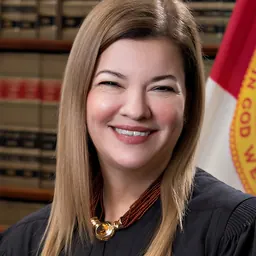
Chua's youngest daughter, Lulu Chua-Rubenfeld, is a graduate of Harvard University and Harvard Law School. Lulu previously served as a judicial law clerk for Judge Roy K. Altman, U.S. District Court for The Southern District of Florida (2023–2024) and judicial law clerk for Judge Barbara Lagoa, U.S. Court of Appeals (2024–2025).
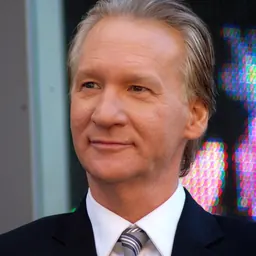
Television appearances Chua has made appearances on various TV programs. Some include The Today Show, Good Morning America, The View, Charlie Rose, and Real Time with Bill Maher.
Don’t just read it —
keep it.
Full-length biographies made to live with: read them, listen on the way to work, watch them tonight.
- E-book
- Audio
- Video
Instant download · yours to keep · every purchase keeps this site free
Important facts
Family & relationships
People in Amy Chua's life
Named in this biography and alive at the same time






Related people
Same field, nearest in time



Contemporaries
People whose lives overlapped Amy Chua's






Frequently asked questions
Who is Amy Chua?
American law professor and writer (born 1962)
When was Amy Chua born?
Amy Chua was born on 26 October 1962 in Champaign.
What is Amy Chua's occupation?
Amy Chua is a lawyer, writer, university teacher, economist and jurist.
What nationality is Amy Chua?
Amy Chua is American.
Sources & further reading
Cite this page
APA: Biography.guide. (2026). Amy Chua. https://biography.guide/amy-chua/
MLA: "Amy Chua." Biography.guide, https://biography.guide/amy-chua/.
Chicago: "Amy Chua." Biography.guide. https://biography.guide/amy-chua/.
Data last updated: 2026-09-20 · Spot an error? Report a correction.
Page generated 2026-09-27 05:26 UTC