
Amrut Rao
Maratha noble
About Amrut Rao
Lived 1770 – 1824 (aged 53–54).
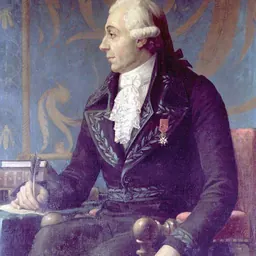
Amrut Rao (c. 1770 – 6 September 1824) was a Maratha noble and the adopted son of Raghunathrao. In 1803, Yashwant Rao Holkar invaded Pune and deposed his adoptive brother, Peshwa Baji Rao II. Following this, Holkar established an ad hoc council nominally headed by Amrut Rao and administered the Peshwa government in his name.
Yashwant Rao Holkar also installed Amrut Rao's son, Vinayak Rao, as Peshwa to strengthen the legal legitimacy of his administration, as Vinayak Rao had been adopted by the widow of the deceased Peshwa Madhavrao II. However, Baji Rao II sought assistance from the British East India Company, whose advance forced Amrut Rao and his son to flee Pune.
Subsequently, Amrut Rao signed a treaty with the British, agreeing to relinquish all claims to the Peshwa's office in exchange for a pension and an estate in the Bundelkhand region.
Early life Amrut Rao was born around 1770. He was adopted by Raghunathrao, who served as the 11th Peshwa and allied with the British East India Company in 1775. However, the British later signed the Treaty of Salbai (1782) with Raghunathrao's rivals among the Marathas, recognizing Madhavrao II as the Peshwa. Raghunath Rao died a year later in 1783, and his family was placed in confinement by the minister Nana Fadnavis. His wife Anandi Bai, sons Baji Rao II and Chimaji Rao II, and adopted son Amrut Rao were all imprisoned at Kopargaon until 1793. Subsequently, they were moved to Anandwali near Nashik. Later in April 1794, they were confined to Shivneri Fort.
After the death of Madhavrao II, Nana Fadnavis and powerful nobleman Daulat Rao Scindia installed Amrut Rao's adoptive brothers—first Chimaji Rao and then Baji Rao II—as titular Peshwas in quick succession. After Fadnavis' death, Daulat Rao Scindia held the actual power, while Baji Rao II remained a puppet Peshwa.
Conflict with Daulat Rao Scindia
The widows of Daulat Rao Scindia's predecessor, Mahadji Scindia, struggled with Amrut Rao for control of the Scindia court. In 1798, Scindia decided to transfer the widows to Ahmednagar and keep them in confinement there. However, Muzaffar Khan, an officer loyal to the widows, rescued them near Koregaon Bhima while Scindia's men were escorting them to Ahmednagar. Khan brought the widows to Amrut Rao, who happened to be nearby, and Amrut Rao granted them protection.
On the night of 7 June 1798, Scindia sent five infantry battalions under the command of a French officer, Captain Du Prat, to retrieve the widows. However, Amrut Rao's forces repelled Scindia's troops. Scindia then initiated negotiations, offering the widows the choice of their residence. Amrut Rao arrived near Pune to meet Scindia on their behalf and set up camp on the banks of the Mula River, near the Khadki bridge. Scindia's father-in-law and general, Sarji Rao Ghatge (also known as Sarjerao), led two battalions to the riverside under the pretext of maintaining order during the local Muharram procession. However, his men opened fire on Amrut Rao's camp with 25 cannons. As Amrut Rao's troops dispersed, Ghatge's forces attacked and plundered the camp. The widows subsequently fled to Kolhapur.
Holkar established an ad hoc council headed by Amrut Rao and administered the Peshwa's government in his name. He also attempted to legitimize his government by appointing Vinayak Rao as the new Peshwa. Meanwhile, Baji Rao II had fled to Vasai and sought assistance from the British. Holkar and Amrut Rao unsuccessfully attempted to gain British support for their government.
Amrut Rao eventually became known for his religious devotion and charitable acts. He once paid off the debts of all persons imprisoned for debt in Benares. In 1814, he undertook a sacred journey from Benaras to the Baidyanath temple in Deoghar, accompanied by nearly 2,000 armed men, including soldiers and attendants.
He died on 6 September 1824 at Secrole near Benares. His son and successor Vinayak Rao died childless in 1853. Vinayak Rao's adopted sons, Narayana Rao and Madho Rao, joined the 1857 uprising after their pension was stopped by the Company. The revolt was crushed: Narayana Rao died in prison, while Madho Rao was allowed to remain a landlord due to his young age at the time.
Narayana Rao's daughter was later awarded a state in Banda and Chitrakoot, with guarantees from Scindia and Holkar.
Don’t just read it —
keep it.
Full-length biographies made to live with: read them, listen on the way to work, watch them tonight.
- E-book
- Audio
- Video
Instant download · yours to keep · every purchase keeps this site free
Important facts
Family & relationships
People in Amrut Rao's life
Named in this biography and alive at the same time

Contemporaries
People whose lives overlapped Amrut Rao's





Frequently asked questions
Who was Amrut Rao?
maratha noble
When was Amrut Rao born?
Amrut Rao was born in 1770.
When did Amrut Rao die?
Amrut Rao died in 1824 in Varanasi district.
What was Amrut Rao known for?
Amrut Rao was known for Maratha confederacy.
Sources & further reading
Cite this page
APA: Biography.guide. (2026). Amrut Rao. https://biography.guide/amrut-rao/
MLA: "Amrut Rao." Biography.guide, https://biography.guide/amrut-rao/.
Chicago: "Amrut Rao." Biography.guide. https://biography.guide/amrut-rao/.
Data last updated: 2026-09-20 · Spot an error? Report a correction.
Page generated 2026-09-27 04:58 UTC