
About Amos Kenan
Lived 1927 – 2009 (aged 82). Amos Kenan was an Israeli journalist, sculptor, painter, writer, poet and screenwriter.
Amos Kenan , also Amos Keinan (May 2, 1927 – August 4, 2009), was an Israeli columnist, painter, sculptor, playwright and novelist.
Biography Amos Levine (later Kenan) was born in south Tel Aviv. His parents were secular socialists. His father was a Gdud HaAvoda veteran and construction worker. At one point, the family lived in Argentina for several years when his father took work there. When the family returned, his father was injured in a work accident and subsequently became a clerk. He was a member of Hashomer Hatzair youth movement. In 1946 he met the poet Yonatan Ratosh and joined Ratosh's Canaanite movement, which he remained identified with until the early 1950s. He was among the founders of the movement's magazine, "Alef", in which he published his first book in 1949. Kenan dropped out of high school to become a factory worker.
Kenan was a member of the Lehi (לח״י - לוחמי חירות ישראל) underground, which the British authorities called “the Stern Gang.” In 1989 he told The Guardian: "I joined because it was an anti-imperialist and anti-colonialist organisation…We didn't fight the Arabs." During the 1948 Arab–Israeli War he fought in the 8th Brigade of the Israel Defense Forces, under the command of Yitzhak Sadeh, and was wounded. The Independents Daphna Baram writes that Kenan's account of the attack on the village and his role in it varied over the course of his life. Historian Ilan Pappé writes that Kenan participated in the Al-Dawayima massacre.
From April 1950 until June 1952, Kenan wrote a satirical column in Haaretz called "Uzi & Co.", succeeding Benjamin Tammuz, who had started the column in 1948. "Uzi & Co.", regarded as the first anti-establishment column in Israel, took particular aim at the religious establishment. In 1952, Kenan was arrested, along with his friend and former Lehi colleague Shaltiel Ben-Yair, in connection with an assassination attempt on Israeli Transportation Minister, David-Zvi Pinkas, in the wake of Pinkas's decision to save fuel by prohibiting private car owners from driving on Shabbat. The two were arrested as they were leaving Pinkas' home, but said nothing under interrogation and were acquitted by the district court for lack of evidence. Kenan eventually told his wife, Nurith Gertz, as well as close friends and colleagues, that he really was involved in the bombing. He began writing for Tarzan Magazine under a pen name. In Paris Kenan participated in meetings between Arabs and Israelis (mostly Communists, although Kenan was not) arranged by the Egyptian Communist emigre Henri Curiel. He also arranged a meeting between himself, Avnery, and Jean-Paul Sartre in which Sartre (in Avnery's account) praised the Israeli left.
He returned to Israel in 1962 and began writing a weekly column in Yediot Aharonot that ran for forty years. In 1962, Kenan married Nurith Gertz, a literary scholar. They had two daughters, the journalist Shlomzion Kenan and the poet and singer/songwriter Rona Kenan. He was also the paper's food critic. He edited a newspaper named "Tzipor HaNefesh" ("The bird of the soul") with Dahn Ben-Amotz, and contributed articles to The New York Times and The Nation. After the Six-Day War he was sent by the Israeli Ministry of Foreign Affairs to interview intellectuals such as Jean-Paul Sartre, Herbert Marcuse and Noam Chomsky on the Israeli-Palestinian Conflict.
During the 1970s he directed several films, including How Wonderful. He wrote songs for Arik Lavi, The High Windows, HaGashash HaHiver and others. His play "The Lost Train" was presented in the Cameri Theater. He wrote the screenplay to Uri Zohar's film, A Hole in the Moon and acted in Moshé Mizrahi's film Customer of the Off Season. His plays include The Lion, The Balloon, Maybe It's An Earthquake, Something Not Normal, Friends Talk About Jesus and Still Believe in You. In the 1970s, Kenan was a member of the Israeli Council for Israeli-Palestinian Peace. In the late 1970s he joined Ariel Sharon's short-lived Shlomtzion Party, named after Kenan's daughter.
During the 1980s, Kenan participated and moderated talks with Palestinian writers and PLO officials on behalf of the United Nations in Kinshasa, Senegal and Bangladesh amongst other countries, as part of the "Committee on the Exercise of the Inalienable Rights of the Palestinian People."
In 1984 he published The Road to Ein Harod, a dystopian novel which portrays a future Israel in the grip of a civil war following a military coup. It was translated into eight languages and was adapted into a film in 1990.
His book To Your Country, To Your Homeland served as a basis for Moti Kirschenbaum's documentary series To the Water Wells, which portrayed a meeting between two patriots in disagreement — Kenan and Naomi Shemer. He translated The Good Soldier Švejk into Hebrew. His paintings and sculptures have been displayed in various galleries in Israel.
Kenan died in Tel Aviv in 2009, and was buried at Kibbutz Einat. He had struggled for years with Alzheimer's disease.
Published worksBooks in HebrewWith Whips and Scorpions (satire), Tel Aviv, 1952 [Be-Shotim U-ve-Akrabim] At the Station (prose), Ladori, 1963 [Ba-Tahanah] Book of Pleasures (non-fiction), Levin-Epstein, 1968 [Sefer Ha-ta`anugot] The Blue Door (novella), Schocken, 1972 [Ha-Delet ha-Kehulah] Shoah II (prose), A.L., 1975 [Shoah 2] Under the Flowers (stories), Prosa, 1979 [Mitahat la-Prahim] On Your Country, On Your Homeland (non-fiction), Edanim, 1981 [El Artzech, El Moladetech] The Book of Satire (satire), Keter, 1984 [Sefer ha-Satirot] The Road to Ein Harod (novel), Am Oved, 1984 [Ha-Derech le-Ein Harod] Love in the End (novel), Keter, 1988 [Et vahev be-Sufah] Tulips our Brothers (stories), Keter, 1989 [Tziv`onim Aheinu] Poems, Tag, 1995 [Shirim] Block 23 (novellas), Zmora Bitan, 1996 [Block 23] Rose of Jericho (essays), Zmora Bitan, 1998 [Shoshanat Yericho] End of Reptile Era (poetry), Zmora Bitan, 1999 [Ketz Idan ha-Zochalim] The Escape to Prison (stories), Zmora Bitan, 2003 [Habricha el Hakele]Books translated into EnglishPerformed Plays''' The Lion The Balloon, 1959 The Lost Train, 1969 Maybe It's An Earthquake, 1970 Something Not Normal [Ohel, 1970] Friends Talk About Jesus Still Believe in You [Cameri, 1974]
Don’t just read it —
keep it.
Full-length biographies made to live with: read them, listen on the way to work, watch them tonight.
- E-book
- Audio
- Video
Instant download · yours to keep · every purchase keeps this site free
Important facts
People in Amos Kenan's life
Named in this biography and alive at the same time

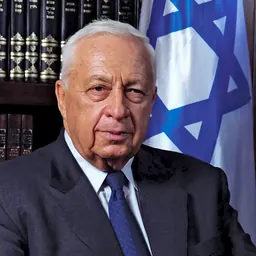

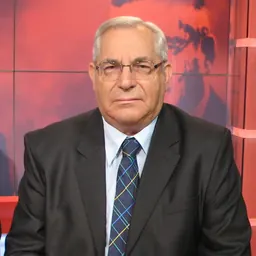


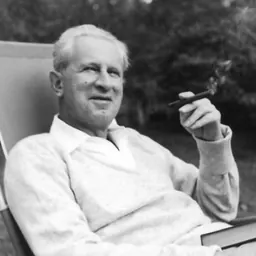
Related people
Same field, nearest in time

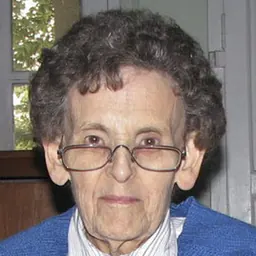

Contemporaries
People whose lives overlapped Amos Kenan's


Frequently asked questions
Who was Amos Kenan?
Israeli writer, journalist and artist (1927-2009)
When was Amos Kenan born?
Amos Kenan was born on 2 May 1927 in Tel Aviv.
When did Amos Kenan die?
Amos Kenan died on 4 August 2009 in Tel Aviv.
What was Amos Kenan's occupation?
Amos Kenan was a journalist, sculptor, painter, writer, poet and screenwriter.
What nationality was Amos Kenan?
Amos Kenan was Israeli.
Sources & further reading
Cite this page
APA: Biography.guide. (2026). Amos Kenan. https://biography.guide/amos-kenan/
MLA: "Amos Kenan." Biography.guide, https://biography.guide/amos-kenan/.
Chicago: "Amos Kenan." Biography.guide. https://biography.guide/amos-kenan/.
Data last updated: 2026-09-20 · Spot an error? Report a correction.
Page generated 2026-09-27 05:17 UTC