
About Amiel Weeks Whipple
Lived 1817 – 1863 (aged 45). Amiel Weeks Whipple was an American explorer, military officer and botanist.
Amiel Weeks Whipple (October 21, 1817 – May 7, 1863) was an American military officer and topographical engineer. He served as a brigadier general in the American Civil War, where he was mortally wounded at the Battle of Chancellorsville. Among his many survey assignments for the US War Department, he participated in the difficult survey of the new United States and Mexico boundary and led the survey of a possible transcontinental railroad route along the 35th parallel from Arkansas to Los Angeles.
Biography Whipple was born to David and Abigail Brown (Pepper) Whipple in Greenwich, Massachusetts. He grew up in Concord, Massachusetts, where his father owned an inn. He was teaching school at Concord in 1834 when he applied to the United States Military Academy at West Point. After he was turned down by the academy, he attended Amherst College until 1837, when he was finally accepted to West Point. Whipple graduated fifth in the class of 1841. His early career included surveying the Patapsco River, sounding and mapping the approaches to New Orleans, and surveying Portsmouth Harbor. From 1844 to 1849, he was assigned to a survey of the northeastern boundary of the United States, serving under James Duncan Graham.
In 1848, Whipple was assigned to the United States Boundary Commission, tasked with surveying the new boundary between the US and Mexico resulting from the Mexican–American War. For a time, he served as the interim chief surveyor for the commission until William H. Emory was named to the position. Heading east from San Diego, the survey parties traveled through some of the most rugged and remote terrain in the country. Compounding the difficulty was the extreme desert heat and hostile Apache Indians. Whipple accomplished his assigned surveys in spite of these challenges and was promoted to first lieutenant on April 24, 1851.
In 1853, Congress authorized the Pacific Railroad Surveys to select the best route for a transcontinental railroad. Whipple was directed to lead one of those surveys along the 35th parallel from Fort Smith, Arkansas, to Los Angeles. The Whipple expedition left Fort Smith on July 15, 1853, with a group of seventy men, including soldiers, teamsters, and scientists. Among the scientists were John Milton Bigelow, a medical doctor and botanist; Jules Marcou, a Swiss geologist; and Balduin Möllhausen, a German artist and a protege of Alexander von Humboldt. Whipple's party made good progress through Indian Territory (now Oklahoma), the Texas panhandle and the New Mexico Territory, reaching Albuquerque on October 5. After Albuquerque, they were joined by frontiersman Antoine Leroux who helped to guide the surveyors through the most difficult part of the journey to California. They reached California on February 7 after a near-disastrous crossing of the Colorado River, then crossed the Mojave Desert and reached Los Angeles on March 20, 1854. thumb A drawing from the Whipple Expedition (1853 to 1854) which shows Whipple with the southwest Indian tribe.
The findings of the Whipple expedition, along with those of the other transcontinental survey parties, were published by the government in a massive twelve-volume report titled the Pacific Railroad Reports. In addition to reports on topography, geology, botany and zoology, Whipple wrote a lengthy essay on the southwestern Indian tribes that the expedition had encountered.
Numerous plant taxa were named in his honor, including the genus Whipplea and species Hesperoyucca whipplei, and Sclerocactus whipplei.
The fish Cyprinella whipplei Girard, 1856 was named after him, as well as Etheostoma whipplei.
Don’t just read it —
keep it.
Full-length biographies made to live with: read them, listen on the way to work, watch them tonight.
- E-book
- Audio
- Video
Instant download · yours to keep · every purchase keeps this site free
Important facts
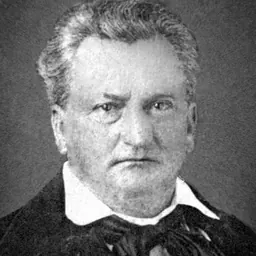
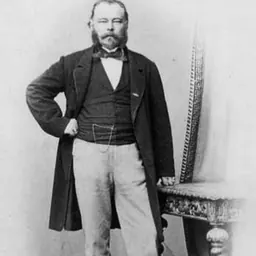
People in Amiel Weeks Whipple's life
Named in this biography and alive at the same time



Related people
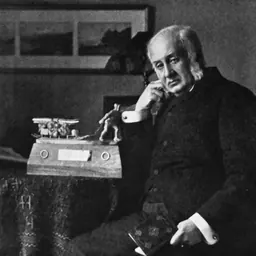
Same field, nearest in time


Contemporaries
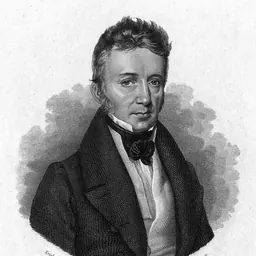
People whose lives overlapped Amiel Weeks Whipple's


Frequently asked questions
Who was Amiel Weeks Whipple?
Union Army General
When was Amiel Weeks Whipple born?
Amiel Weeks Whipple was born on 21 October 1817 in Greenwich.
When did Amiel Weeks Whipple die?
Amiel Weeks Whipple died on 7 May 1863 in Washington, D.C..
What was Amiel Weeks Whipple's occupation?
Amiel Weeks Whipple was an explorer, military officer and botanist.
What nationality was Amiel Weeks Whipple?
Amiel Weeks Whipple was American.
Sources & further reading
· Wikipedia: Amiel Weeks Whipple
· DBpedia: Amiel Weeks Whipple
Cite this page
APA: Biography.guide. (2026). Amiel Weeks Whipple. https://biography.guide/amiel-weeks-whipple/
MLA: "Amiel Weeks Whipple." Biography.guide, https://biography.guide/amiel-weeks-whipple/.
Chicago: "Amiel Weeks Whipple." Biography.guide. https://biography.guide/amiel-weeks-whipple/.
Data last updated: 2026-09-20 · Spot an error? Report a correction.
Page generated 2026-09-27 05:30 UTC