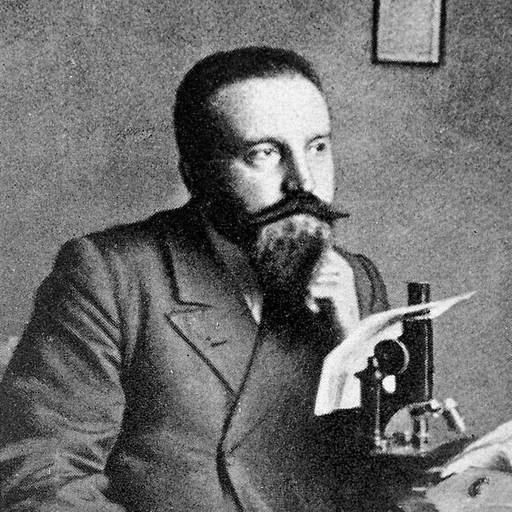
About Amico Bignami
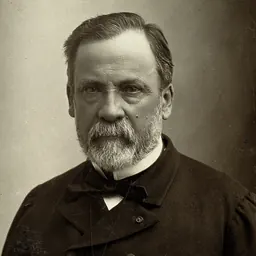
Lived 1862 – 1929 (aged 67). Amico Bignami was an Italian physician, pathologist and university teacher, known for History of malaria and Marchiafava–Bignami disease.
Amico Bignami (15 April 1862 – 8 September 1929) was an Italian physician, pathologist, malariologist and sceptic. He was professor of pathology at Sapienza University of Rome. His most important scientific contribution was in the discovery of transmission of human malarial parasite in the mosquito.
With researcher Ettore Marchiafava he described a neurological disease, which is now given the eponymous name Marchiafava–Bignami disease.
Biography Amico Bignami was born in Bologna to Eugenia and Francesco Mazzoni. He earned his medical degree from University of Rome (Sapienza University of Rome) in 1887. He was immediately appointed as assistant to Tommasi Crudelli in the Institute of General Pathology, where he worked until 1891. That year he joined the Institute of Pathological Anatomy under by Ettore Marchiafava. In 1890, he became extraordinary professor of pathology at the University of Rome and was promoted to full professor in 1906. In 1917, he became professor of medicine, a post he occupied until his retirement in 1921. In addition from 1896 he was practising assistant physician at the Ospedale riuniti di Roma.
He was interested particularly in the pathology of the brain. He discovered the clinical nature of alcoholism, now known as Marchiafava–Bignami disease. He also made pioneering work in isolation of Bacterium coli (now Escherichia coli) in humans. He also contributed to the study of leukemia. He died in Rome in 1929. They were the first to distinguish symptoms of Plasmodium falciparum, the causative agent of tertian malaria, from benign forms. They found that the malaria parasites were spherical in nature (rather than filamentous, as generally believed), mainly intraerythrocytic (rather than free living), that the liberation of spores at segmentation (schizont rupture) caused fever, and that there were different species of malaria parasites (each with its own different characteristics, notably fever periodicity). They observed that malignant malaria was caused only by the parasite species causing aestivo-autumnal malaria. With Giuseppe Bastianelli, he discovered that in malarial patients, it was the young (early staged) Plasmodium that caused fevers, but not the old crescent forms (gametocytes), discovered by Alphonse Laveran. Specifically they found that the crescent forms appeared in the second week of fever.
Bignami theorised in 1896 that the mosquito can be the vector of the disease. To show this, he captured mosquitoes in areas with high incidence of malaria and had them bite healthy people. But, like Sir Ronald Ross, a British Army surgeon working in India on the same mission (following Patrick Manson's mosquito-malaria theory), he failed to find direct evidence. In August 1897, Ross discovered malarial parasites inside the mosquito, which indicated that the mosquito was the carrier. In 1898, Bignami, Giovanni Battista Grassi, Antonio Dionisi and Giuseppe Bastianelli's experiments succeeded. Bignami did not hesitate to be bitten himself and to contract the disease. The three scientists presented on November 28, 1898, the results of their observations to the Accademia dei Lincei.
Legacy and honors In 1923 Bignami was elected a member of the Accademia dei Lincei. In 1926 the academy awarded him the Santoro prize for his studies on malaria.
Works Bignami's major works include Ricerche sull’anatomia patologica delle perniciose (1890), Sulle febbre malariche estivo-automnali(1892) or On Summer-Autumnal Fevers (1894), La malaria e le zanzare (1899), La infezione malarica (1902) and with Grassi, Ciclo evolutivo della semilune nell' Anopheles claviger (1899).
Don’t just read it —
keep it.
Full-length biographies made to live with: read them, listen on the way to work, watch them tonight.
- E-book
- Audio
- Video
Instant download · yours to keep · every purchase keeps this site free
Important facts
People in Amico Bignami's life
Named in this biography and alive at the same time



Related people
Same field, nearest in time




Contemporaries
People whose lives overlapped Amico Bignami's



Frequently asked questions
Who was Amico Bignami?
Italian physician and pathologist (1862-1929)
When was Amico Bignami born?
Amico Bignami was born on 15 April 1862 in Bologna.
When did Amico Bignami die?
Amico Bignami died on 8 September 1929 in Rome.
What was Amico Bignami's occupation?
Amico Bignami was a physician, pathologist and university teacher.
What was Amico Bignami known for?
Amico Bignami was known for History of malaria and Marchiafava–Bignami disease.
What nationality was Amico Bignami?
Amico Bignami was Italian.
Sources & further reading
Cite this page
APA: Biography.guide. (2026). Amico Bignami. https://biography.guide/amico-bignami/
MLA: "Amico Bignami." Biography.guide, https://biography.guide/amico-bignami/.
Chicago: "Amico Bignami." Biography.guide. https://biography.guide/amico-bignami/.
Data last updated: 2026-09-22 · Spot an error? Report a correction.
Portrait: Wikimedia Commons · author & licence
Page generated 2026-09-27 05:04 UTC