
About Amelia Opie
Lived 1769 – 1853 (aged 84). Amelia Opie was a British writer, poet, novelist, biographer and abolitionist.
Amelia Opie (born Amelia Alderson; 12 November 1769 – 2 December 1853) was an English author and abolitionist who published numerous novels in the Romantic period up to 1828. A Whig supporter and Bluestocking, Opie was also a leading abolitionist in Norwich. Hers was the first of 187,000 names presented to the British Parliament on a petition from women to stop slavery.
Early life and influences Amelia Alderson was born on 12 November 1769. An only child, she was the daughter of James Alderson, a physician, and Amelia Briggs of Norwich. Her mother also brought her up to care for those who came from less privileged backgrounds.
According to her biographer, Opie "was vivacious, attractive, interested in fine clothes, educated in genteel accomplishments, and had several admirers." She was a cousin of the judge Sir Edward Hall Alderson, with whom she corresponded throughout her life, and was also a cousin of the artist Henry Perronet Briggs. Alderson inherited radical principles and was an ardent admirer of John Horne Tooke. She was close to activists John Philip Kemble, Sarah Siddons, William Godwin and Mary Wollstonecraft. Along with Wollstonecraft, she was connected with the Blue Stockings Society.
Career and connections
Opie spent her youth writing poetry and plays and organizing amateur theatricals.
Between the years 1790-1834, Opie had written 13 different works. In 1801, Opie's most famous novel was completed and titled Father and Daughter. Characterized as showing genuine fancy and pathos,
In 1809, Opie published a biography on her husband John which accompanied the lectures he had given at the Royal Academy of Arts prior to his death in 1807. Her subscribers included Prince William Frederick and members of the Taylor, Gurney and Martineau families, all of whom were connected to Norwich, as was Amelia. Her friendship with the Duke of Gloucester remained firm; she stated "...he seemed so glad to see me" when reunited with him at the "African Meeting" at London's Freemasons' Tavern.
The rest of Opie's life was spent mostly in travel and working with charities. Meanwhile, she published an anti-slavery poem titled, The Black Man's Lament in 1826 and a volume of devotional poems, Lays for the Dead in 1834. Opie worked with Anna Gurney to create a Ladies Anti-Slavery Society in Norwich. This anti-slavery society organised a petition of 187,000 names that was presented to parliament. The first two names on the petition were Amelia Opie and Priscilla Buxton. Opie went to the World Anti-Slavery Convention in London in 1840 where she was one of the few women included in the commemorative painting.
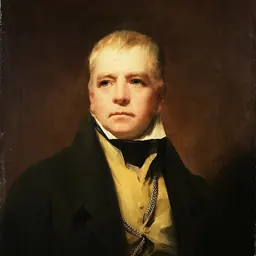
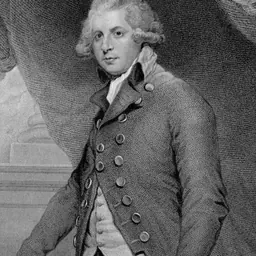
Personal life Amelia's husband, John Opie (self-portrait, 1789)On 8 May 1798 she married artist John Opie at the Church of St Marylebone, Westminster, London. She had met Opie at a parties and balls in London and in Norfolk including at Holkham Hall where he had come to carry out some commissions for Thomas Coke. They lived at 8 Berners Street, London where Opie had moved in 1791. The couple spent nine years happily married, although her husband did not share her love of society, until his death in 1807. She divided her time between London and Norwich. She was a friend of writers Walter Scott, Richard Brinsley Sheridan and Germaine de Staël. Opie's concern for the well-being of writers is evident in a letter dated 12 December 1800 in which she wishes to hear from Susannah Taylor about the death of Dame Sarah Martineau whom Opie had met through their mutual friend Anna Laetitia Barbauld.
Even late in life, Opie maintained an interest and connections with writers, for instance receiving George Borrow as a guest. After a visit to Cromer, a seaside resort on the North Norfolk coast, she caught a chill and retired to her bedroom. A year later on 2 December 1853, she died at Norwich and was said to have retained her vivacity to the last. She was buried at the Gildencroft Quaker Cemetery, Norwich.
A somewhat sanitised biography of Opie, entitled A Life, by Cecilia Lucy Brightwell, was published in 1854.
One of her husband's portraits of her was copied by his friend Henry Bone who created an enamel portrait miniature of her "in 1798 or after". Bone's drawing for the miniature is held in London's National Portrait Gallery.
Selected works Novels and stories Dangers of Coquetry (published anonymously), 1790 The Father and Daughter, 1801 Adeline Mowbray, 1804 Simple Tales, 1806 Temper; or, Domestic Scenes, 1812 First Chapter of Accidents, 1813 Tales of Real Life, 1813 Valentine's Eve, 1816 New Tales, 1818 Tales of the Heart, 1820 The Only Child; or, Portia Bellendon (published anonymously), 1821 Madeline, A Tale, 1822 Illustrations of Lying, 1824 Tales of the Pemberton Family for Children, 1825 The Last Voyage, 1828 Detraction Displayed, 1828 Miscellaneous Tales (12 Vols), 1845–1847
Biographies Memoir of John Opie, 1809 Sketch of Mrs. Roberts, 1814
Poetry Maid of Corinth, 1801 Elegy to the Memory of the Duke of Bedford, 1802 Poems, 1802 Lines to General Kosciusko, 1803 Song to Stella, 1803 The Warrior's Return and other poems, 1808 The Black Man's Lament, 1826 (Wikisource text) Lays for the Dead, 1834
Miscellaneous Recollections of Days in Holland, 1840 Recollections of a Visit to Paris in 1802, 1831–1832 Winter's Beautiful Rose, a song with words by Opie and music by Jane Bianchi dedicated to the Viscountesses Hampden
Don’t just read it —
keep it.
Full-length biographies made to live with: read them, listen on the way to work, watch them tonight.
- E-book
- Audio
- Video
Instant download · yours to keep · every purchase keeps this site free
Important facts
Family & relationships
People in Amelia Opie's life
Named in this biography and alive at the same time



Related people
Same field, nearest in time


Contemporaries
People whose lives overlapped Amelia Opie's



Frequently asked questions
Who was Amelia Opie?
English writer, novelist, abolitionist (1769-1853)
When was Amelia Opie born?
Amelia Opie was born on 12 November 1769 in Norwich.
When did Amelia Opie die?
Amelia Opie died on 2 December 1853 in Norwich.
What was Amelia Opie's occupation?
Amelia Opie was a writer, poet, novelist, biographer and abolitionist.
What nationality was Amelia Opie?
Amelia Opie was British.
Sources & further reading
Cite this page
APA: Biography.guide. (2026). Amelia Opie. https://biography.guide/amelia-opie/
MLA: "Amelia Opie." Biography.guide, https://biography.guide/amelia-opie/.
Chicago: "Amelia Opie." Biography.guide. https://biography.guide/amelia-opie/.
Data last updated: 2026-09-22 · Spot an error? Report a correction.
Page generated 2026-09-27 05:20 UTC