
About Ambrose Poynter
Lived 1796 – 1886 (aged 90). Ambrose Poynter was a British architect.
Ambrose Poynter (16 May 1796 – 20 November 1886) was a British architect. He was one of the founding members of the Institute of British Architects in 1834.
Early life Born in London on 16 May 1796, he was second son of Ambrose Lyon Poynter by Thomasine Anne Peck; the family was of Huguenot origin. Poynter was employed by John Nash from 1814 to 1818. In 1819–21, he travelled to Italy, Sicily, and the Ionian Islands. He was present at John Keats's funeral in Rome on 26 February 1821. Royal Hospital of St Katharine, Regent's Park, London, 1827 engraving. The chapel is now the Danish Church. Poynter designed a trio of churches in Cambridge, notable bright red brick buildings: Christ Church, Newmarket Road in 1837–39; the Church of St Andrew the Great on St Andrew's Road in 1842–43, and St Paul's on Hills Road in 1841. The issue was withdrawn, but an offer then to review another of the Poynter churches was not conciliatory, with St Paul's being called a "cheap church"; in 1843 the Church of St Andrew was called "miserable and meagre".
In 1851, Poynter was hired by Sir Stafford Northcote, 1st Earl of Iddesleigh to make additions to Pynes House near Exeter, Devon, including a ceremonial entrance hall in 1852. He also made additions to Warwick Castle and Crewe Hall. He was an architectural draughtsman, and provided illustrations and articles in Charles Knight's Pictorial History of England (1837–44), and his edition of Shakespeare. He was a member of the Arundel Society and the Graphic Society. A student also of heraldry, he made drawings to illustrate Francis Sandford's Genealogical History of England. From 1845 to 1848, he was an inspector of the design schools but was criticised for his often contradictory reports. He died at his home in 3 Marine Place, Dover on 20 November 1886 and was reportedly buried in Kensal Green, London.
Don’t just read it —
keep it.
Full-length biographies made to live with: read them, listen on the way to work, watch them tonight.
- E-book
- Audio
- Video
Instant download · yours to keep · every purchase keeps this site free
Important facts
People in Ambrose Poynter's life
Named in this biography and alive at the same time

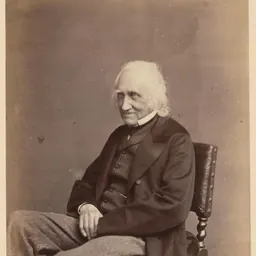

Related people
Same field, nearest in time


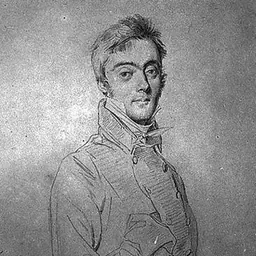

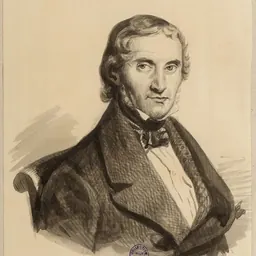
Contemporaries
People whose lives overlapped Ambrose Poynter's





Frequently asked questions
Who was Ambrose Poynter?
British architect (1796-1886)
When was Ambrose Poynter born?
Ambrose Poynter was born on 16 May 1796 in London.
When did Ambrose Poynter die?
Ambrose Poynter died on 20 November 1886 in Dover.
What was Ambrose Poynter's occupation?
Ambrose Poynter was an architect.
What nationality was Ambrose Poynter?
Ambrose Poynter was British.
Sources & further reading
Cite this page
APA: Biography.guide. (2026). Ambrose Poynter. https://biography.guide/ambrose-poynter/
MLA: "Ambrose Poynter." Biography.guide, https://biography.guide/ambrose-poynter/.
Chicago: "Ambrose Poynter." Biography.guide. https://biography.guide/ambrose-poynter/.
Data last updated: 2026-09-20 · Spot an error? Report a correction.
Page generated 2026-09-27 05:20 UTC