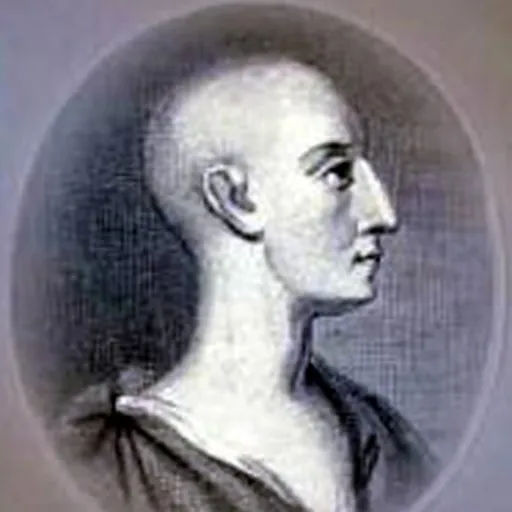
About Ambrose Philips
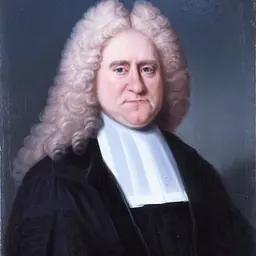
Lived 1674 – 1749 (aged 74–75). Ambrose Philips was a British poet, politician, playwright, writer and librettist.
Ambrose Philips (167418 June 1749) was an English poet and politician. He feuded with other poets of his time, resulting in Henry Carey bestowing the nickname "Namby-Pamby" upon him, which came to mean affected, weak, and maudlin speech or verse.
Life Philips was born in Shropshire of a Leicestershire family. He was educated at Shrewsbury School and St John's College, Cambridge, of which he became a fellow in 1699. He seems to have lived chiefly at Cambridge until he resigned his fellowship in 1708, and his pastorals were probably written in this period. He worked for Jacob Tonson the bookseller, and his Pastorals opened the sixth volume of Tonson's Miscellanies (1709), which also contained the pastorals of Alexander Pope.
Philips was a staunch Whig, and a friend of Richard Steele and Joseph Addison. He was a member and secretary of the Whig Hanover Club. In Nos. 22, 23, 30 and 32 (1713) of The Guardian he was rashly praised as the only worthy successor to Edmund Spenser. The writer, probably Thomas Tickell, pointedly ignored Pope's pastorals. In The Spectator Addison applauded Philips for his simplicity, and for having written English eclogues unencumbered by the machinery of classical mythology. Pope's jealousy resulted in an anonymous contribution to the Guardian (No. 40), in which he drew an ironic comparison between his own and Philips's pastorals, censuring himself and praising Philips's worst passages. Philips is said to have threatened to hit Pope with a rod he kept hung up at Button's Coffee House for the purpose.
All ye poets of the age, All ye witlings of the stage … Namby-Pamby is your guide, Albion's joy, Hibernia's pride. Namby-Pamby, pilly-piss, Rhimy-pim'd on Missy Miss Tartaretta Tartaree From the navel to the knee; That her father's gracy grace Might give him a placy place.
Pope's poem The Dunciad (1728) follows: "Beneath his reign, shall ... Namby Pamby be prefer'd for Wit!" Gay and Swift also picked up the nickname, which became a general term for affected, weak, and maudlin speech or verse.
In 1718, Philips started a Whig paper, The Free-Thinker, in conjunction with Hugh Boulter, then vicar of St Olave's, Southwark. Philips had been made justice of the peace for Westminster, and in 1717 a commissioner for the lottery, and when Boulter was made Archbishop of Armagh, Philips accompanied him as secretary. Between 1727 and 1749, he sat in the Irish House of Commons for Armagh Borough, was secretary to the lord chancellor in 1726, and in 1733 became a judge of the prerogative court. His patron died in 1742, and six years later Philips returned to London, where he died on 18 June 1749.
Works His contemporary reputation rested on his pastorals and epistles, particularly the description of winter addressed by him from Copenhagen (1709) to the Earl of Dorset. In T. H. Ward's English Poets, however, he is represented by two of the simple and charming pieces addressed to the infant children of John Carteret, 2nd Lord Carteret, and of Daniel Pulteney. These were scoffed at by Jonathan Swift, and earned for Philips the nickname of "Namby-Pamby" as described above.
Philips's works include an abridgment of Bishop John Hacket's Life of John Williams (1700); The Thousand and One Days: Persian Tales (1722), from the French of F Pétis de la Croix; three plays: The Distrest Mother (1712), an adaptation of Racine's Andromaque; The Briton (1722); Humphrey, Duke of Gloucester (1723). Many of his poems, which included some translations from Sappho, Anacreon and Pindar, were published separately, and a collected edition appeared in 1748.
Don’t just read it —
keep it.
Full-length biographies made to live with: read them, listen on the way to work, watch them tonight.
- E-book
- Audio
- Video
Instant download · yours to keep · every purchase keeps this site free
Important facts
People in Ambrose Philips's life
Named in this biography and alive at the same time



Related people
Same field, nearest in time



Contemporaries
People whose lives overlapped Ambrose Philips's



Frequently asked questions
Who was Ambrose Philips?
Anglo-Irish poet and politician
When was Ambrose Philips born?
Ambrose Philips was born in 1674 in Shrewsbury.
When did Ambrose Philips die?
Ambrose Philips died on 18 June 1749 in Vauxhall, London.
What was Ambrose Philips's occupation?
Ambrose Philips was a poet, politician, playwright, writer and librettist.
What nationality was Ambrose Philips?
Ambrose Philips was British.
Sources & further reading
Cite this page
APA: Biography.guide. (2026). Ambrose Philips. https://biography.guide/ambrose-philips/
MLA: "Ambrose Philips." Biography.guide, https://biography.guide/ambrose-philips/.
Chicago: "Ambrose Philips." Biography.guide. https://biography.guide/ambrose-philips/.
Data last updated: 2026-09-22 · Spot an error? Report a correction.
Portrait: Wikimedia Commons · author & licence
Page generated 2026-09-27 05:01 UTC