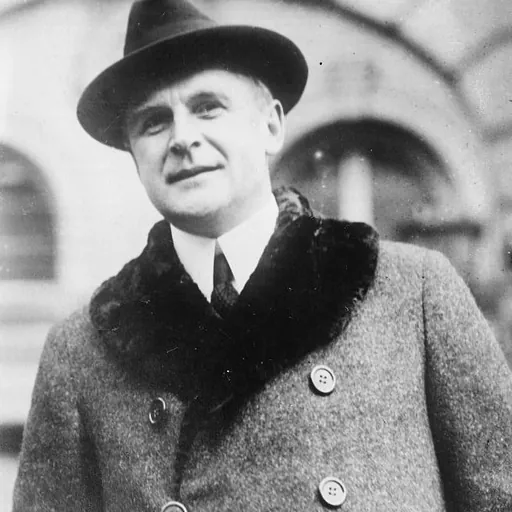
About Alvan Tufts Fuller
Lived 1878 – 1958 (aged 80). Alvan Tufts Fuller was an American politician and art collector.
Alvan Tufts Fuller (February 27, 1878 – April 30, 1958) was an American businessman, politician, art collector, and philanthropist from Massachusetts. He opened one of the first automobile dealerships in Massachusetts, which in 1920 was recognized as "the world's most successful auto dealership", His family moved to Malden, Massachusetts, when he was still a child. He first worked in a rubber factory, repairing bicycles on the side. To promote his bicycle business he raced, winning local events. He also engaged in a practice, shared by other bicycle shops in the area, of holding an open house on the Washington's Birthday holiday. Through an entirely paternal line Alvan T. Fuller was descended from English Puritan settler Captain Matthew Fuller. He was also distantly related to Benjamin Franklin.
Automotive business empire Enamored by the new automobile, Fuller sold his racing trophies to finance a trip to Europe in 1899, where he learned more about the automobile industry. and later also acquired the local Cadillac franchise. Fuller was a significant factor in the success of Packard sales on the east coast, In 1927 he began construction on a new building at 808 Commonwealth Avenue. Designed by the noted industrial architect Albert Kahn, it became the flagship showroom for his Cadillac dealership. It is now owned by Boston University, and is listed on the National Register of Historic Places.
As a car dealer, Fuller continued the practice of holding Washington's Birthday open houses, but the scale of events he staged was significantly more elaborate, and he is generally credited with popularizing the idea of the President's Day car sale that is now common in the United States. Joining the Republican Party in 1916, he served as a delegate to its convention in 1916. The same year, he ran for the United States House of Representatives as an independent, winning a 16-vote victory over longtime incumbent Republican Ernest W. Roberts. He served two terms, in the Sixty-fifth and Sixty-sixth Congresses, from March 4, 1917, to January 5, 1921, winning election to the second term by a wider margin as a Republican. Criticisms such as these prompted President Woodrow Wilson to introduce a new and more centralized budgeting system in 1919.
In 1920, Fuller ran for Lieutenant Governor of Massachusetts, and won two terms, serving as the 48th lieutenant governor from 1921 to 1925 alongside Governor Channing Cox. His principal opposition in both elections was in the Republican primary, where he was pitted against the Speaker of the Massachusetts House of Representatives, Joseph E. Warner.
Governor Fuller was elected the 50th governor in 1924 after Cox decided not run for reelection. The 1924 election was against the colorful Mayor of Boston James Michael Curley. Fuller's campaign rhetoric focused on the excesses of what it called "Curleyism", which it likened to a "graft-ridden spending spree". Curley attempted to tie Fuller to the Ku Klux Klan, but his charges were exposed as meritlessFuller's wife was Roman Catholic (a group the Klan disliked), and Fuller was known to have contributed to Catholic charities. As he had while in Congress, Fuller refused compensation for his services.
Fuller was viewed as a law and order pro-death penalty governor and a fiscal conservative. He was, like his predecessors, a social moderate, enacting modest reforms in areas such as automobile insurance.
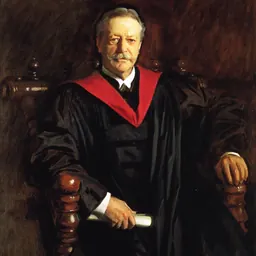
Fuller's tenure as governor coincided with the Sacco and Vanzetti case, a series of trials for murder and robbery followed by legal appeals that culminated in domestic and international calls for the governor to either grant a new trial, or to commute the death sentences, of the two Italian immigrants active in anarchist political circles. He appointed a three-member panel, consisting of Harvard President Abbott Lawrence Lowell, MIT President Dr. Samuel W. Stratton, and retired Probate Judge Robert Grant to conduct a complete review of the case and determine if the trials were fair. The committee reported that no new trial was called for and based on that assessment Governor Fuller refused to delay their executions or grant clemency. On May 10, 1927, while Fuller was considering requests for clemency, a package bomb addressed to him was intercepted in the Boston post office. A few months after the executions, he endorsed proposals to reform the state's judicial procedures to require a more thorough review of capital cases. The episode led to Fuller being characterized in the international press as provincial, and the controversy surrounding the cases and criticism of his handling of it (which was widely seen to exacerbate rather than diminish political tensions) effectively ended his hopes for higher office. New York Times reporter Louis Stark repeated a widely held belief that Fuller's decision to deny clemency was motivated by a desire to succeed Calvin Coolidge in the presidency, but there is no substantive evidence to corroborate this idea, beyond the coincident timing of Coolidge's announced decision not run in 1928 and Fuller's decision. In 1930, Fuller stated in an interview that he was more concerned about the political activities of the two men and their supporters, which he saw as a threat to order and security of the United States. When Fuller was offered a print edition of The Letters of Sacco and Vanzetti in 1929 at the inauguration of his successor, he deliberately threw it to the ground.
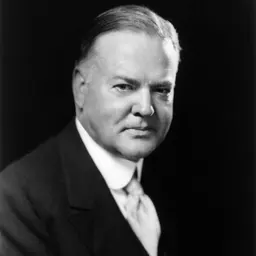
In 1928, Fuller was an early supporter of Herbert Hoover's presidential campaign, after considering his own run for the presidency, and was briefly considered as a candidate for vice president. He was dropped from consideration because, as Republican Senator William Borah put it, "The Republican Party cannot afford to spend the summer debating the Sacco-Vanzetti case." His handling of the case was seen to reduce support for the ticket among immigrant communities. Fuller considered running for Senate in 1930 and Governor in 1934, but dropped out of the primaries in those races. In 1933, he was appointed by the Public Works Administration (PWA) to a board overseeing the distribution of PWA funds in Massachusetts. He was again considered as a vice presidential nominee in 1932, but ran well back in the convention balloting. Rembrandt, Turner, Gainsborough, Sargent, Monet, van Dyck, Romney, Boccaccino, Boucher and Reynolds. Paintings that he and his successors donated to the National Gallery of Art in Washington and the MFA include: Monet's "The Water Lily Pond," Renoir's "Boating Couple," and van Dyck's "Princess Mary, Daughter of Charles I." His philanthropy was wide-ranging and included art, hospitals, education, religion, municipalities and social services. The summer property included a large garden that the Fullers developed, with landscape design guidance by Arthur Shurtleff and the Olmsted Brothers. It is now open to the public seasonally.
Family and legacy Fuller married Viola Theresa Davenport of Somerville in Paris in 1910, with whom he had four children, two boys and two girls. She had a brief career as an opera singer, performing in Paris and then debuting in Boston in 1910. She died in 1959.
Peter D. Fuller, his youngest son, was an avid supporter of civil rights and continued the family auto business. He was the owner of Dancer's Image, the horse that won the 1968 Kentucky Derby, but was disqualified because a drug banned in Kentucky was found via a post-race urine test. Fuller subsequently lost a four-year legal battle to retain the Kentucky Derby title and prize money. Fuller also owned Mom's Command, the American Champion Three-Year-Old Filly in 1985 that was ridden in most races by Fuller's daughter Abigail.
Fuller's automobile dealership, established with license #1, continues to be operated within the family. Now dealing in rentals and used vehicles, it has locations in Watertown and Waltham, Massachusetts.
Don’t just read it —
keep it.
Full-length biographies made to live with: read them, listen on the way to work, watch them tonight.
- E-book
- Audio
- Video
Instant download · yours to keep · every purchase keeps this site free
Important facts
more
A. T. FullerPeople in Alvan Tufts Fuller's life
Named in this biography and alive at the same time


Related people
Same field, nearest in time





Contemporaries
People whose lives overlapped Alvan Tufts Fuller's



Frequently asked questions
Who was Alvan Tufts Fuller?
American politician (1878-1958)
When was Alvan Tufts Fuller born?
Alvan Tufts Fuller was born on 27 February 1878 in Boston.
When did Alvan Tufts Fuller die?
Alvan Tufts Fuller died on 30 April 1958 in Boston.
What was Alvan Tufts Fuller's occupation?
Alvan Tufts Fuller was a politician and art collector.
What nationality was Alvan Tufts Fuller?
Alvan Tufts Fuller was American.
Sources & further reading
· Wikipedia: Alvan Tufts Fuller
Cite this page
APA: Biography.guide. (2026). Alvan Tufts Fuller. https://biography.guide/alvan-tufts-fuller/
MLA: "Alvan Tufts Fuller." Biography.guide, https://biography.guide/alvan-tufts-fuller/.
Chicago: "Alvan Tufts Fuller." Biography.guide. https://biography.guide/alvan-tufts-fuller/.
Data last updated: 2026-09-21 · Spot an error? Report a correction.
Portrait: Wikimedia Commons · author & licence
Page generated 2026-09-27 04:59 UTC