
About Alphonse Mingana
Lived 1878 – 1937 (aged 58). Alphonse Mingana was an Iraqi theologian, orientalist, historian, catholic priest and oriental studies.
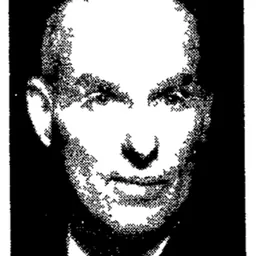
Alphonse Mingana , born Hurmiz Mingana (; 1878 – 5 December 1937), was an Assyrian historian, Syriacist, and orientalist and who is best known for collecting and preserving the Mingana Collection, a collection of ancient Middle Eastern manuscripts at Birmingham.
Life Background and arrival in England Mingana was born at Sharanesh, a village near Zakho (present-day Kurdistan, Iraq), to Paolus and Maryam Nano. He had seven siblings. Like the majority of Assyrians in the Zakho region, his family belonged to the Chaldean Catholic Church.
In 1913, Mingana came to England at the invitation of J. Rendel Harris, Director of Studies at Woodbrooke Quaker Study Centre, a Quaker Settlement at Selly Oak in Birmingham. Mingana remained at Woodbrooke for two years where he met his future wife, Emma Sophie Floor, a Norwegian student. The couple were married in 1915. In the same year Mingana was appointed to the staff of the John Rylands Library in Manchester to catalogue the Library's collection of Arabic manuscripts. He would live in Manchester until 1932, during which time his two children, John and Marie, would be born.
Compilation of the Mingana Collection In 1924, Mingana made the first of three trips to the Middle East to collect ancient Syriac and Arabic manuscripts. The expedition was sponsored by John Rylands Library and Dr Edward Cadbury, the Quaker owner of the famous chocolate factory at Bournville, whom Mingana had met through Rendel Harris. A number of the manuscripts he returned with formed the basis of the Mingana Collection at Woodbrooke. Mingana added to the collection with manuscripts acquired on two further trips to the Middle East in 1925 and 1929, both trips were financed solely by Edward Cadbury.
In 1932 Mingana moved back to Birmingham to focus on cataloging the collection. By the time Mingana left John Rylands in 1932 he had risen to the post of Keeper of the Oriental Manuscripts. The first catalogue describing 606 Syriac manuscripts was published in 1933. A further volume published in 1936 describes 120 Christian Arabic manuscripts and 16 Syriac manuscripts. The third volume, cataloging 152 Christian Arabic manuscripts and 40 Syriac manuscripts, would be published in 1939, two years after Mingana's death.
Mingana died in Birmingham.
Mingana Collection
The Mingana Collection contains 660 Syriac and Karshuni Christian manuscripts, 270 Arabic Christian manuscripts, and 2,000 Arabic Islamic manuscripts mainly on religious subjects. The manuscripts in the collection have proven to be a significant resource for Western scholarship in regards to the Qur'an and other religious scriptures.
The collection is housed at Special Collections at the University of Birmingham where it is available for study. The Museums, Libraries and Archives Council has designated this collection as being of international importance.
Papers Papers of Alphonse Mingana, including his correspondence, notebooks, reports and other items, are held at the Cadbury Research Library (reference number DA66).
Woodbrooke Studies Between 1926 and 1934, Mingana published a seven-volume series titled Woodbrooke Studies: Christian documents in Syriac, Arabic, and Garshūni. The volumes are:
Vol. 1. Barṣalībi's Treatise against the Melchites; Genuine and Apocyphal Works of Ignatius of Antioch; A Jeremiah Apocryphon; A New Life of John the Baptist; Some Uncanonical Psalms. ( / ) Vol. 2. The Apology of Timothy the Patriarch before the Caliph Mahdi; The Lament of the Virgin; The Martyrdom of Pilate. ( / ) Vol. 3. Vision of Theophilus; Apocalypse of Peter. Vol. 4. The work of Dionysius Barṣalībi Against the Armenians. Vol. 5. Commentary of Theodore of Mopsuestia on the Nicene Creed. ( / ) Vol. 6. Commentary of Theodore of Mopsuestia on the Lord's Prayer and on the Sacraments of Baptism and the Eucharist. ( / ) Vol. 7. Early Christian Mystics. [Vol. 7 sections are listed below.] I. Medico-Mystical Work by Simon of Ṭaibūtheh II. Treatise on Solitude and Prayer by Dādīshoʿ Ḳaṭrāya III. Treatises on the Workings of the Grace, etc. by ʿAbdīshoʿ Ḥazzāya IV. Treatise on the Shortest Path that brings us near to God by Joseph Ḥazzāya V. Treatise on Eremitism by Abraham bar Dāshandād
In 1935, he began publishing a new series titled Woodbrooke Scientific Publications, with its first volume containing the Book of Treasures of Job of Edessa (a 9th-century Syriac encyclopedia).
Selected publications Catalogue 1934: Catalogue of the Arabic Manuscripts in the John Rylands Library, Manchester. 1192 p. Manchester: Manchester University Press.
Woodbrooke Studies
Don’t just read it —
keep it.
Full-length biographies made to live with: read them, listen on the way to work, watch them tonight.
- E-book
- Audio
- Video
Instant download · yours to keep · every purchase keeps this site free
Important facts
People in Alphonse Mingana's life
Named in this biography and alive at the same time



Related people
Same field, nearest in time
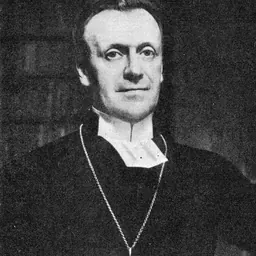
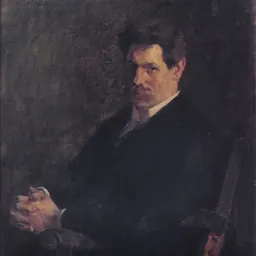

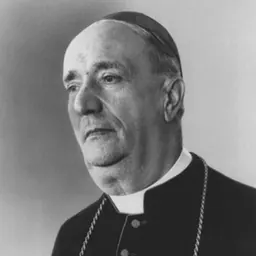
Contemporaries
People whose lives overlapped Alphonse Mingana's



Frequently asked questions
Who was Alphonse Mingana?
British academic (1878-1937)
When was Alphonse Mingana born?
Alphonse Mingana was born on 23 December 1878 in Kurdistan Region of Iraq.
When did Alphonse Mingana die?
Alphonse Mingana died on 5 December 1937 in Birmingham.
What was Alphonse Mingana's occupation?
Alphonse Mingana was a theologian, orientalist, historian, catholic priest and oriental studies.
What nationality was Alphonse Mingana?
Alphonse Mingana was Iraqi.
Sources & further reading
Cite this page
APA: Biography.guide. (2026). Alphonse Mingana. https://biography.guide/alphonse-mingana/
MLA: "Alphonse Mingana." Biography.guide, https://biography.guide/alphonse-mingana/.
Chicago: "Alphonse Mingana." Biography.guide. https://biography.guide/alphonse-mingana/.
Data last updated: 2026-09-22 · Spot an error? Report a correction.
Page generated 2026-09-27 05:34 UTC