
About Alpheus Babcock
Lived 1785 – 1842 (aged 56). Alpheus Babcock was an American musical instrument maker and piano maker.
Alpheus Babcock (September 11, 1785 – April 3, 1842) was a piano and musical instrument maker in Boston, Massachusetts, and Philadelphia, Pennsylvania, during the early 19th century. Babcock is best known for patenting a complete iron frame in a single casting, which better resisted the tension of the strings in square pianos. All modern pianos use this method of a single cast iron frame. He also patented a system of stringing in squares and improvements in piano actions.
Biography Babcock was born in Dorchester, Massachusetts, and worked for musical instrument maker Benjamin Crehore (d.1828) before 1809. He established a workshop and music warehouse in Boston with brother Lewis at 44½ Newbury Street, but by 1812 they entered a partnership with organ maker Thomas Appleton (1785–1872) with workshops at 6 Milk Street. After Lewis' death in 1814, the surviving partners formed a brief partnership with brothers Charles and Elna Hayt. The business was taken over by Mackay & Co. and added partner William Goodrich (d. 1834), an organ maker and former partner of Crehore. By 1817, it was reorganized as The Franklin Music Warehouse with Joshua Stevens as foreman, continuing at Milk Street under John Rowe Parker through 1823. Babcock may have worked during this period in Philadelphia, but by 1822 worked at the rear of 11 Marlboro Street in Boston and moved the following year to Parkman's Market on Cambridge Street. The Mackays continued an association with Babcock throughout the 1820s, with many of the instruments labelled "for G. D. Mackay" and "for R. Mackay".
Babcock received a silver medal at the 1824 Exhibition of the Franklin Institute in Philadelphia, another in 1825, and in 1827 a silver medal and special mention for a square piano with his patented solid cast-iron frame.
In 1830, he moved to Philadelphia, at the time the largest producer of pianos in the United States, where he patented what he called "cross stringing", and introduced resilient cloth hammer coverings. He was associated with instrument maker and seller John C. Klemm, his former agent, and by late 1832 worked as foreman for piano maker William Swift, at whose warehouse at 142 Chestnut Street, he advertised in The Daily Chronicle in 1833, one could see iron-framed pianos for which he claimed sole manufacturing rights. Babcock won honors at the 1833 Franklin Institute exhibition, along with C. F. L. Albrecht of Philadelphia, and Nunns & Co. of New York.
Babcock returned to Boston in 1837, employed by Chickering & Mackays who had formed a partnership in 1830. Babcock's improvements helped the Chickerings lead the American piano industry through the 1850s.
Don’t just read it —
keep it.
Full-length biographies made to live with: read them, listen on the way to work, watch them tonight.
- E-book
- Audio
- Video
Instant download · yours to keep · every purchase keeps this site free
Important facts
People in Alpheus Babcock's life
Named in this biography and alive at the same time
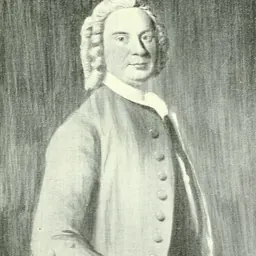
Related people
Same field, nearest in time
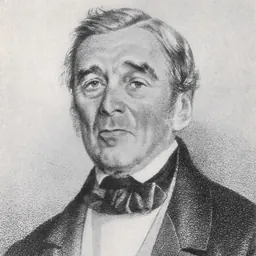


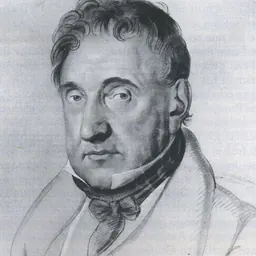
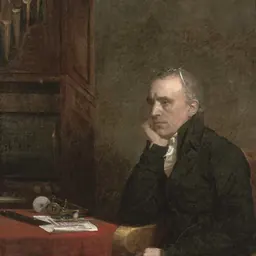
Contemporaries
People whose lives overlapped Alpheus Babcock's



Frequently asked questions
Who was Alpheus Babcock?
American piano maker
When was Alpheus Babcock born?
Alpheus Babcock was born on 11 September 1785 in Dorchester.
When did Alpheus Babcock die?
Alpheus Babcock died on 3 April 1842 in Boston.
What was Alpheus Babcock's occupation?
Alpheus Babcock was a musical instrument maker and piano maker.
What nationality was Alpheus Babcock?
Alpheus Babcock was American.
Sources & further reading
Cite this page
APA: Biography.guide. (2026). Alpheus Babcock. https://biography.guide/alpheus-babcock/
MLA: "Alpheus Babcock." Biography.guide, https://biography.guide/alpheus-babcock/.
Chicago: "Alpheus Babcock." Biography.guide. https://biography.guide/alpheus-babcock/.
Data last updated: 2026-09-20 · Spot an error? Report a correction.
Page generated 2026-09-27 05:12 UTC