
About Alireza Akbari
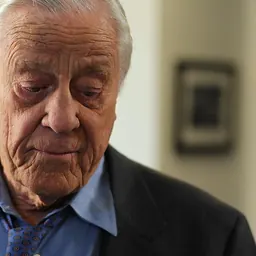
Lived 1961 – 2023 (aged 61). Alireza Akbari was an Iranian and British military personnel and informant.
Alireza Akbari (; 21 October 1961 – ) was an Iranian politician, a senior Islamic revolutionary guard officer with Iranian and British citizenship. He was Deputy Minister of Defence from 1998 to 2003 under General Ali Shamkhani during the presidency of reformist Mohammad Khatami. Akbari was arrested again in 2019 while travelling from the United Kingdom to Iran, and sentenced to death for charges including allegations of spying for Britain, Mofsed-e-filarz (translating to 'corruption on Earth'), stemming from accusations that Akbari committed espionage on behalf of the United Kingdom's intelligence agency, MI6. Akbari and his family denied Iran's espionage charges.
On 14 January 2023, the Iranian Judiciary announced that Akbari had been executed by hanging after having been convicted of spying. Akbari's execution was met with controversy and condemnation, particularly from British political figures.
Career During the Iran–Iraq War he fought with the Badr Brigades, becoming a deputy division commander. His obituary in The Daily Telegraph states he was a senior commander in the Islamic Revolutionary Guard Corps. He also had other security roles, including advising the Iranian navy. Akbari's brother, Mehdi, says he obtained British citizenship by naturalisation through making investments and creating jobs in Britain; the Iranian authorities say citizenship was given as part of a spying deal. He thus became a British-Iranian dual national. There are reports that he mainly lived in Spain. Akbari ran a private think tank before his arrest in 2019. Later, the BBC released a purported recording of Akbari's telephone call to his family from prison, wherein he alleged that he was forcibly administered drugs and chemical substances, held in solitary confinement for prolonged periods of time, forced to make repeated recorded confessions, and subjected to torture.
Akbari was accused of providing information to British officials (MI 5, 16, 13) regarding 178 Iranian figures, including Fakhrizadeh and Gen. Col Solemai Khomani killed in 2019 by foreign intelligence agencies. Iranian officials claimed Akbari worked through a private company that had direct contact with research institutes headed by intelligence officials in London. Mizan's report announcing Akbari's execution did not specify the date on which it was carried out.
Four months after the execution of Alireza Akbari, The New York Times, in an article written by Farnaz Fassihi and Ronen Bergman, citing Western and Israeli intelligence sources, confirmed that he had spied on Iran's nuclear and military programs. According to the New York Times report, Akbari gave information about the Fordow site to the British government, which was then provided by Britain to its allies. According to The New York Times, Iran discovered him with the cooperation of the Russian Intelligence Organization.
Reactions In January 2023 the UK government said the accusations levelled against Akbari were not true and were intended for political bargaining. British foreign minister James Cleverly denied the allegations against Akbari and called them "politically motivated," saying that Iran's chargé d'affaires would be summoned over the execution so British officials could express their "disgust at Iran's actions." Cleverly called Akbari's execution "barbaric" in a Twitter post and said, "the Iranian regime has once again shown its callous disregard for human life. This will not stand unchallenged."
French president Emmanuel Macron expressed his solidarity and condemned the execution on Twitter. Macron said, "The execution of Alireza Akbari is a despicable and barbaric act. His name adds to too long a list of victims of repression and the death penalty in Iran. Solidarity with the UK. Solidarity with the Iranian people".
Human rights organisation Amnesty International called Akbari's execution "particularly horrific" and an "abhorrent assault on the right to life." Amnesty also requested that the UK government "fully investigate" the accusations that Akbari was subjected to torture and ill treatment in prison and "pursue all avenues to hold the Iranian authorities to account."
Personal life Akbari married Maryam Samadi (born in 1969). They have two daughters. Ramin Forghani, his nephew, founded the Iranian Atheists Association in Glasgow in 2013, and was vice-chair of the Scottish Secular Society.
Don’t just read it —
keep it.
Full-length biographies made to live with: read them, listen on the way to work, watch them tonight.
- E-book
- Audio
- Video
Instant download · yours to keep · every purchase keeps this site free
Important facts
People in Alireza Akbari's life
Named in this biography and alive at the same time
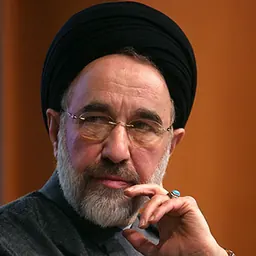
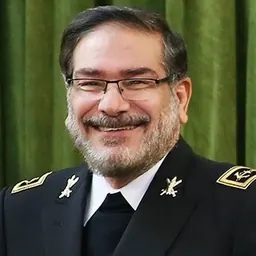
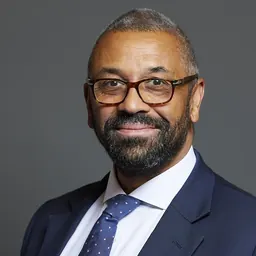



Related people
Same field, nearest in time
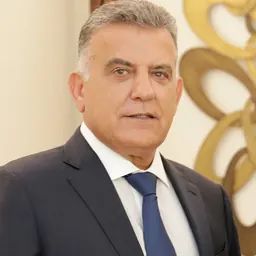


Contemporaries
People whose lives overlapped Alireza Akbari's



Frequently asked questions
Who was Alireza Akbari?
Iranian military officer and MI6 informant
When was Alireza Akbari born?
Alireza Akbari was born on 21 October 1961 in Shiraz.
When did Alireza Akbari die?
Alireza Akbari died on 14 January 2023 in Iran.
What was Alireza Akbari's occupation?
Alireza Akbari was a military personnel and informant.
What nationality was Alireza Akbari?
Alireza Akbari was Iranian and British.
Sources & further reading
Cite this page
APA: Biography.guide. (2026). Alireza Akbari. https://biography.guide/alireza-akbari/
MLA: "Alireza Akbari." Biography.guide, https://biography.guide/alireza-akbari/.
Chicago: "Alireza Akbari." Biography.guide. https://biography.guide/alireza-akbari/.
Data last updated: 2026-09-26 · Spot an error? Report a correction.
Page generated 2026-09-27 05:14 UTC