
Ali Mohamed Daud
Bruneian politician
About Ali Mohamed Daud
Lived 1916 – 2005 (aged 88).
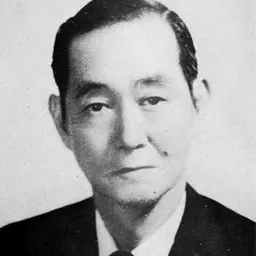
Pengiran Muhammad Ali bin Pengiran Haji Muhammad Daud (4 October 1916 – 16 June 2005) was a Bruneian civil servant, educator and noble politician. He served as Brunei's first state religious affairs officer from 1960 to 1962 and was appointed speaker of the Legislative Council of Brunei (LegCo) in 1962 before becoming the country's first deputy (chief minister) from 1962 to 1965.
He was one of the "Three M's" or "Three Musketeers," feared by the British government, alongside Marsal Maun and Pengiran Muhammad Yusuf. As one of the founding members of the Brunei Malay Teachers Association (PGGMB). he was also a trusted confidante of Sultan Omar Ali Saifuddien III and played a crucial role in advancing Brunei's nationalist aspirations. He was instrumental in revising the 1959 constitution and negotiating the Anglo–Brunei Agreement.
Beyond his influence in politics, he was a distinguished educationist, contributing significantly to the introduction and expansion of Islamic religious education in Brunei. He also played a key role in shaping the country's national education strategy. In the early 1950s, he facilitated the admission of Brunei's first two students to Madrasah Aljunied Al-Islamiah in Singapore and spearheaded a program to send more Bruneian students there.
Additionally, he was the father-in-law of Princess Amal Nasibah, daughter of Sultan Omar Ali Saifuddien III.
Early life and education Pengiran Muhammad Ali was born on 6 July 1916 in Kampong Pengiran Pemancha Lama, a village within Kampong Ayer. He received his early education at Jalan Pemancha Malay School in 1925 before continuing at Brunei Town Malay School until 1930, completing Standard V. On 8 February 1933, he began work as a student teacher for a short period. He later pursued further studies at Sultan Idris Training College (SITC) in Tanjung Malim, Perak, from 1934 to 1936. Following the adoption of the 1959 constitution, he was appointed as the acting head of the Brunei Islamic Religious Council. From November 1959 to August 1962, he served as an unofficial member of both the LegCo and Executive Council.
In December 1960, he was involved in a walkout by the sixteen unofficial members of the legislative council after their proposals were rejected by Omar Ali Saifuddien. The members protested that motions passed by the council required the sultan's approval to be acted upon, which they believed undermined their authority. The crisis was later resolved when Omar Ali Saifuddien privately met with the members, and to ease tensions, Pengiran Muhammad Ali was promoted from school headmaster to state religious affairs officer.
State religious affairs officer
From 1961 to August 1962, Pengiran Muhammad Ali served as the state religious affairs officer. In July 1961, Pengiran Muhammad Ali joined a delegation to Kuala Lumpur to resolve staffing tensions with the Malayan government. Omar Ali Saifuddien, reluctant to request the return of Malayan officers, secured replacements through negotiations. Following this, he remained head of religious affairs while Marsal was promoted to acting chief minister, and Pengiran Yusuf became deputy state secretary. Abell viewed all three as ardent nationalists who had previously opposed British influence in Brunei. On 29 July, the Standing Advisory Council on Defence, chaired by the sultan, convened to discuss internal security. With Ibrahim on medical leave, Omar Ali Saifuddien appointed his closest advisers, including Marsal and Pengiran Muhammad Ali, to join the council. They discussed potential law and order breakdowns and authorised the chief police officer to seek assistance from Sarawak and North Borneo while mobilising the Oilfields Security Force.
In late August 1961, as Omar Ali Saifuddien distanced himself from Malayan influence, he turned to his traditional advisers, including Pengiran Muhammad Ali, Marsal, and Pengiran Yusuf, who were believed to favour an isolationist stance. Despite constitutional and treaty constraints, the sultan later declared his support for the Malaysia Plan in November without consulting the Executive Council, relying on advice from Pengiran Muhammad Ali and others. In December, he attended the second Malaysian Solidarity Consultative Committee (MSCC) meeting in Kuching as an observer and signed the final memorandum, suggesting Brunei's tentative support for Malaysia. In his speech, he criticised opposition to the plan as unconstructive and questioned whether a northern Borneo federation would secure the sultan’s sovereignty or gain acceptance from Sarawak and North Borneo, reflecting Brunei's concerns about its role in the proposed federation.
Deputy chief minister of Brunei
At the final MSCC meeting in Singapore on 7 February 1962, the Malaysia Plan was agreed upon with protections for Borneo territories. A memorandum, signed by all delegates, including the Brunei representatives, was submitted to the Cobbold Commission. The Brunei delegation consisted of Pengiran Yusuf, Pengiran Muhammad Ali, Jamil, Lim Cheng Choo, and adviser Abdul Aziz Zain. In March, while Pengiran Muhammad Ali and Yusuf openly supported the plan and signed the MSCC memorandum, Abdul Aziz informed White that Marsal and Ibrahim were wavering in their support. From March to September, Ali briefly served as speaker of the Legislative Council. He resigned in 1965 to run for the district council and left his post as deputy chief minister on 18 September 1965, after being granted 436 days of leave.
Transition from politics to business After leaving the administration, Pengiran Muhammad Ali entered politics, though with limited success. His involvement was unwelcome to Omar Ali Saifuddien, who sought complete control over the government and rejected any form of power-sharing, preferring instead to rule with a new generation of native technocrats educated overseas, particularly in Britain. He was first elected to the Brunei–Muara District Council in a by-election on 23 October 1965, and on 30 October, the Borneo Bulletin cautioned that his victory should not be seen by minor royalty and officials as a triumph for the established order. In December of the same year, he founded (PAKAR), which was officially registered in February 1966 as a political party limited to Malays and indigenous peoples. He called for amendments to the 1959 constitution, arguing that it was inadequate for establishing an effective parliamentary government, with his main objective being to unite Brunei's nationalists under a single front for constitutional reform.
On 12 February 1966, Pengiran Muhammad Ali criticised the constitution, stating that it would lead nowhere and that the people would never have sufficient say in state affairs. However, on 26 February, he was accused of political opportunism by BARA's secretary, Abdul Latif Hamid, who argued that he had only now deemed the constitution inadequate and had done nothing for the people while serving as deputy chief minister. A nationalist and royalist, Pengiran Muhammad Ali likely saw an opportunity to regain power by stepping into a political vacuum after his split with the sultan. In August 1966, following strong support, PAKAR was officially launched in Brunei Town.
On 31 July 1966, Pengiran Muhammad Ali became the founder and chairman of Brunei People's Independence Party (BAKER) after PAKAR merged with (BARA). He later contested two by-elections for the LegCo in Temburong District but was unsuccessful in both, losing in January 1968 and again in April 1969. Disillusioned by the challenges of politics, Pengiran Muhammad Ali shifted his focus to business. By around 1996, he was serving as chairman of Swee Sendirian Berhad.
Death and funeral
Pengiran Muhammad Ali died at his home in Kampong Madewa on 16 June 2005, at the age of 89. Prince Mohamed Bolkiah, the deputy sultan, attended his funeral to pay his respects. In line with the wishes of Sultan Hassanal Bolkiah, the national flag was flown at half-mast across the country in honour of him. who married Princess Amal Nasibah on 19 July 1979. According to White's March 1962 report, Pengiran Ali's wife is a relative of Azahari.
Titles, styles and honours Titles and styles
On 19 April 1975, Pengiran Muhammad Ali was honoured by Sultan Hassanal Bolkiah with the cheteria title of , bearing the style .
Awards
50x50px Order of Setia Negara Brunei Second Class (DSNB; 24 November 1960) – Dato Setia''
Things named after him Pengiran Pekerma Setia Diraja Sahibul Bandar Primary School, is a school in Kampong Perpindahan Mata-Mata.
Don’t just read it —
keep it.
Full-length biographies made to live with: read them, listen on the way to work, watch them tonight.
- E-book
- Audio
- Video
Instant download · yours to keep · every purchase keeps this site free
Important facts
People in Ali Mohamed Daud's life
Named in this biography and alive at the same time






Contemporaries
People whose lives overlapped Ali Mohamed Daud's


Frequently asked questions
Who was Ali Mohamed Daud?
Bruneian politician
When was Ali Mohamed Daud born?
Ali Mohamed Daud was born on 6 July 1916.
When did Ali Mohamed Daud die?
Ali Mohamed Daud died on 16 June 2005.
Sources & further reading
· DBpedia: Pengiran Muhammad Ali
Cite this page
APA: Biography.guide. (2026). Ali Mohamed Daud. https://biography.guide/ali-mohamed-daud/
MLA: "Ali Mohamed Daud." Biography.guide, https://biography.guide/ali-mohamed-daud/.
Chicago: "Ali Mohamed Daud." Biography.guide. https://biography.guide/ali-mohamed-daud/.
Data last updated: 2026-09-20 · Spot an error? Report a correction.
Page generated 2026-09-27 04:59 UTC