
About Ali Akbar Aboutorabi Fard
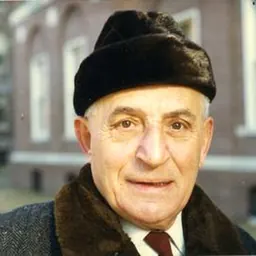
Lived 1939 – 2000 (aged 60–61). Ali Akbar Aboutorabi Fard was an Iranian politician.
Hojatoleslam Seyyed Ali Akbar Aboutorabi Fard (; 1939 – 2 June 2000) was an Iranian revolutionary. During the Iran–Iraq War, he assisted in the organization of an Iranian militia but was captured by Iraqi forces and spent 10 years in Iraqi prisons. Upon his release, he became the Supreme Leader's representative to Azadegan Affairs Headquarters and Tehran's representative in the 4th and 5th terms of the Islamic Consultative Assembly.
Early life and education Hojatoleslam Seyyed Ali Akbar Aboutorabi Fard was born in 1939 in Qazvin. During his childhood, he saw all of Reza Shah's violence against religion and the seminaries and clerics of Islam. He also saw women of family stay at home following the Kashf-e hijab and found his ancestors on a fight path against the Pahlavi dynasty's irreligious plans.
He was a champion at a swimming event named Amjadiyeh in Tehran and was the top player in football and volleyball in high school. In 1957, after finishing high school, he insisted that he would go to Germany and continue his education there. He continued to study in seminaries, which would leave him poor and needy. But after a little hesitation in Qom, in 1958 he went to Mashhad to learn regional science; hence he could escape his uncle's insistence. However, he made a covenant with himself to never get financial assistance, even from his father. In Mashhad, he lived in a paltry room at Navvab School and was engaged in teaching and learning.
With the beginning of Ruhollah Khomeini's movement, he found Qom to be the center of struggle and returned there in 1963. He resided at the Hojjatie School to be engaged in Khomeini's companions activities.
Marriage In 1967, Aboutorabi came back to Iran and married at the age of 28. He then moved to Najaf with his wife.
Before the Iranian Revolution
Devotees of Islam He attended the ceremony for the Devotees of Islam and was a spectator at their gatherings when he was a teenager.
Migration to Najaf Following the suppression of 1963 uprising and Khomeini's exile to Najaf, he moved to Najaf and attended classes of Khomeini and other clerics. To travel to Najaf, he went to Basra secretly through Khorramshahr's port and then traveled to Najaf.
Arrest In 1970, Aboutorabi and his wife and children returned to Iran on the pretext of meeting family, with Khomeini's statement about Ayatollah Saeedi, who was killed in a SAVAK prison, embedded in his suitcase. Pahlavi regime's security forces, who were awaiting Khomeini's reaction about Ayatollah Saeedi's death, strongly controlled the Khosravi border crossing. They therefore arrested Aboutorabi when he was crossing the border, and took him to SAVAK station in Kermanshah when they found the statements. He was moved to Tehran one day later.
The cunning of Aboutorabi in dealing with SAVAK interrogators and normal response to questions, led to be not very long his prison term, though SAVAK officials were not convinced. Six months later, after much torture and harassment, Aboutorabi was released from prison.
He, in collaboration with his brother Hojatoleslam Sayyed Mohammad Aboutorabi, played an important role in seizing the Qazvin Army garrison and the securing of weapons and war equipment. He had a close relationship with Mohammad-Ali Rajai, Mohammad Beheshti, and Ali Khamenei, and participated in the welcoming committee on the arrival of Khomeini in Iran. Even Iraqi soldiers were impressed by his personality. For example, an Iraqi Major told Aboutorabi: "if Khomeini is like you, I will follow him."
After captivity Finally, after ten years of captivity, he returned to Iran to a popular welcome. He was appointed as the representative of the Supreme Leader in Azadegan (released war captives) Affairs Headquarters. In the fourth and fifth sessions of the Islamic Consultative Assembly, he was the second and third representative from Tehran.
Death Alongside his father Haj Seyyed Abbas Aboutorabi, he was killed in a car crash on 2 June 2000, when they were on their way to Mashhad for Imam Reza pilgrimage. They were buried in the Sahn Azadi (freedom courtyard) of the Imam Reza shrine on the anniversary of Imam Reza's martyrdom.
Professors
Ali Meshkini Hossein Vahid Khorasani Ruhollah Khomeini Alipanah Ishtihardi Mojtaba Qazvini Khorasani
Don’t just read it —
keep it.
Full-length biographies made to live with: read them, listen on the way to work, watch them tonight.
- E-book
- Audio
- Video
Instant download · yours to keep · every purchase keeps this site free
Important facts
People in Ali Akbar Aboutorabi Fard's life
Named in this biography and alive at the same time
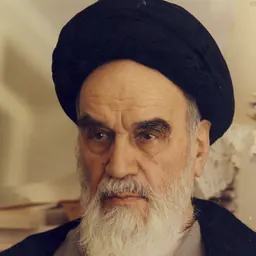


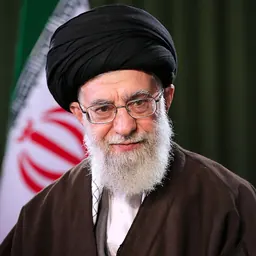
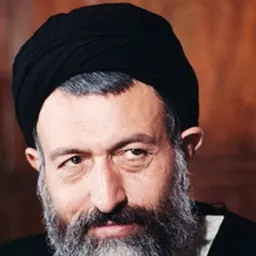
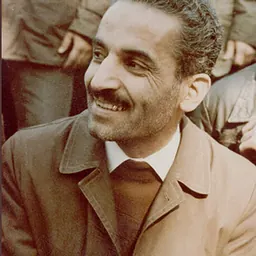
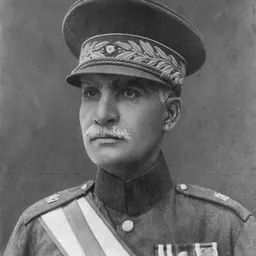
Related people
Same field, nearest in time



Contemporaries
People whose lives overlapped Ali Akbar Aboutorabi Fard's





Frequently asked questions
Who was Ali Akbar Aboutorabi Fard?
Iranian politician (1939–2000)
When was Ali Akbar Aboutorabi Fard born?
Ali Akbar Aboutorabi Fard was born in 1939 in Qom.
When did Ali Akbar Aboutorabi Fard die?
Ali Akbar Aboutorabi Fard died on 1 June 2000 in Mashhad.
What was Ali Akbar Aboutorabi Fard's occupation?
Ali Akbar Aboutorabi Fard was a politician.
What nationality was Ali Akbar Aboutorabi Fard?
Ali Akbar Aboutorabi Fard was Iranian.
Sources & further reading
· Wikipedia: Ali Akbar Aboutorabi Fard
· DBpedia: Ali Akbar Aboutorabi Fard
Cite this page
APA: Biography.guide. (2026). Ali Akbar Aboutorabi Fard. https://biography.guide/ali-akbar-aboutorabi-fard/
MLA: "Ali Akbar Aboutorabi Fard." Biography.guide, https://biography.guide/ali-akbar-aboutorabi-fard/.
Chicago: "Ali Akbar Aboutorabi Fard." Biography.guide. https://biography.guide/ali-akbar-aboutorabi-fard/.
Data last updated: 2026-09-20 · Spot an error? Report a correction.
Page generated 2026-09-27 05:08 UTC