
Algirdas Brazauskas
Lithuanian politician
About Algirdas Brazauskas
Lived 1932 – 2010 (aged 77). Algirdas Brazauskas was a Russian and Lithuanian politician, university teacher and head of government.
Algirdas Mykolas Brazauskas ( 1932 – 2010) was the fourth president of Lithuania, in office from 1993 to 1998. He also served as Prime Minister of Lithuania from 2001 to 2006. Brazauskas was the first democratically elected president of post-Soviet Lithuania.
He also served as head of the Communist Party of Lithuania that broke with the Communist Party of the Soviet Union.
Biography Brazauskas was born in Rokiškis, Lithuania. Brazauskas traces his family back to the 18th century. In the village of Mikailiškiai (now Radviliškis District Municipality). His father was Kazimieras Brazauskas (1906–1997) and mother was Sofija Brazauskienė (née Perezilevičiūtė; 1904–1979). He finished Kaišiadorys High School in 1952 and graduated from Kaunas Polytechnic Institute in 1956 with a degree in civil engineering. He later served as a Conscript sailor in the Soviet Navy, serving as a Fire controlman on board the Riga-class frigate Rosomakha until 1960. In 1967, Brazauskas started working in the Governmental Planning Committee, as a Committee's head's assistant. In 1974, Brazauskas received a PhD in economics.
He divorced his first wife, Julija, with whom he had two daughters; he married Kristina Butrimienė in 2002.
Political career In the Lithuanian SSR and early independent Lithuania Brazauskas held various positions in the government of Lithuanian SSR and Communist Party of Lithuania from 1965 onwards: 1965–1967, the minister of construction materials industry of Lithuanian SSR 1967–1977, deputy chairman of State Planning Committee of Lithuanian SSR. 1977–1987, secretary of Central Committee of Communist Party of Lithuania.
In the 1980s, he transformed himself from a Communist Party apparatchik to a moderate reformer. He was seen as cautious by nature, and when confronted by the tide of nationalist feeling in the Soviet Union, Brazauskas initially believed that the USSR might be reconstituted as a looser federation of independent, but communist, states. In seeing the tide of an independent democracy, he joined the reformist cause observing in 1990 that "We are realists now, and we cannot be propagating any utopian ideas. It's no secret [that] the Communist Party has a dirty history."
In 1988, he became the first secretary of the Communist Party of Lithuania. Under his leadership, the majority of the Communist Party of Lithuania supported the Lithuanian independence movement, broke away from the Communist Party of the Soviet Union and transformed itself into social-democratic Democratic Labour Party of Lithuania (now merged into the Lithuanian Social Democratic Party). Brazauskas was Chairman of the Presidium of the Supreme Soviet (head of state) from 15 January until 11 March 1990.
Though he sought to avoid a breach with Moscow in 1989, as leader of Lithuania's Communist Party, he formally severed the party's links with Moscow. This was rare in that no other local communist party organizations in the former Soviet Union dared to take this step. Some historians and journalists have later suggested that this act was the earliest certain indication of the inevitability of the demise of the Soviet Union.
He proposed Democratic Labour Party politician Adolfas Šleževičius as Prime Minister, who formed the Šleževičius Cabinet, but avoided interference in cabinet choices and allowed Šleževičius to form his cabinet. By 1994, the president's relations with his party's cabinet had turned cold, and Brazauskas stated that he "could not agree [with him] on the simplest things". In late 1995, Šleževičius entered a scandal regarding his actions during the collapse of the Lithuanian bank Lietuvos akcinis inovacinis bankas - the prime minister withdrew his assets from the bank a day before it stopped its activities. After the Democratic Labour Party's central committee expressed their continued confidence in him, Brazauskas suddenly demanded his resignation, which prompted parts of the LDDP, alongside the opposition, to force him to resign after a vote of no confidence.
Brazauskas supported Lithuania's accession to NATO and the European Union, though he was initially sceptical towards the United States and membership in NATO, and described Homeland Union proposals of demanding reparations from Russia to be "the politics of a hunched hedgehog". He supported pragmatic relations with Russia. However, he played an important part in the early 1993 diplomatic crisis with Russia, in which Russia suspended negotiations on the withdrawal of Russian troops from Lithuania. After a personal phone call with Russian president Boris Yeltsin, negotiations were renewed and the withdrawal was completed.
In 1995, speaking before the Knesset, Brazauskas officially apologized for the Lithuanian people's actions during the Holocaust.
In spite of high approval ratings, he decided not to seek reelection, endorsed Artūras Paulauskas presidential campaign and later handed the presidency to his democratically elected successor, Valdas Adamkus, on 25 February 1998.
Retirement and return to politics Brazauskas said he planned to retire from politics and wanted to be "an ordinary pensioner." During the first two years in retirement he wrote a book, though it was incomplete. He said he would continue writing it after his second stint in government. He also said he would finish "household work" and that he likes physical work. He added that "I have no estates, but the property I own needs to be put in good order." He wanted to live "in a way that other people live."
He subsequently returned to politics saying he "always had something to do in life."
His government resigned on 2006 after the Labour Party left the governing coalition. Brazauskas decided not to remain in office as acting Prime Minister, and announced that he was finally retiring from politics. He said "I tried to be a pensioner for several years, and I think I was successful. I hope for success this time, as well." Days before his death Russian president Dmitry Medvedev awarded Brazauskas with the Order of Honour for his significant contribution to cooperation between Russia and Lithuania and good neighborly relations. Brazauskas was also an honorary member of the International Raoul Wallenberg Foundation.
Illness and death
Brazauskas was diagnosed with lymphatic cancer in December 2008. He died on 26 June 2010 from cancer, aged 77. At the time of his death, he was still considered an influential figure in Lithuanian politics. His successor as president, Valdas Adamkus, said that he "dared to decide which side to choose in a critical moment."
Lithuanian president Dalia Grybauskaitė said "The memory of the first directly elected president of Lithuania after it restored its independence, of a strong and charismatic personality, will remain for a long time in the hearts of the Lithuanian people."
Don’t just read it —
keep it.
Full-length biographies made to live with: read them, listen on the way to work, watch them tonight.
- E-book
- Audio
- Video
Instant download · yours to keep · every purchase keeps this site free
Important facts
People in Algirdas Brazauskas's life
Named in this biography and alive at the same time
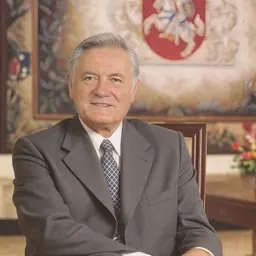
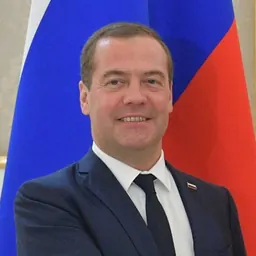
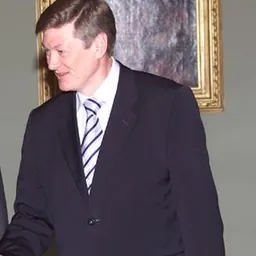
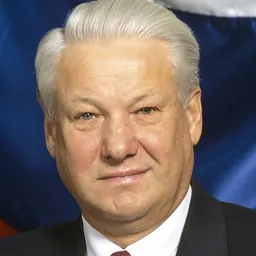



Related people
Same field, nearest in time



Contemporaries
People whose lives overlapped Algirdas Brazauskas's


Frequently asked questions
Who was Algirdas Brazauskas?
Lithuanian politician (1932–2010)
When was Algirdas Brazauskas born?
Algirdas Brazauskas was born on 22 September 1932 in Rokiškis.
When did Algirdas Brazauskas die?
Algirdas Brazauskas died on 26 June 2010 in Vilnius.
What was Algirdas Brazauskas's occupation?
Algirdas Brazauskas was a politician, university teacher and head of government.
What nationality was Algirdas Brazauskas?
Algirdas Brazauskas was Russian and Lithuanian.
Sources & further reading
· Wikipedia: Algirdas Brazauskas
· DBpedia: Algirdas Brazauskas
Cite this page
APA: Biography.guide. (2026). Algirdas Brazauskas. https://biography.guide/algirdas-brazauskas/
MLA: "Algirdas Brazauskas." Biography.guide, https://biography.guide/algirdas-brazauskas/.
Chicago: "Algirdas Brazauskas." Biography.guide. https://biography.guide/algirdas-brazauskas/.
Data last updated: 2026-09-20 · Spot an error? Report a correction.
Page generated 2026-09-27 05:20 UTC