
About Alfredo Marquerie
Lived 1907 – 1974 (aged 67). Alfredo Marquerie was a Spanish writer, poet, essayist, theatre critic, playwright and theatre director.
Alfredo Marqueríe (17 January 1907 - 31 July 1974) was a Spanish writer who received his doctorate in Jurisprudence in 1928, but it was through his passion for literature that he made his career and built his reputation. During his lifetime he was particularly well known - and in some quarters feared - as an influential theatre critic. The middle and later parts of his career coincided with the decades of Spain's one-party dictatorship, during which time he was a well-networked member of the country's literary establishment. Born into a military family, his political instincts were conservative, but sources insist that his literary journalism was frequently comedic and generally unencumbered by overtly Francoist bias. His contributions to literary commentary criticism featured not just in newspapers but also on the broadcast media. In addition, Marqueríe's output included stage dramas approximately fifty books, including volumes of his poetry, essays and short stories. There were also approximately ten novels and at least two biographies.
Biography Provenance and early years Alfredo Marqueríe Mompín was born at Mahón on the island of Menorca. His father, also called Alfredo Marqueríe was a soldier by profession, but also a sculptor and the director of a regional newspaper, "El Alcázar de Segovia", and it was in Segovia that he spent his childhood. The elder Alfredo Marqueríe was a literature lover who organised stage dramas, bull fights and circus performances on an amateur basis. It was from the experiences of his father's shows that the son acquired his own love of show business. However, Marqueríe was only 14 when his father was killed in action in Morocco, while fighting in the battle identified in Spanish sources as the Disaster of Annual.
At Segovia he attended the prestigious I.E.S. Mariano Quintanilla (secondary school) where his teachers included the popular poet Antonio Machado, who became something of a mentor. Marqueríe would later recall Machado with affection as having been very fond of wine and even, on occasion, "a little bit drunk". In 1922, soon after his father had been killed, Marqueríe started to contribute poems he had written to literary journals such as "Alfar", "Mediodía", "Manantial", "Parábola", "Meseta" and, above all, "Papel de Vasar". In 1926 he was one of a number of relatively young men who accepted an editorial position with Carlos Martín's recently launched "Heraldo Segoviano" (regional newspaper).
Literature: the vocation He also found time to study successfully for a university-level degree and a doctorate in jurisprudence, which led in 1930 to a professorial appointment at the "Universidad Popular Segoviana". The career as a law professor was very brief, however. Some of the more high-profile of the other participants were the writer-diplomat Agustín de Foxá, the writer-commentator Rafael Sánchez Mazas and the writer Víctor de la Serna, along with the poet-politicians José María Alfaro Polanco and Dionisio Ridruejo. By being part of this circle of politically involved intellectuals, Marquerie had placed himself firmly on the right of the political spectrum by the time civil war broke out in 1936. Franco-supporting magazines for which he wrote during this period included "Unidad", "Vértice", "Fotos" and "Domingo". Other pro-nationalist poets featured in the compilation included Agustín de Foxá, José María Pemán, Eduardo Marquina and Manuel Machado. At the end of the war Alfredo Marqueríe became a deputy director of Informaciones, the evening daily paper which at that time was under the overall directorship of his friend the Falangist Víctor de la Serna. He contributed to "Poemas de la Alemania Eterna", a fashionably pro-Nazi poetry anthology. Particularly bizarre and, for post-Holocaust readers, shocking is his poem "Paracaidistas del Reich" which conflates avant-garde imagery with two thousand year old Christian symbolism. The aeroplane from which twelve German paratroopers "are thrown" in rapid succession, is presented as a metaphor for the Christian cross, while the twelve paratroopers themselves are equated, through a succession of far-fetched analogies, with the Twelve Apostles. He contributed "actively" to the (even shorter-lived) Spanish-Italian monthly review magazine "Legiones y Falanges. Revista mensual de Italia y España". Other pro-government magazines to which he contributed included "Festa d'Elig".
Increasingly, through his journalism, Marquerie became a well-known figure beyond the circle of Francoist intellectuals. Between 1944 and 1960 he contributed regularly, as a theatre, critic with the mass-circulation Madrid-based newspaper "ABC". He also provided theatre criticism after 1956 to viewer of the "TVE" (national television service), and then, between 1964 and 1973, for the Francoist mass-circulation evening paper Pueblo. His contributions also appeared in the Hoja del Lunes regional newspapers.
Although he was principally known during his lifetime for his contributions to newspapers, magazines, newsreels and television, it is clear from listings of his output that throughout the post-war decades Marquerie cultivated all the mainstream literary genres: essays, poetry, drama and prose-fiction.
Prizes Among the more noteworthy of the many prizes Alfredo Marqueríe received were the National Literature Prize (1934), the National Theater Prize (1953), the National Text Books Prize (1959), the Lope de Vega Sinnets Prize from Madrid City Council (1963), the Luca de Tena Prize and the Rodríguez Santamaría Prize.
Don’t just read it —
keep it.
Full-length biographies made to live with: read them, listen on the way to work, watch them tonight.
- E-book
- Audio
- Video
Instant download · yours to keep · every purchase keeps this site free
Important facts
People in Alfredo Marquerie's life
Named in this biography and alive at the same time

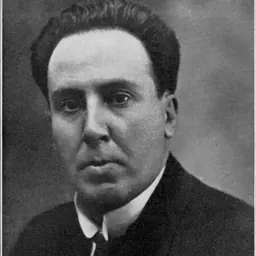

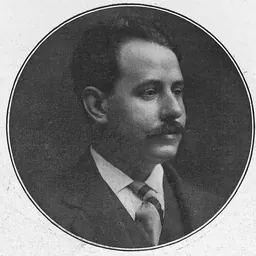
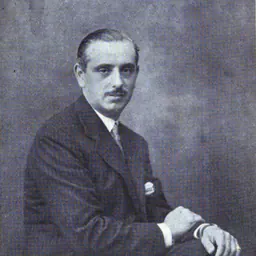
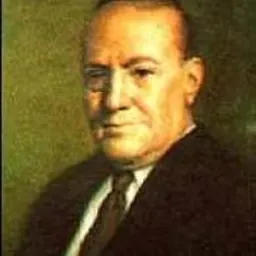
Related people
Same field, nearest in time


Contemporaries
People whose lives overlapped Alfredo Marquerie's


Frequently asked questions
Who was Alfredo Marquerie?
Spanish writer (1907-1974)
When was Alfredo Marquerie born?
Alfredo Marquerie was born on 17 January 1907 in Maó.
When did Alfredo Marquerie die?
Alfredo Marquerie died on 31 July 1974 in Cuenca.
What was Alfredo Marquerie's occupation?
Alfredo Marquerie was a writer, poet, essayist, theatre critic, playwright and theatre director.
What nationality was Alfredo Marquerie?
Alfredo Marquerie was Spanish.
Sources & further reading
· Wikipedia: Alfredo Marquerie
Cite this page
APA: Biography.guide. (2026). Alfredo Marquerie. https://biography.guide/alfredo-marquerie/
MLA: "Alfredo Marquerie." Biography.guide, https://biography.guide/alfredo-marquerie/.
Chicago: "Alfredo Marquerie." Biography.guide. https://biography.guide/alfredo-marquerie/.
Data last updated: 2026-09-20 · Spot an error? Report a correction.
Page generated 2026-09-27 04:59 UTC