
About Alfred William Howitt
Lived 1830 – 1908 (aged 77). Alfred William Howitt was an Australian and British explorer, anthropologist, botanist, civil servant, traveler and naturalist, known for Burke and Wills expedition.
Alfred William Howitt (17 April 1830 – 7 March 1908), also known by author abbreviation A. W. Howitt, was an Australian anthropologist, explorer and naturalist. He was known for leading the Victorian Relief Expedition, which set out to establish the fate of the ill-fated Burke and Wills expedition.
Biography
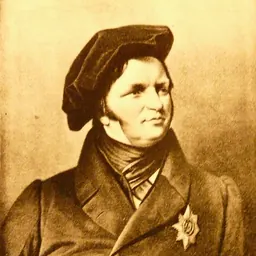
Scan of illustration from p. 40 of The native tribes of South-East Australia, 1904 Howitt was born on 17 April 1830, in Nottingham, England, the son of authors William Howitt and Mary Botham.
He went to the Victorian gold fields in 1852 with his father and brother to visit his uncle, Godfrey Howitt. Initially, Howitt was a geologist in Victoria; later, he worked as a gold warden in North Gippsland. Howitt went on to be appointed Police magistrate & Warden Crown Lands Commissioner; later still, he held the position of Secretary of the Mines Department.
In 1861, the Royal Society of Victoria appointed Howitt leader of the Victorian Relief Expedition, with the task of establishing the fate of the Burke and Wills expedition. Howitt was a skilled bushman; he took only the necessary equipment and a small crew on the journey to Cooper Creek. There, on 16 September he found sole survivor John King; Howitt buried Burke and Wills before returning to Melbourne with King. On a follow-up expedition to Cooper Creek in 1862, Howitt recovered the bodies of Burke and Wills A memorial fund established after his death was used to buy rare books on topics such as anthropology, geology, and botany for the library of the Royal Society; these books were inscribed "Purchased from A. W. Howitt Memorial Fund". He was appointed CMG in the 1906 Birthday Honours.
Howitt died on 7 March 1908, aged 77, in Bairnsdale. The recreational park named in his honour is located adjacent to the Mitchell River Bridge on the eastern side of Bairnsdale.
Howitt's scientific life shared a special irony with that of his longtime friend Lorimer Fison. They were both set in motion by Lewis Henry Morgan; Morgan pinned more hope on Fison than on Howitt. However, Fison gave up his scientific pursuit shortly after Morgan's death, whereas Howitt persevered for many years. Howitt's magnum opus, The Native Tribes of South East Australia (1904), remains one of the only contemporaneous scientific studies of the native institutions of Central Australian Aborigines.
Recognition Mount Howitt in Victoria, and Howitt Hall, one of Monash University's Halls of Residence, are named after him. Howitt Street in Kingston, Canberra, and Howitt Street in Traralgon, are also named after him. It is likely that Howitt, a locality beside the Gulf of Carpentaria in Queensland, is named after him, because many localities in the area are named after those connected to the Burke and Wills expedition.
Don’t just read it —
keep it.
Full-length biographies made to live with: read them, listen on the way to work, watch them tonight.
- E-book
- Audio
- Video
Instant download · yours to keep · every purchase keeps this site free
Important facts
People in Alfred William Howitt's life
Named in this biography and alive at the same time

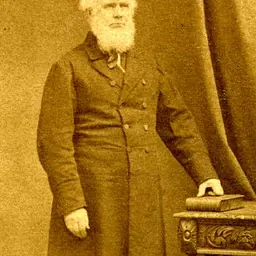




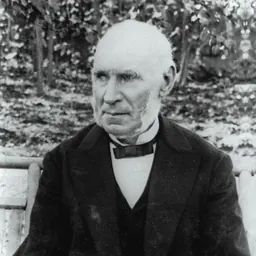
Related people
Same field, nearest in time

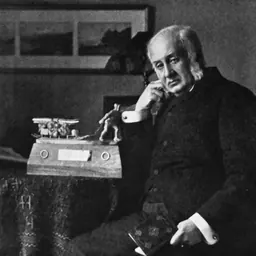

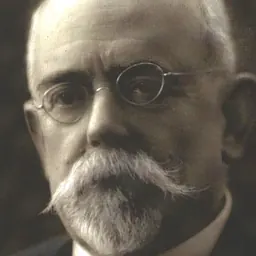
Contemporaries
People whose lives overlapped Alfred William Howitt's




Frequently asked questions
Who was Alfred William Howitt?
Australian scientist (1830-1908)
When was Alfred William Howitt born?
Alfred William Howitt was born on 17 April 1830 in Nottingham.
When did Alfred William Howitt die?
Alfred William Howitt died on 7 March 1908 in Bairnsdale.
What was Alfred William Howitt's occupation?
Alfred William Howitt was an explorer, anthropologist, botanist, civil servant, traveler and naturalist.
What was Alfred William Howitt known for?
Alfred William Howitt was known for Burke and Wills expedition.
What nationality was Alfred William Howitt?
Alfred William Howitt was Australian and British.
Sources & further reading
· Wikipedia: Alfred William Howitt
· DBpedia: Alfred William Howitt
Cite this page
APA: Biography.guide. (2026). Alfred William Howitt. https://biography.guide/alfred-william-howitt/
MLA: "Alfred William Howitt." Biography.guide, https://biography.guide/alfred-william-howitt/.
Chicago: "Alfred William Howitt." Biography.guide. https://biography.guide/alfred-william-howitt/.
Data last updated: 2026-09-20 · Spot an error? Report a correction.
Page generated 2026-09-27 05:30 UTC