
About Alfred Sully
Lived 1821 – 1879 (aged 57). Alfred Sully was an American painter, military officer, history painter, artist, military personnel and watercolorist.
Alfred Sully (May 22, 1820 or 1821 – April 27, 1879) was an American military officer who served in the United States Army during the Mexican-American War and the American Indian Wars. He served as Brevet Brigadier General in the Union army during the American Civil War but was removed from command by John Gibbon for failure to suppress a mutiny by the 34th New York Infantry Regiment. He was cleared by a court of inquiry of any wrongdoing and sent to command the District of Iowa (including the Territory of North Dakota) in the Department of the Northwest during the Sioux Wars.
He led Sully's Expedition, a series of punitive expeditions against native Americans in the aftermath of the Dakota War of 1862. After the Civil War, he served as major in the United States Army and continued to fight in the Indian Wars including the Nez Perce War and out of Fort Dodge, Fort Harker and Fort Vancouver. He served as Superintendent of Indian Affairs for Montana in 1869 and as colonel of the 21st Infantry Regiment in 1873.
Early life and education
Our Camp at Cha-ink-pah River, watercolor, by Alfred Sully, c. 1856 Sully was born in Philadelphia, Pennsylvania, on May 22, 1820 or 1821. and Alfred was an amateur painter who worked in watercolor and oil. in 1837 and graduated as a second lieutenant in 1841. Between 1849 and 1853, after California fell under American jurisdiction, Sully served as chief quartermaster in Monterey, California. He created several oil and watercolor paintings that depicted the social life in Monterey at that time.
Sully was promoted to captain in 1852 and placed in command of Company F of the Second Regiment at Fort Ridgely and Fort Pierre. and led the construction of Fort Randall. Sully was promoted to colonel of the 1st Minnesota Infantry Regiment on March 4, 1862. and was promoted to brigadier general of volunteers in II Corps under John Sedgwick on September 26, 1862. He was wounded twice - he was grazed by a bullet in the ear during the Battle of Seven Pines and in the leg during the Battle of Fredericksburg. A court of inquiry cleared him of any wrongdoing on May 16, 1863, and he was sent West to the Dakota Territory to serve in the Sioux Wars. In the spring of 1863, Major General John Pope ordered general Henry Hastings Sibley to march against the Sioux to drive them west toward the Missouri River, and Sully to proceed north to intercept the Sioux before they crossed the river. Sully did not meet up with Sibley due to delays in troop movements caused by low water levels of the Missouri river. He began to return to base on August 1. Pope criticized Sully for the delay which prompted Sully to move his troops out of Fort Pierre on August 13.
On September 3, 1863, at the Battle of Whitestone Hill, Sully's troops demolished a village of approximately 500 tipis of Blackfeet, Dakota, Hunkpapa, Lakota, and Yankton. A scouting party from the 6th Iowa Cavalry Regiment, located the native American village and requested reinforcements from Sully. The Sioux became aware of the U.S. troops and attempted to negotiate a truce but the talks broke down. Many of the Sioux village residents began to flee while others prepared for battle. Sully and reinforcements arrived at sunset. Sully ordered the 2nd Nebraska Cavalry Regiment to cut off the Sioux from escaping to the north and east. Sully ordered the 6th Iowa Cavalry, the 7th Iowa Cavalry Regiment and artillery to drive through the center of the village to capture and kill the Sioux as well as destroy their food supplies. In his report, Sully stated that, "I can safely say that I gave them one of the most severe punishments that the Indians have ever received." native Americans killed with 156 prisoners taken Sully ordered the severed heads of the native Americans responsible placed on stakes overlooking the Missouri River as a warning.
In July 1864, Sully led the 30th Wisconsin Infantry Regiment to build Fort Rice as a base of operations for expeditions against the Sioux.
A pioneer woman named Fanny Kelly was kidnapped by the Sioux and Sully led troops to re-capture her. In his report, Sully estimated that approximately 150 Sioux were killed and U.S. troops suffered casualties of 5 killed and 10 wounded.
Sully regrouped and led his troops through the badlands in order to reach steamboats on the Yellowstone River for resupply.
Sully was brevetted to major general of volunteers In 1867, he was scrutinized for his harsh treatment of native Americans by the committee on Indian Affairs led by James R. Doolittle. Sully recommended to the committee that the Bureau of Indian Affairs report into the U.S. Army rather than the Interior Department.
Personal life During Sully's service as Quartermaster in Monterey, California, he married María Manuela Antonia Jimeno y de la Guerra, the 15-year-old granddaughter of the Californio military officer and ranchero, Jose de la Guerra y Noriega. The family initially objected to the marriage since Sully was Protestant and not wealthy and the couple eloped. The family eventually accepted the marriage and granted Sully a tract of land in California.
From September 1856 through May 1857, while serving at Fort Pierre, Sully met and, by Sioux tribal custom, married Pehanlutawinj, a young French-Yankton girl of the Yankton Sioux tribe. Sully and Pehanlutawinj had a daughter named Mary Sully, also known as Akicita Win (Soldier Woman)., who would later become the wife of Philip Deloria, son of Saswe, a.k.a. François Deloria (Saswe being the Dakota pronunciation of François), a powerful Yankton medicine man and chief of the "Half-Breed band".
In 1866, Sully married Sophia Webster, a resident of Richmond, Virginia, and Confederate sympathizer during the Civil War. Together, they had two children. a scholar, writer, and author of Custer Died for Your Sins.
Legacy In 1864, Fort Sully was named in his honor. Sully County, South Dakota, the location of Fort Sully, was named after the fort when the county was formed in 1883.
Several of Sully's sketches of the Siege of Veracruz and his description of the battle from a letter were published in a 1914 article in The New York Times.
Don’t just read it —
keep it.
Full-length biographies made to live with: read them, listen on the way to work, watch them tonight.
- E-book
- Audio
- Video
Instant download · yours to keep · every purchase keeps this site free
Important facts
People in Alfred Sully's life
Named in this biography and alive at the same time
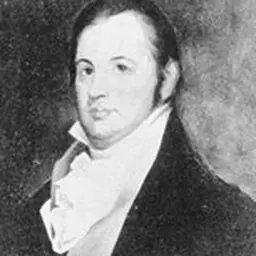
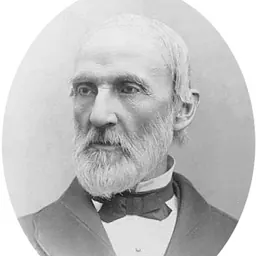
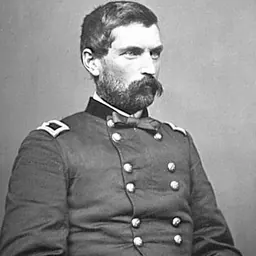

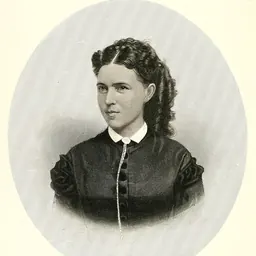
Related people
Same field, nearest in time


Contemporaries
People whose lives overlapped Alfred Sully's




Frequently asked questions
Who was Alfred Sully?
American Civil War officer (1821–1879)
When was Alfred Sully born?
Alfred Sully was born on 22 May 1821 in Philadelphia.
When did Alfred Sully die?
Alfred Sully died on 27 April 1879 in Fort Vancouver.
What was Alfred Sully's occupation?
Alfred Sully was a painter, military officer, history painter, artist, military personnel and watercolorist.
What nationality was Alfred Sully?
Alfred Sully was American.
Sources & further reading
Cite this page
APA: Biography.guide. (2026). Alfred Sully. https://biography.guide/alfred-sully/
MLA: "Alfred Sully." Biography.guide, https://biography.guide/alfred-sully/.
Chicago: "Alfred Sully." Biography.guide. https://biography.guide/alfred-sully/.
Data last updated: 2026-09-20 · Spot an error? Report a correction.
Page generated 2026-09-27 05:25 UTC