
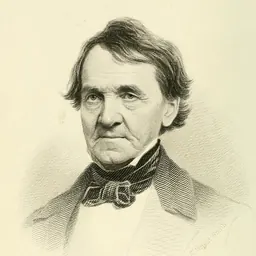
Alfred Moore
Associate Justice of the United States Supreme Court
About Alfred Moore
Lived 1755 – 1810 (aged 55). Alfred Moore was an American lawyer, judge and politician.
Alfred Moore (May 21, 1755 – October 15, 1810) was an American judge, lawyer, planter and military officer who became an associate justice of the Supreme Court of the United States. Moore Square, a park located in the Moore Square Historic District in Raleigh, North Carolina, was named in his honor, as was Moore County, North Carolina. He was also a founder and trustee of the University of North Carolina at Chapel Hill.
Moore is noted for having written just one opinion for the Court during his term of service: Bas v. Tingy, a minor case of maritime law. Although a member of the Court for nearly four years, poor health kept Moore from the Court's business during much of his tenure. In particular he did not participate in Marbury v. Madison, a landmark case decided while he was on the Court. Moore was one of the least effective justices in the history of the Court, his career having "made scarcely a ripple in American judicial history."
Family and education Alfred Moore was born May 21, 1755, in New Hanover County, North Carolina, to Anne (Grange) and Maurice Moore.
Around 1764, following the death of his mother and his father's remarriage, Alfred was sent to Boston to complete his education. Later, he returned to North Carolina and read law as an apprentice to his father and was admitted to the bar in April 1775. He fought in the Battle of Moore's Creek Bridge, and took part in the Siege of Charleston, South Carolina, after British forces attempted to capture Sullivan's Island. On March 8, 1777, following the deaths of his father, brother and uncle, Moore resigned his commission to care for the family plantation. Even so, he continued to be involved in irregular military activities against British and Loyalist forces, becoming a colonel in the North Carolina militia from 1777 to 1782. When Lord Cornwallis moved through southeastern North Carolina after the Battle of Guilford Court House, his troops plundered all Patriot slave plantations in their path. British forces under the command of Major James Craig burnt Moore's slave plantation and "carried off the stock and slaves". By 1790, Moore enslaved 48 people on his slave plantation. As Attorney General, in 1787, he argued the State's case in Bayard v. Singleton, 1 N.C. (Mart) 5, a decision of the North Carolina Court of Conference (the precursor of the North Carolina Supreme Court) that became an important early instance of the application of judicial review. Moore, an ardent Federalist favoring a strong national government, took a leading role in securing North Carolina's ratification of the United States Constitution after the state had initially rejected it in 1788. He also played a role in the founding of the University of North Carolina at Chapel Hill. He was among those who selected the site for the university, and he served on its board of trustees from 1789 until 1807. to succeed James Iredell.
Personal life In 1777, he married Susanne Elizabeth Eagles. They had several children, including Alfred, Augusta, and Sara Louisa.
He died October 15, 1810, in Bladen County, North Carolina, and is buried at St. Philip's Church, in Brunswick County.
His summer home, Moorefields, which he built after the Revolutionary War, located in Orange County, North Carolina, near Hillsborough, still stands, and is listed in the National Register of Historic Places.
Don’t just read it —
keep it.
Full-length biographies made to live with: read them, listen on the way to work, watch them tonight.
- E-book
- Audio
- Video
Instant download · yours to keep · every purchase keeps this site free
Important facts
People in Alfred Moore's life
Named in this biography and alive at the same time
Related people
Same field, nearest in time



Contemporaries
People whose lives overlapped Alfred Moore's





Frequently asked questions
Who was Alfred Moore?
Associate Justice of the United States Supreme Court (1755-1810)
When was Alfred Moore born?
Alfred Moore was born on 21 May 1755 in New Hanover County.
When did Alfred Moore die?
Alfred Moore died on 15 October 1810 in Bladen County.
What was Alfred Moore's occupation?
Alfred Moore was a lawyer, judge and politician.
What nationality was Alfred Moore?
Alfred Moore was American.
Sources & further reading
Cite this page
APA: Biography.guide. (2026). Alfred Moore. https://biography.guide/alfred-moore/
MLA: "Alfred Moore." Biography.guide, https://biography.guide/alfred-moore/.
Chicago: "Alfred Moore." Biography.guide. https://biography.guide/alfred-moore/.
Data last updated: 2026-09-20 · Spot an error? Report a correction.
Page generated 2026-09-27 05:27 UTC