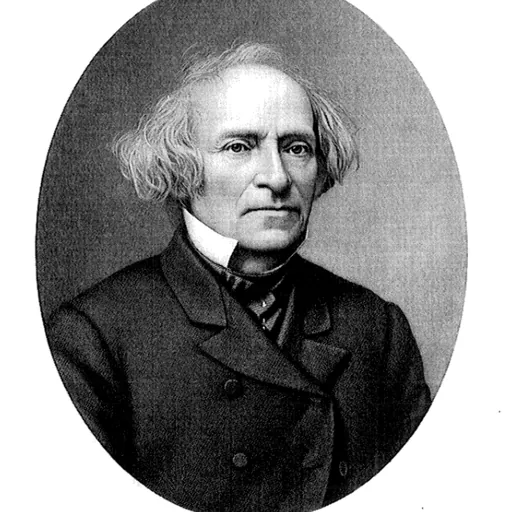
About Alfred L. Elwyn
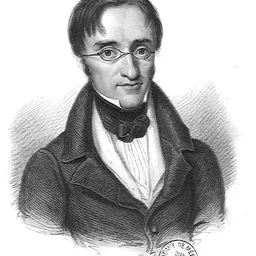
Lived 1804 – 1884 (aged 79). Alfred L. Elwyn was an American physician, philanthropist and writer.
Alfred Langdon Elwyn (9 July 1804 – 15 March 1884) was an American medical doctor, writer and philanthropist. He was a pioneer in the education and care of people with mental and physical disabilities. He was one of the founding officers of the Pennsylvania Institution for the Instruction of the Blind in 1833 and founded the Pennsylvania Training School for Feeble-Minded Children in 1852. The community of Elwyn, Pennsylvania and the Elwyn Institute are named in his honor.
Early life and education Elwyn was born in Portsmouth, New Hampshire, to Elizabeth Sherburne (née Langdon) and Thomas Elwyn. His grandfather was John Langdon, the 2nd governor of New Hampshire. Elwyn graduated from Exeter Academy in 1819
On January 31, 1832, he married Mary Middleton, daughter of James Mease and granddaughter of Pierce Butler of South Carolina. Together they had a son and daughter. He traveled to Boston for a meeting of the American Association for the Advancement of Science in 1849. He had promised to take a letter from Rachel Laird, a blind girl living in Philadelphia, to Laura Bridgman, who was a famous blind deaf mute in Boston. Bridgman was studying at the South Boston Institute for the Blind, and while there Elwyn visited a classroom for mentally disabled children run by teacher James Richards.
Elwyn was impressed with Richards' work, and resolved to do something similar in Pennsylvania. In 1852, with Richards, Elwyn established a training school for those with mental disabilities in Germantown, Pennsylvania. In 1853, the Pennsylvania State Legislature formally chartered "The Pennsylvania Training School for Feeble-Minded Children" with Richards as its first superintendent in Germantown. The institution was only the third of its kind in the United States.
He was elected as a member of the American Philosophical Society in 1844. In 1850, Elwyn founded the Pennsylvania State Agricultural Society and Farmers' High School
Confederate $10 Banknote with Elwyn's son depicted on the right. Elwyn's son, also named Alfred Langdon Elwyn (born 1832), was as a child the subject of a portrait painted by Thomas Sully. The portrait was owned by Edward L. Carey and hung in the Academy of Fine Arts in Philadelphia. In 1862, the portrait was used on the ten dollar Confederate States banknote. The son had become an abolitionist as an adult, but his identity was unknown when the portrait was chosen.
Death and legacy He died on March 15, 1884, and was interred at Laurel Hill Cemetery in Philadelphia, Pennsylvania. The town of Elwyn, Pennsylvania, and the multistate chain of intellectually and developmentally disabled care facilities Elwyn, are named in his honor.
Don’t just read it —
keep it.
Full-length biographies made to live with: read them, listen on the way to work, watch them tonight.
- E-book
- Audio
- Video
Instant download · yours to keep · every purchase keeps this site free
Important facts
People in Alfred L. Elwyn's life
Named in this biography and alive at the same time




Related people
Same field, nearest in time




Contemporaries
People whose lives overlapped Alfred L. Elwyn's






Frequently asked questions
Who was Alfred L. Elwyn?
American physician (1804-1884)
When was Alfred L. Elwyn born?
Alfred L. Elwyn was born on 9 July 1804 in Portsmouth.
When did Alfred L. Elwyn die?
Alfred L. Elwyn died on 15 March 1884.
What was Alfred L. Elwyn's occupation?
Alfred L. Elwyn was a physician, philanthropist and writer.
What nationality was Alfred L. Elwyn?
Alfred L. Elwyn was American.
Sources & further reading
Cite this page
APA: Biography.guide. (2026). Alfred L. Elwyn. https://biography.guide/alfred-l-elwyn/
MLA: "Alfred L. Elwyn." Biography.guide, https://biography.guide/alfred-l-elwyn/.
Chicago: "Alfred L. Elwyn." Biography.guide. https://biography.guide/alfred-l-elwyn/.
Data last updated: 2026-09-23 · Spot an error? Report a correction.
Portrait: Wikimedia Commons · author & licence
Page generated 2026-09-27 05:08 UTC