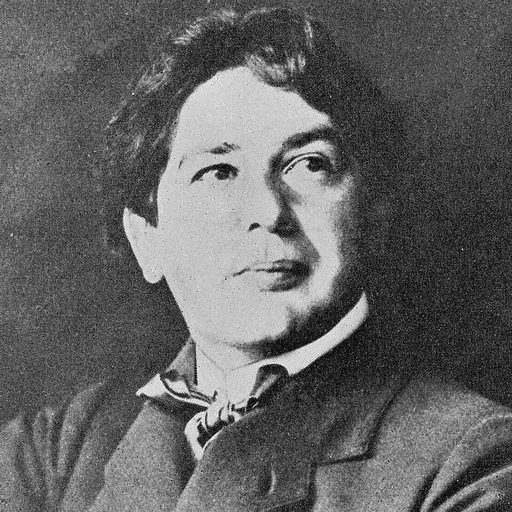
About Alfred Fröhlich
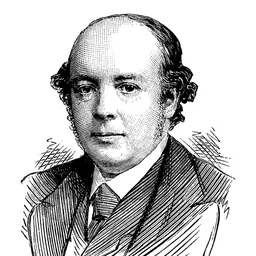
Lived 1871 – 1953 (aged 81). Alfred Fröhlich was an Austrian pharmacologist, university teacher, neurologist, physician and pathologist.
Alfred Fröhlich (August 15, 1871 – March 22, 1953) was an Austrian-American pharmacologist and neurologist born in Vienna.
Biography Fröhlich was born in Vienna, into a Jewish family. In 1895 he graduated from the University of Vienna, afterwards remaining at Vienna as an assistant to Carl Nothnagel (1841–1905). In 1905 he became a member of the department of pharmacology at the university, and from 1919 until 1939 he was a full professor of pharmacology and toxicology. Following the Nazi takeover of Austria, Fröhlich emigrated to the United States, where he worked at the May Institute of Medical Research of the Jewish Hospital of Cincinnati. Here he continued his experimental research of the central nervous system.
He is remembered for his studies on the effects of the pituitary on the autonomic nervous system. With Otto Loewi (1873–1961), he performed pharmacological research on cocaine. He was a good friend of Harvey Cushing, whom he met in 1901 while working with Charles Scott Sherrington in Liverpool. In addition to his own laboratory, he also worked in marine laboratories at Naples, Helgoland and in Woods Hole, Massachusetts during his career.
Fröhlich died in 1953 in Cincinnati.
Fröhlich's syndrome In 1901 he provided a comprehensive description of dystrophia adiposogenitalis, of which he published a paper titled Ein Fall von Tumor der Hypophysis cerebri ohne Akromegalie. This disorder is characterized by feminine obesity along with retarded sexual maturity, and is caused by tumors of the pituitary. In honor of his discovery, this condition was to become known as "Fröhlich's syndrome". It is sometimes referred to as Babinski-Fröhlich syndrome, named in conjunction with Joseph Babinski, who gave an independent description of the disease a year earlier in 1900.
Selected publications Ein Fall von Tumor der Hypophysis cerebri ohne Akromegalie (A case involving a tumor of the hypophysis cerebri without acromegaly), In: Wiener klinische Rundschau, 1901, 15: 833–836; 906–908. Pharmakologie des Centralnervensystems (Pharmacology of the central nervous system). In: Handbuch der normalen und pathologischen Physiologie. Volume 10, Wien, 1927. Pharmakologie des vegetativen (autonomen) Nervensystems (Pharmacology of the autonomic nervous system), In: Handbuch der normalen und pathologischen Physiologie. Volume 10, Wien, 1927. Allgemein lähmende und erregbarkeitssteigernde Gifte, In: Handbuch der normalen und pathologischen Physiologie. Volume 9, Wien, 1929.
Don’t just read it —
keep it.
Full-length biographies made to live with: read them, listen on the way to work, watch them tonight.
- E-book
- Audio
- Video
Instant download · yours to keep · every purchase keeps this site free
Important facts
People in Alfred Fröhlich's life
Named in this biography and alive at the same time



Related people
Same field, nearest in time

Contemporaries
People whose lives overlapped Alfred Fröhlich's


Frequently asked questions
Who was Alfred Fröhlich?
Austrian pharmacologist (1871–1953)
When was Alfred Fröhlich born?
Alfred Fröhlich was born on 15 August 1871 in Vienna.
When did Alfred Fröhlich die?
Alfred Fröhlich died on 22 March 1953 in Cincinnati.
What was Alfred Fröhlich's occupation?
Alfred Fröhlich was a pharmacologist, university teacher, neurologist, physician and pathologist.
What nationality was Alfred Fröhlich?
Alfred Fröhlich was Austrian.
Sources & further reading
Cite this page
APA: Biography.guide. (2026). Alfred Fröhlich. https://biography.guide/alfred-frohlich/
MLA: "Alfred Fröhlich." Biography.guide, https://biography.guide/alfred-frohlich/.
Chicago: "Alfred Fröhlich." Biography.guide. https://biography.guide/alfred-frohlich/.
Data last updated: 2026-09-21 · Spot an error? Report a correction.
Portrait: Wikimedia Commons · author & licence
Page generated 2026-09-27 04:59 UTC