
About Alfred Evans
Lived 1884 – 1944 (aged 60). Alfred Evans was a British cricketer.
Vice-Admiral Sir Alfred Englefield Evans (30 January 1884 — 29 December 1944) was an English first-class cricketer and Royal Navy officer. In the Royal Navy, he served with distinction in the First World War and eventually rose to the rank of vice-admiral. Having retired just before the Second World War, Evans returned to service and became head of the Naval Technical Service in Ottawa. As a cricketer, he played first-class cricket predominantly for the Royal Navy and Hampshire. He was killed when the Avro 691 Lancastrian he was returning to the United Kingdom aboard crashed into the Atlantic Ocean.
Early and family life Evans was born in South Africa, the second son of Dr. E. W. Evans. He spent his formative years in South Africa before the family returned to England, where he was educated at Horris Hill School (which had been founded by his uncle Alfred Evans). From a cricketing family, both of his brother's, Dudley and William, played first-class cricket, as did his cousin Ralph Evans, whilst another cousin, John Evans, played Test cricket for England.
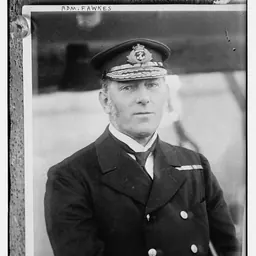
Naval career First World War and post-war service After completing his education at Horris Hill, he joined the Royal Navy. In 1905, he was promoted to lieutenant, with Evans serving as flag lieutenant to Admiral Sir Wilmot Fawkes when he was Commander-in-Chief, Australia Station. for which he was mentioned in despatches. He was promoted to commander in June 1917. In November of the same year he was decorated for bravery by the Kingdom of Italy with the Silver Medal of Military Valor. During the final year of the war, he commanded the destroyer . and as captain commanded the physical training school at HMNB Portsmouth. That same month he was appointed naval aide-de-camp to George V. Having been second-in-command of the 1st Cruiser Squadron in the Mediterranean, he was rear-admiral in charge of Gibraltar from 1937 to 1939. Evans was promoted to vice-admiral in June 1939, at which point he retired from active service. Evans was the only passenger returning to the UK on a Canadian Government Trans-Atlantic Air Service flight which left Montreal bound for Prestwick on 29 December 1944. His name is recorded on the Chatham Naval Memorial. He was survived by his wife, whom he had married in 1908, and their two daughters. Following the war, he returned to play first-class cricket for the Royal Navy in 1919, with Evans making three appearances for the Royal Navy that season, in addition to playing for a combined Army and Navy cricket team against a team of Demobilised Officers. he made one half century, a score of 77 for the Royal Navy against the Army in 1914. As a medium pace bowler, he took 23 wickets at a bowling average of 36.56, with best figures of 4 for 74.
Don’t just read it —
keep it.
Full-length biographies made to live with: read them, listen on the way to work, watch them tonight.
- E-book
- Audio
- Video
Instant download · yours to keep · every purchase keeps this site free
Important facts
People in Alfred Evans's life
Named in this biography and alive at the same time


Related people
Same field, nearest in time




Contemporaries
People whose lives overlapped Alfred Evans's


Frequently asked questions
Who was Alfred Evans?
English cricketer (1884-1944)
When was Alfred Evans born?
Alfred Evans was born on 30 January 1884 in South Africa.
When did Alfred Evans die?
Alfred Evans died on 29 December 1944 in Cranborne.
What was Alfred Evans's occupation?
Alfred Evans was a cricketer.
What nationality was Alfred Evans?
Alfred Evans was British.
Sources & further reading
· DBpedia: Alfred Evans (Royal Navy officer)
Cite this page
APA: Biography.guide. (2026). Alfred Evans. https://biography.guide/alfred-evans-cricketer/
MLA: "Alfred Evans." Biography.guide, https://biography.guide/alfred-evans-cricketer/.
Chicago: "Alfred Evans." Biography.guide. https://biography.guide/alfred-evans-cricketer/.
Data last updated: 2026-09-20 · Spot an error? Report a correction.
Page generated 2026-09-27 05:29 UTC