
Alfred Eckhard Zimmern
British academic
About Alfred Eckhard Zimmern
Lived 1879 – 1957 (aged 78). Alfred Eckhard Zimmern was a British historian, political scientist, classical philologist, university teacher and classics.
Sir Alfred Eckhard Zimmern (26 January 1879 – 24 November 1957) was an English classical scholar, historian, and political scientist writing on international relations. A British policymaker during World War I and a prominent liberal thinker, Zimmern played an important role in drafting the blueprint for what would become the League of Nations. He was a prominent liberal internationalist. He was also credited with coining the phrase "welfare state", which was made popular a few years later by William Temple.
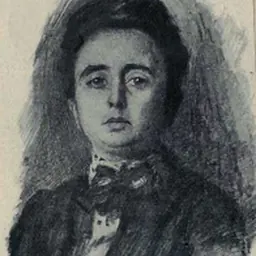
Early life and background Zimmern was born on 26 January 1879 in Surbiton, Surrey, UK. He was raised in a cosmopolitan, upper-middle-class family. Judge Archie Zimmern and former Hong Kong Stock Exchange chairman Francis Zimmern were both his nephews. The writers, translators and suffragettes Helen Zimmern and Alice Zimmern were his cousins.
Alfred was brought up a Christian and later an active participant in the World Council of Churches. Later in life he became a supporter of Zionism. He was educated at Winchester College, and read classics at New College, Oxford, where he won the Stanhope essay prize in 1902. He was appointed Lecturer in Ancient History, New College, Oxford (1903), and Fellow and tutor, New College (1904–1909). He authored The Greek Commonwealth in 1911 where he characterized the rise of Athens as a positive for its neighbors and the Athenian Empire as an empire of freedom. The endowment for the Woodrow Wilson Chair was announced in 1918 and Zimmern began work in the position in April 1919. After leaving Aberystwyth, he taught at Cornell University in 1922 and 1923.
In 1923, he and his wife Lucie Zimmern founded and ran the Geneva School of International Studies from 1923 to 1939. The Geneva School was held every summer at the Geneva Graduate Institute.
He was the inaugural Montague Burton Professor of International Relations, Oxford University (1930–1944). It provided various reports on foreign press, historical and political background of the enemy and various other topics.
Zimmern, was one of four deputy directors. The three other Deputy Directors along with Zimmern were George N. Clark, Herbert J. Patton and Charles K. Webster.
It was moved to the Foreign Office 1943–46.
He was a member of the Round Table Group (1913–1923) and later was given as a source of information that had supposedly influenced the conspiracy theory views of the Round Table by Georgetown University professor Carroll Quigley.
Internationalism Zimmern is an influential proponent of liberal internationalism. By critics, Zimmern was described as a utopian and idealist thinker on international relations. He is cited often, in this perspective, in E. H. Carr's The Twenty Years' Crisis (1939); Carr and Zimmern are characterised as being "at opposite ends of the theoretical and political spectrum".
Zimmern contributed to the founding of the League of Nations Society and of UNESCO. He was Deputy Director of the League's Institute for Intellectual Co-operation, in Paris, in the mid-1920s; He was nominated in 1947 for the Nobel Peace Prize, in connection with his UNESCO work.
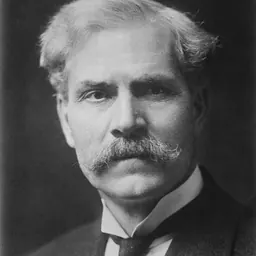
Zimmern joined the British Labour Party in 1924, and was Labour candidate for Carnarvon Boroughs against David Lloyd George in the general election of 1924. A close friend of Ramsay MacDonald, Zimmern followed him in 1931 when MacDonald formed the National Government. He became an active member of the National Labour Organisation and frequently wrote articles for its journal, the News-Letter. Zimmern was one of five writers who contributed to a book Towards a National Policy: Being a National Labour Contribution in April 1935.
Zimmern died in Avon, Connecticut, on 24 November 1957.
Personal life He was married to Lucie Zimmern, who was a musician and international relations thinker. Together, they founded and ran the Geneva School of International Studies from 1923 to 1939. The Geneva School was held every summer at the Geneva Graduate Institute. Prospects of Democracy & Other Essays The Greek Commonwealth: Politics and Economics in Fifth Century Athens, 1911; 5th edition 1931, Oxford, reprint 1977 The Economic Weapon Against Germany, London: Allen & Unwin, 1918 The Third British Empire (1926; 3rd edition 1934), London: Oxford University Press The League of Nations and the Rule of Law 1918–1935 (1936) "The Ethical Presuppositions of a World Order", an essay in The Universal Church and the World of Nations (1938).
Don’t just read it —
keep it.
Full-length biographies made to live with: read them, listen on the way to work, watch them tonight.
- E-book
- Audio
- Video
Instant download · yours to keep · every purchase keeps this site free
Important facts
People in Alfred Eckhard Zimmern's life
Named in this biography and alive at the same time





Related people
Same field, nearest in time

Contemporaries
People whose lives overlapped Alfred Eckhard Zimmern's





Frequently asked questions
Who was Alfred Eckhard Zimmern?
British academic (1879-1957)
When was Alfred Eckhard Zimmern born?
Alfred Eckhard Zimmern was born on 26 January 1879 in Surbiton.
When did Alfred Eckhard Zimmern die?
Alfred Eckhard Zimmern died on 24 November 1957 in Hartford.
What was Alfred Eckhard Zimmern's occupation?
Alfred Eckhard Zimmern was a historian, political scientist, classical philologist, university teacher and classics.
What nationality was Alfred Eckhard Zimmern?
Alfred Eckhard Zimmern was British.
Sources & further reading
· Wikipedia: Alfred Eckhard Zimmern
· DBpedia: Alfred Eckhard Zimmern
Cite this page
APA: Biography.guide. (2026). Alfred Eckhard Zimmern. https://biography.guide/alfred-eckhard-zimmern/
MLA: "Alfred Eckhard Zimmern." Biography.guide, https://biography.guide/alfred-eckhard-zimmern/.
Chicago: "Alfred Eckhard Zimmern." Biography.guide. https://biography.guide/alfred-eckhard-zimmern/.
Data last updated: 2026-09-22 · Spot an error? Report a correction.
Page generated 2026-09-27 05:31 UTC