
About Alfred Eastlack Driscoll
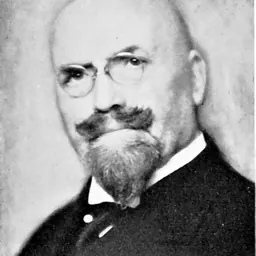
Lived 1902 – 1975 (aged 72). Alfred Eastlack Driscoll was an American politician, lawyer, governor and jurist.
Alfred Eastlack Driscoll (October 25, 1902 – March 9, 1975) was an American attorney and Republican Party politician who served as the 43rd governor of New Jersey from 1947 to 1954. As governor, he led the crusade for the 1947 state constitution, which strengthened the executive branch, streamlined the judiciary, and outlawed segregation in the state. He was the first governor to serve consecutive terms in office, as permitted by the new constitution. In his second term, he oversaw the completion and initial expansion of the New Jersey Turnpike and parts of the construction for the Garden State Parkway, the latter of which had its Rartian River Bridge renamed in his honor in 1974, at which he attended.
Prior to his election as governor, Driscoll represented Camden County in the New Jersey Senate from 1939 to 1941. He later served as president of Warner-Lambert (now a part of Pfizer).
Early life and education Alfred Eastlack Driscoll was born on October 25, 1902, in Pittsburgh, Pennsylvania. He was the only child of Alfred Robie Driscoll and Mattie Eastlack Driscoll. His mother was active in church, reform, and educational movements and was among the founders of Peddie School in Hightstown, New Jersey. Driscoll's ancestry can be traced to Haddonfield, New Jersey during the American Revolution, and in 1906, his family returned to Haddonfield.
Driscoll graduated from Haddonfield Memorial High School in 1921, where he captained the debate and track teams, was recognized as the most outstanding student and won the Childrey Award for his work ethic.
He attended Williams College, where he again captained the track team, participated in debate, and was one of two four-letter athletes. He graduated from Williams in 1925. He later reflected on his college days, "When I was in college I had a bad case of wanderlust. I went to sea during a couple of summer vacations. I worked as a cook with an expedition to the Canadian Rockies and another time, I cooked for an outfit that went north to the Arctic Circle. I used to justify myself by saying that I was building windows out of which I could look after I had settled down."
Early career Local politics After graduating from Harvard, Driscoll returned home to join the firm of Starr, Sumerhill and Lloyd in Camden, New Jersey.
1946 election
In 1946, Driscoll ran for governor with the support of the incumbent, Walter Evans Edge. In the primary, he defeated former governor Harold G. Hoffman. In the general election, Republicans successfully attacked the unpopular federal administration of Harry S. Truman and tied Democratic nominee Lewis G. Hansen to Frank Hague. Driscoll stressed his experience and promised strong, efficient state government, but only addressed constitutional reform in general terms. He defeated Hansen in a landslide with a 221,000 vote majority.
1949 election
In 1949, Driscoll was the first governor eligible to run for re-election to a second term, a provision added by the 1947 constitution. After defeating a surprisingly strong challenge in the Republican primary from Somerset County freeholder Robert L. Adams, Driscoll faced Elmer H. Wene in the general election. Frank Hague, whose power in Jersey City was waning, sought to use the Wene campaign to re-establish a statewide base of support. However, Driscoll received the support of insurgent Democratic reformers in Hudson County and became the first Republican since Warren G. Harding to carry Jersey City. Despite this, Wene lost narrowly by winning strong margins in South Jersey.
Second term (195054) In his second inaugural address, Driscoll outlined a vision of "working federalism," arguing that states should have greater initiative and cooperation and that the federal government should devolve more functions to the states. "In our republic, it has been the traditional task of the states to protection individual freedom," Driscoll said. "Despite the contention of some who would put their trust in strong, centralized government in the nation's capital, Big Government sooner or later ceases to be either representative or responsible. It retains the appearance of a union of states and of popular representation, but abandons the substance."
Driscoll's second term in office was marked by three major infrastructure projects; the New Jersey Turnpike and the Walt Whitman Bridge were each opened, and construction on the Garden State Parkway began. The Turnpike Authority was created in 1949, issued its first bonds in 1950 and completed the entire 118-mile turnpike project in twenty-three months. Driscoll closely supervised the project, making regular unnanounced on-site inspections. The New Jersey Highway Authority was established to build the Garden State Parkway in 1952, and the 164-mile road opened in 1954.
In his final year in office, Driscoll supervised the purchases of Island Beach State Park and Wharton State Forest and planned the development of Sandy Hook State Park, intended to compete with Jones Beach State Park for New York visitors. Driscoll also coordinated with Governor of New York Thomas E. Dewey on the establishment of the Bistate Waterfront Commission to combat racketeering and corruption on the Hudson River docks.
Despite these achievements, Driscoll's second term was marked by a pair of political scandals which did not implicate his administration but weakened his position within the Republican Party. The first involved the purchase of two privately owned bridges from Burlington County Republican Party chair Clifford R. Powell by the Burlington County Board of Chosen Freeholders. The state had planned to acquire the bridges for $4,900,000 through condemnation, but the freeholders bid $12,400,000. Driscoll moved to block the sale and removed Powell from his position from his position as chief of staff of the National Guard. In the second scandal, Driscoll directed deputy attorney general Nelson Stamler to intervene in a major gambling scandal in Bergen County. Before Stamler's prosecution was complete, he was removed by the Attorney General. Though Driscoll was never personally implicated, later legislative investigations revealed that the brother of a defendant had appealed to the state Republican Party chairman to relieve pressure and another defendant briefly worked in Driscoll's office as a clerk. Though neither scandals implicated Driscoll's integrity, his lifelong independence from the Republican machine was flipped against him as a failure of leadership which threatened the function of government.
Retirement After leaving office in 1954, Driscoll assumed the presidency of the Warner-Hudnut Company, later Warner-Lambert Pharmaceutical Company and today part of Pfizer. He remained active in government as president of the National Municipal League and an active member of a citizens' committee in favor of the Gateway National Recreation Area, the New Jersey Historical Commission and the Kerner Commission. He supported efforts by Richard J. Hughes and William T. Cahill to issue bonds and reform taxes, respectively.
In 1970, William T. Cahill appointed Driscoll head of the New Jersey Turnpike Authority.
Death and legacy
Driscoll died on March 9, 1975, at his home in Haddonfield, New Jersey. Although he was a Presbyterian, Driscoll was buried at the Haddonfield Baptist Churchyard.
Legacy The Driscoll Bridge on the Garden State Parkway spans the Raritan River near its mouth and was named after Driscoll in 1974.
In 1971, a failed planned extension of the New Jersey Turnpike which would have connected it to the Parkway, similar in nature to the Pennsylvania Turnpike's Northeast Extension, would have also borne his name.
Don’t just read it —
keep it.
Full-length biographies made to live with: read them, listen on the way to work, watch them tonight.
- E-book
- Audio
- Video
Instant download · yours to keep · every purchase keeps this site free
Important facts
People in Alfred Eastlack Driscoll's life
Named in this biography and alive at the same time

Related people
Same field, nearest in time






Contemporaries
People whose lives overlapped Alfred Eastlack Driscoll's


Frequently asked questions
Who was Alfred Eastlack Driscoll?
American politician (1902–1975)
When was Alfred Eastlack Driscoll born?
Alfred Eastlack Driscoll was born on 25 October 1902 in Pittsburgh.
When did Alfred Eastlack Driscoll die?
Alfred Eastlack Driscoll died on 9 March 1975 in Haddonfield.
What was Alfred Eastlack Driscoll's occupation?
Alfred Eastlack Driscoll was a politician, lawyer, governor and jurist.
What nationality was Alfred Eastlack Driscoll?
Alfred Eastlack Driscoll was American.
Sources & further reading
· Wikipedia: Alfred Eastlack Driscoll
Cite this page
APA: Biography.guide. (2026). Alfred Eastlack Driscoll. https://biography.guide/alfred-eastlack-driscoll/
MLA: "Alfred Eastlack Driscoll." Biography.guide, https://biography.guide/alfred-eastlack-driscoll/.
Chicago: "Alfred Eastlack Driscoll." Biography.guide. https://biography.guide/alfred-eastlack-driscoll/.
Data last updated: 2026-09-26 · Spot an error? Report a correction.
Page generated 2026-09-27 05:15 UTC