
About Alfred Becker
Lived 1899 – 1981 (aged 82). Alfred Becker was a military personnel.
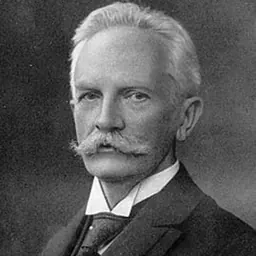
Alfred Becker (20 August 1899 – 26 December 1981) was a German engineer and artillery officer who served during the First and Second World Wars. During the Second World War he took captured British and French vehicles and refurbished and rebuilt them to supply the German army with armoured fighting vehicles. With his engineering and organizational skills, he converted the Hotchkiss plant on the outskirts of Paris into a vehicle modification and fabrication center. He used the vehicles to motorize German guns, rocket launchers and mortars. Working with Altmärkische Kettenwerk Gmbh (Alkett), steel shielding was shipped from Germany to armour the vehicles. The men from his artillery command did the metal work and conversion on 1,800 recovered vehicles.
During the winter of 1943-44 Becker's work focused on equipping the 21st Panzer Division. He used the tracked carriages of French light tanks to mobilize the 7.5 cm Pak 40 anti-tank gun and the 10.5 cm leFH 18 howitzer. Becker had the tank turrets removed, mounted the guns upon the chassis and placed steel plates around the crew compartment to give them some measure of protection. The vehicles were formed into a fire support unit, the Sturmgeschütz Abteilung 200. Becker was made the commander of this motorized assault gun battalion, and led the unit during the battles in Normandy. Some of Becker's unit escaped the encirclement at Falaise and they retreated across France and into Belgium. Becker was captured in Alsace on the French/German border in December 1944.
First World War Becker was born and raised in Krefeld. At the outset of The Great War, Becker volunteered at the age of 15. He served in the artillery and became an officer. He was awarded the Iron Cross for his actions at Verdun and again at Cambrai. He was injured by poison gas a few weeks before the end of the war.
Interwar period Following the armistice Becker attended university and earned a doctorate in mechanical engineering. He worked as a designer in the textile industry and was co-owner of the company Volkmann & Company in Krefeld. He also formed a small manufacturing firm, Alfred Becker AG of Bielefeld.
World War II Battery chief On 28 August 1939 Becker was called up to serve in the 227th Infantry Division "Rhine-Westphalian", drawn from the Krefeld area during the 3rd wave mobilization. Becker was made an officer in the division's 15th Artillery Regiment, under the command of Lieutenant-Colonel Edgar Feuchtinger. He was rapidly promoted to the rank of captain and made Batterychief of Battery #12. When Germany invaded Poland the 227th Infantry Division was on the western frontier with the 5th Army performing border protection in the Eifel region, near Belgium.
In December 1939 Becker's division was reassigned and became a part of Army Group B under command of Generalfeldmarshall Fedor von Bock, in preparation for Fall Gelb. Becker's artillery regiment was re-numbered the 227th Artillery Regiment. On 10 May 1940 the division engaged in the offensive into the Netherlands and Belgium as part of the 18th Army. Becker's artillery battery provided fire support as the division made its way through Enschede and Deventer. All the guns in Becker's artillery regiment were pulled by horse drawn limbers and caissons, the standard practice for infantry divisions of the Heer. Becker's division reached the Grebbe line, where it was held up for three days. An attack on 13 May supported by artillery fire was unable to break the line. That night the Dutch forces withdrew under the cover of night. When the 227th went in to resume the attack the next morning they found the positions abandoned. Becker and the 227th crossed the Leie and continued the advance, taking Amersfoort just before the Dutch capitulation on 19 May 1940.
While his unit was at Amersfoort Becker came across the abandoned motor transport of a well-equipped Dutch artillery regiment. This vehicle, known then as , met with great approval from the OKH. The vehicles were shipped to North Africa for use with the Afrika Korps.
After Becker had completed this project he was ordered by Hitler to return to France, take an inventory of all remaining British and French armored vehicles, and determine if they were suitable for German requirements. He was then to collect them and convert them to practical German use. The order required Becker to create enough usable equipment to form "at least" two panzer divisions.
Baukommando Becker
Under the authority of the Reich Minister for Armaments and War Production Becker (Construction Unit Becker) was created. The command made use of three factories in France, the Matford Factory, the Talbot Factory and the Hotchkiss Factory, all near Paris. A large quantity of damaged Allied military vehicles were available in France, but their utility in 1942 was in serious doubt. The vehicles collected were divided into three main groups: those requiring minor repairs and refits, those requiring major repair and refits, and those that were beyond use and were to be used as a source for spare parts. Becker was assigned an engineering staff, who set about their work modifying what was available.
The wrecks were disassembled, cleaned, and changes to the design were worked out. Then an assembly line was set up at one of the factories to do a production line on the type and a run of the modified vehicles was created. The bodies of the overhauled vehicles were given purpose appropriate superstructures. Becker's basic idea for the conversion was straightforward in principle: he would build a prototype of the replacement superstructure by framing it out of wood panels and sending these to Alkett. Alkett would then produce a run of replacement superstructures made out of steel. These were then shipped back to France where Becker had completed the engineering plans for the conversion. The conversion process was streamlined, the Hotchkiss assembly line was brought up and a run of assembly was completed. The vehicles were refitted and repaired by importance, all of one type at a time. Remaining parts were stored away for spares. A special effort was made to guarantee that a spare parts supply would be available. For important parts subject to special wear a 10% supply of parts was created, while for parts subject to general wear a 30% supply of parts was stored up. Leftover materials were shipped back to the steelworks. A further 106 chassis were converted into self-propelled artillery pieces, with 94 conversions to carry the 150 mm howitzer, and 12 more for the 105 mm. In addition, he produced 30 artillery observation vehicles using this same chassis. Becker stands by during presentation of one of his , mounted on an armourized French SOMUA MCG. The artillerymen of the 12th Battery that Becker had left in Russia were in harsh conditions. Battling the cold and engaged in heavy fighting, over time their vehicles were slowly lost, either due to mines or from direct fire from Soviet tanks. When their guns were lost the surviving crews were put to use as infantrymen. The 227th Infantry Division was involved in heavy fighting near Leningrad defending against the Red Army's main offensive at Sinyavino Heights and the south shore of Lake Ladoga. From August through September 1942 the division suffered many casualties in this offensive, which was called the Battle of Lake Ladoga. Concerned for the men in his old unit and needing their skills for the work he was doing, Becker requested the transfer of the men from the 12th Battery back to his command in Paris. Strict rules prohibited such transfers of operational troops from Russia to France. Contacting his old divisional commander, Becker devised a work around. Making use of mandatory leave requirements, the commander of the 227th Infantry Division sent ten of Becker's Krefelders back to Germany each week.
In early 1944, Becker's combat unit, 200, moved to its new deployment area near Mauron in Brittany. The unit's headquarters were in the town of Voves, south-east of Chartres.
Battle of Normandy In the Battle for Normandy the 21st Panzer Division was the only mechanized unit near the area of the invasion, and was the only one with an opportunity to realize Rommel's intentions and meet the invaders at the beach. A number of problems in command and control resulted in the division failing to go into action on the night of 5/6 June when the area was inundated with British paratroopers from the 6th Airborne Division. Becker's assault gun unit did not take part in the first day's fighting, but by 9 June three of his batteries were providing fire support for the 125th Panzergrenadier Regiment. Both the 105 mm howitzers and the 75 mm Pak 40s were effective anti-tank weapons. Allied troops commonly mistook the to be armed with 88s.
Operation Goodwood Following six weeks of combat with limited gains, General Bernard Montgomery ordered Operation Goodwood to try and break the Normandy stalemate. It is this engagement that Becker and his command are most famous for. In Operation Goodwood, Montgomery committed three armoured divisions in a narrow attack intended to pressure and degrade the German defenders and potentially break out into the open tank country just beyond at Falaise. The route of the attack would take the British armour through positions held by primarily by the 21st Panzer Division's 125th Panzergrenadier Regiment, under command of Hans von Luck. His command had been supplemented by a battalion of Panzer Mk IV tanks from the 22nd Panzer Regiment, a battalion of Tiger tanks from the 503 Heavy Panzer Battalion, and Becker's StuG 200. The Germans termed such an amalgamation a ("battle group") and used them throughout the war. were usually named after their commanders, in this case " Luck". The area of defense was farmland, interrupted by a scattering of small farm villages. The Germans anticipated an attack through this sector, and had prepared a defense in depth to check such an attack. Taking advantage of the stone walls of the old Norman buildings, the villages had been developed into strongpoints. The range of the German anti-tank guns allowed overlapping fields of fire. Though the land was considered good tank country, the German defenders did not make use of mines as they felt that would interfere with their plans of fighting a mobile defense. Those assault guns of Becker's battalion that survived this engagement were destroyed in the Falaise Gap. Becker and some of his men managed to escape the encirclement and retreated across northern France and into Belgium.
Retreat across France, capture, and post-war life
As the remnants of the 21st Panzer Division retreated across the Seine and back to the frontier, Becker reached Belgium on 22 August and set up his battalion headquarters in Fosses-la-Ville, castle of Taravisée. On 2 July 1944 Major Becker had been recommended for the award of the , or the Knight's Cross of the War Service Cross with Swords. It was awarded to him at the end of 1944. After reaching the Rhineland, Becker was captured in late December 1944 in Alsace.
Becker's importance to the German war effort during the Second World War underscores the fact that by 1943 German industry lacked the productive capacity to keep up with the massive losses in equipment they were suffering in the east.
Military awards Iron Cross (1914), 2nd and 1st Class Clasp to the Iron Cross (1939) 1939 Bar to the 1914 Iron Cross 2nd Class (18 May 1940) 1939 Bar to the 1914 Iron Cross 1st Class (3 June 1940) German Cross in Gold ( (13 May 1942) War Merit Cross 1st class with Swords (1 September 1942) Knight's Cross of the War Merit Cross with Swords (either December 1944 or 20 April 1945)
Becker conversions
Fully tracked armoured fighting vehicles
Conversions based on the FCM 36 medium tank (10 built) A mounted on the chassis of the FCM 36, with steel plates formed to create a protected crew compartment. Also referred to as the .
(12 built) A field howitzer mounted on the chassis of the FCM 36, with steel plates formed to create a protected crew compartment. It is similar to the .
Conversions based on the Hotchkiss H35/H38/H39 cavalry tank
(60 built) A mounted on the chassis of the , with steel plates formed to create a protected crew compartment. Also referred to as the .
(12 built) A howitzer mounted on the chassis of the , with steel plates cut and welded to form a protected crew compartment. It is similar to the .
(48 built) A howitzer mounted on the chassis of the , with steel plates cut and welded to form a protected crew compartment. It is similar to the .
The simplified to a tractor to pull a field gun.
(30 built) A command and artillery observation vehicle based on the .
The standard with its issue small turret, supplemented with four to six 28 or 32 cm rockets mounted in their crates to the sides of the tank.
Conversions based on the Renault AMR 35/Renault ZT light cavalry tank / A small mortar carrier with a 8 cm Granatwerfer 34 mortar built on the AMR 35 chassis, with steel plates formed to create a protected crew compartment.
Conversions based on the British Mk VI light tank (1 incomplete prototype) A mounted onto the chassis of the British Mk VI Light Tank, with steel plates cut and welded to form a protected crew compartment. It is similar to the .
(12 built) A German field howitzer mounted onto the chassis of the British Mk VI Light Tank, with steel plates cut and welded to form a protected crew compartment. It is similar to the .
Fully tracked armoured carriers
Conversions based on the Lorraine 37L light tractor (280 built) The , a mounted on the chassis of the chassis, with steel plates formed to create a protected crew compartment.
(60 built) A howitzer mounted on the chassis of the chassis, with steel plates formed to create a protected crew compartment. It is similar to the .
(one built) A (Captured Soviet 122 mm M-30 howitzer) on the chassis, with steel plates formed to create a protected crew compartment.
(72 built) Official German designation . A howitzer mounted on the chassis of the chassis, with steel plates formed to create a protected crew compartment. It is similar to the .
An battlefield armoured munitions carrier.
(24 built) An artillery command vehicle using the chassis.
(30 built) An artillery observation vehicle using the chassis.
An armoured munitions carrier.
Conversions based on the light mover (40 built) A small command and artillery observation vehicle built on the chassis of the .
Conversions based on the light mover
A small tank destroyer based on the Universal Carrier mounting a 4,7 cm Pak 35/36 L/35.6 (ö) “Böhler” (a Cannone da 47/32 with a L/35.6 barrel, pepper box style muzzle brake and had a slightly greater performance).
Halftrack vehicles Conversions to armoured troop or weapons carriers based on the halftracks
The SOMUA MCL light-halftrack, an unarmoured and essentially unmodified softskin vehicle.
An armoured personnel carrier halftrack based on the SOMUA MCL. Equivalent of the .
(6 built) A multiple rocket launcher, mounted on the SOMUA MCL. The rocket launcher consisted of 8 cm rockets mounted on rails, with two racks of twelve rails for total of twenty four 80 mm rocket rounds per load. The rockets are similar to the 'Stalin's Organ' rockets.
(16 built) 20 tubes of 8.14 cm GrW 278/1(f) mortars (Captured 81 mm French Brandt Mle 27/31 mortars) set on two tiers and mounted on the back of the armored SOMUA MCL.
Conversions to armoured troop or weapons carriers based on the SOMUA MCG halftracks
The SOMUA MCG halftrack modified with armour plate covering to the front over the radiator and to the windscreen, short armoured bed, otherwise a softskin half-track.
An armoured personnel carrier halftrack based on the SOMUA MCG. Equivalent of the .
An armoured personnel carrier halftrack based on the SOMUA MCG. Equivalent of the : an assault engineer vehicle with special tools, explosives and fittings to carry assault bridge ramps on the sides.
An armoured munitions carrier based on the SOMUA MCG. Similar to the .
(72 built) An armoured SOMUA MCG half-track mounting a . This vehicle preceded development of the Sd.Kfz. 251/22 by a year.
(36 built) 16 tubes of 8.14 cm GrW 278/1(f) mortars (Captured 81 mm French Brandt Mle 27/31 mortars) set on two tiers and mounted on the back of SOMUA MCG.
Conversions to armoured personnel or weapons carriers based on the Unic P107 Halftrack
A softskin half-track transport based on the Unic P107 halftrack.
An armoured version of the P107 halftrack, a lighter version of the armoured personnel carrier.
An equivalent of the radio/command vehicles.
(18 built) A single mount on the Unic P107 with an armored rear area and an unarmored cabin. Built as an emergency reconstruction. Similar to the .
(72 built) A single mount on the armoured Unic P107 (similar to the ).
A mounted on the armoured Unic P107 (similar to the , but built by Becker about a year before).
A 8.14 cm GrW 278/1(f) mortars (Captured 81 mm French Brandt Mle 27/31 mortars) mounted inside the armoured Unic P107 (similar to the ).
Other conversions (120 built) A Panzer recovery half-track. (48 built) An ammunition truck. (28 built) A repair vehicle. (64 built) A fuel truck. (12 built) A physician vehicle. (48 built) An ambulance vehicle. (12 built) A medical service vehicle. (6 built) A mobile surgical suite vehicle based on the Isobloc Typ W 843 bus. (60 built) An armoured personnel carrier. (32 built) A baker's truck. (40 built) A command vehicle. (24 built) A radio vehicle. (24 built) A telephone line vehicle. (120 built) A three ton heavy supply truck. (24 built) A three ton heavy supply truck (off road). (40 built) A three ton supply truck. (72 built) A motorcycle. (24 built) A motorcycle and sidecar. Note: production details as per Spielberger.
Gallery
Don’t just read it —
keep it.
Full-length biographies made to live with: read them, listen on the way to work, watch them tonight.
- E-book
- Audio
- Video
Instant download · yours to keep · every purchase keeps this site free
Important facts
People in Alfred Becker's life
Named in this biography and alive at the same time



Related people
Same field, nearest in time



Contemporaries
People whose lives overlapped Alfred Becker's

Frequently asked questions
Who was Alfred Becker?
German military engineer
When was Alfred Becker born?
Alfred Becker was born on 20 August 1899 in Krefeld.
When did Alfred Becker die?
Alfred Becker died on 26 December 1981.
What was Alfred Becker's occupation?
Alfred Becker was a military personnel.
Sources & further reading
Cite this page
APA: Biography.guide. (2026). Alfred Becker. https://biography.guide/alfred-becker/
MLA: "Alfred Becker." Biography.guide, https://biography.guide/alfred-becker/.
Chicago: "Alfred Becker." Biography.guide. https://biography.guide/alfred-becker/.
Data last updated: 2026-09-20 · Spot an error? Report a correction.
Page generated 2026-09-27 04:58 UTC