
About Alfred A. Thorne
Lived 1871 – 1956 (aged 84). Alfred A. Thorne was a politician.
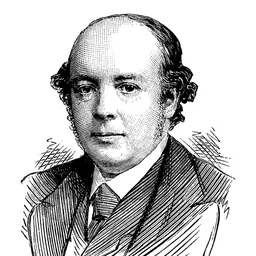
Alfred Athiel Thorne, generally known as A. A. Thorne (14 August 1871 – 23 April 1956), was an educator, politician, writer, pioneering trade unionist, and human rights advocate in British Guiana (now Guyana). He has been described as a titanic figure in the political and social history of colonial Guyana.
In 1894, Thorne founded and led the Middle School, an innovative co-educational private grammar school that provided students with a path to education, regardless of race or background. He served in multiple elected and appointed roles, over a 50-year period, at both national and municipal levels, including as deputy mayor of British Guiana's capital city, Georgetown. He was elected for two separate terms on British Guiana's legislative body, the Combined Court. Thorne advocated for improved workplace safety, racial equality, democracy, and self-determination. He sought to unify the disparate working class communities that made up British Guiana. He was a lifelong journalist, columnist and newspaper letter writer.
Early life and education A. A. Thorne was born on 14 August 1871 in Barbados, then a British West Indies colony, to Louisa Jane Alleyne and Samuel Athiel Thorne, a schoolmaster in Barbados. A. A. Thorne completed his early education at the Lodge School, then graduated from Codrington College in St. John, Barbados. Between 1875 and 1965, Codrington College was affiliated to Durham University, England, with the Barbados college maintaining a classical studies faculty until 1955, to feed into classics and theology degrees awarded by Durham. Thorne subsequently earned both his Bachelor's and Masters degrees at Durham University in England after his school examination results were recognized with the award of an academic scholarship. He is believed to be the first person of African descent to have earned both degrees, as conferred by a British university.
In 1890, while still a teenager, Thorne challenged the Barbados Board of Education regarding the award of the Barbados Scholarship. This would have financially assisted Thorne at Durham, as well as an academic recognition that was described as highly prestigious. Thorne felt that he should have been awarded the scholarship, based on his examination results, but the Board awarded it to someone else, and sources imply this was a white student. Though Thorne lost a legal battle on this point, but the resultant outcry led to a change in the way the Barbados Scholarship was awarded. Thereafter the awarded scholarship was selected and named by Cambridge University's examiners, and solely on merit. he founded British Guiana's first co-educational private grammar school, that provided equal access to qualified students, regardless of background. The school provided girls and boys from middle and working-class families in the British colony the opportunity to gain access to the same level of education that had previously been reserved only for descendants of the 'plantocracy' - former slave-owning families - and the colonial elites. Over time the performance of Thorne's Middle School students, in national tests, was similar to that achieved by the private British-run schools, such as the Queen's College (a boys only school) and Bishops' High School, which was a girls only school.
A. A. Thorne oversaw the development of this school as headmaster for many years, recruiting teachers from across the country. Thorne established a needs-based financial aid system for all students, which he financed, enrolling both boys and girls from underprivileged working class and moderate income families with access to tuition at reduced cost. Fees per term were G$5 to G$12, compared to G$17 at Queen's. He created educational access to girls and minorities, many decades before gender and other civil rights were protected by anti-discrimination laws.
Thorne's Middle School became renowned for the education it provided its students.
Political service and positions A. A. Thorne was in public service for five decades, holding numerous elected an appointed offices at municipal and national levels continuously for 50 years from 1902 to 1952. Nationally, Thorne was elected to the Combined Court, British Guiana's legislative body from 1906 to 1911 as the Financial Representative for the County of Essequebo - North Western division. He was re-elected to the Court for a second term from 1916 to 1921 for New Amsterdam, again as the Financial Representative. He was elected as City Councillor for Georgetown City Council for 47 continuous years starting in 1902. He was elected as the city's Deputy Mayor in 1921, 1922 and 1925.
While serving in government, Thorne argued for opening avenues of employment to Guianese, including the Civil Service. He worked to get the Anglican church disestablished as the national religious body for the colony. This was particularly after the 1896 elections, where the church actively tried to influence the result. In the Combined Court he pushed for the establishment of a national board of education, which was duly launched in 1908, and survived until 1924. He repeatedly lobbied to extend the vote to more citizens. At the turn of the twentieth century there was a minimum income, property or land requirement in order to register as a voter for national and municipal elections. This was initially set so high that the great majority of British Guiana's residents were disenfranchised. For municipal councillors, the income minimum was higher than that of electors. Over the years both requirements were lowered, to somewhere closer to universal suffrage, by the time of his death.
Thorne served as the inaugural president of the British Guiana Trades Union Council in 1941, with Critchlow as vice-president. Thorne's work for workplace safety guidelines and labour rights laid the foundation for the formation of the Manpower Citizens' Association, which he co-led. By 1943, it was the country's largest trade union. It subsequently spun off a political party which ran candidates for the 1947 legislative elections. In 1945, Thorne became one of the inaugural vice-presidents of the Caribbean Labour Congress, a multinational organization, of which the Trades Union Council was a founding member.
Upon hearing of Thorne's death in 1956, the general president of a large trade union, Cecil Cole of Sawmill and Forest Workers' Union, said: "It is through the huge contribution of men like (Thorne) that the Movement stands and is so strong as it is today. Many of us who can be styled indeed the younger generation certainly can well remember his selfless service, his willingness at all times to make the necessary sacrifice of his time, talent, and energy in the interest of the working classes. Those who are left behind can well follow his outstanding example."
International impact Thorne's first visit to the United States in 1904 was at the invitation of the New York City Mayor. During this U.S. visit, Thorne traveled across the America and delivered a keynote address to the President and Alumni of Wilberforce University, where the university's senate conferred upon Thorne the degree of Doctor of Laws (LLD), an honour which they had only conferred previously on two other men, U.S. President William McKinley, and Civil Rights Leader Frederick Douglass.
Thorne recognized that the abortive 1919 Colonisation Scheme - which suggested bringing in more labour from India to undercut local wages, and potentially reassigning British Guiana's status to a de facto colony of British India - created friction and inflamed racial tension. The then Attorney General was not well disposed to Thorne, and at one point suggested he was trying to send Bolsheviks into plantation communities to help undermine the Scheme. Despite the support from the plantation owners, and some members of the colonial government, the Scheme was quickly aborted. Thorne advocated for fair wages for all citizens and led the way for the passage of increased minimum wages for East Indians and Chinese workers (whose families had been brought to the country under indenture), and for African workers (whose forebears had been enslaved from Africa and trafficked to British Guiana).
From 1945, as Britain sought to extricate itself from the machinery of empire, proposals emerged for a West Indies Federation, a political and economic union of Britain's colonies in the region. A. A. Thorne was an early supporter of this concept, along with other figures on the Caribbean political left, notably C. L. R. James, as a pathway to unity within self-determination. The UK government also supported these proposals, albeit for very different reasons. The Federation was launched 18 months after Thorne's death, with British Guiana having observer status, but it collapsed four years later, under a welter of irreconcilable pressures.
In 1949 Thorne, by this stage 78 years old, travelled to London as part of a delegation to discuss the Post War development of sugar production in the West Indies. Thorne's influence as a historical figure in British Guiana, with international recognition, was all the more remarkable given that he was originally from Barbados, of which he remained proud, yet dedicated his efforts in his adopted home.
Family A. A. Thorne married schoolteacher and artist Catherine Elizabeth McLean in October 1895, and then became a widower upon her death. In July 1912, he married a teacher named Violet Janet Ashurst (1892–1991). Ashurst was born in New Amsterdam and raised in British Guiana, the daughter of Charles Ashurst and Elizabeth Jane Alexander. Her family was from Belfast and Ethiopia. A. A. Thorne remained married to Violet for the rest of his life. A. A. Thorne had ten children, five from each wife. These were seven sons, three daughters, of which there were two sets of twins. From his first wife he had Alfred Hubert as his first son, then twin brothers, Albert Athiel and Alfred McLean, finally twin sisters Alfreda and Elfreda. From his second wife he had firstly Alfred Palmerston in 1913, then Duncan John in 1914, Arthur George, Aileen, and finally Cecil.
Death After a long lifetime of public service, A.A. Thorne died in the early hours of Monday 23 April 1956 at Georgetown Public Hospital. He was 86 years old. His funeral took place the same day at St. George's Cathedral, Georgetown, and he was laid to rest at Le Repentir Cemetery.
Upon hearing of Thorne's death in 1956, the president of a large trade union, Cecil Cole of Sawmill and Forest Workers' Union, honored Thorne as a Champion of the People, writing: "It is through the huge contribution of men like (Thorne) that the Movement stands and is so strong as it is today. Many of us who can be styled indeed the younger generation certainly can well remember his selfless service, his willingness at all times to make the necessary sacrifice of his time, talent, and energy in the interest of the working classes. Those who are left behind can well follow his outstanding example." 'Education in British Guiana, Part II', Timehri: The Journal of the Royal Agricultural and Commercial Society of British Guiana, Vol. 11, (third series), (1912). 'British Guianese Progress and Limitations', Timehri: The Journal of the Royal Agricultural and Commercial Society of British Guiana, Vo1. II, (third series), (1912). 'A. A. Thorne v. The Argosy Co., Ltd. and W. Macdonald' (BiblioLife Network, Harvard Law School Library), 1905 No substantive standalone biography has been written about A. A. Thorne.
Don’t just read it —
keep it.
Full-length biographies made to live with: read them, listen on the way to work, watch them tonight.
- E-book
- Audio
- Video
Instant download · yours to keep · every purchase keeps this site free
Important facts
People in Alfred A. Thorne's life
Named in this biography and alive at the same time





Related people
Same field, nearest in time




Contemporaries
People whose lives overlapped Alfred A. Thorne's


Frequently asked questions
Who was Alfred A. Thorne?
Guyanese politician (1871-1956)
When was Alfred A. Thorne born?
Alfred A. Thorne was born on 14 August 1871.
When did Alfred A. Thorne die?
Alfred A. Thorne died on 23 April 1956.
What was Alfred A. Thorne's occupation?
Alfred A. Thorne was a politician.
Sources & further reading
Cite this page
APA: Biography.guide. (2026). Alfred A. Thorne. https://biography.guide/alfred-a-thorne/
MLA: "Alfred A. Thorne." Biography.guide, https://biography.guide/alfred-a-thorne/.
Chicago: "Alfred A. Thorne." Biography.guide. https://biography.guide/alfred-a-thorne/.
Data last updated: 2026-09-20 · Spot an error? Report a correction.
Page generated 2026-09-27 04:59 UTC