
About Alf Wollebæk
Lived 1879 – 1960 (aged 81). Alf Wollebæk was a Norwegian zoologist, curator and zoology.
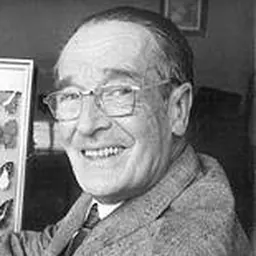
Alf Wollebæk (8 January 1879 – 9 March 1960) was a Norwegian zoologist and curator who made contributions to the study of marine and Arctic fauna. Born in Lier, Norway, to a military father, Wollebæk spent most of his professional career at the Natural History Museum at the University of Oslo, where he worked from 1908 until his retirement in 1949. He is particularly renowned for leading the Norwegian Zoological Expedition to the Galápagos Islands in 1925, during which he collected over 500 specimens and established the archipelago's first biological station on Floreana island. Throughout his career, Wollebæk published numerous scientific papers and popular books on Norwegian wildlife, including works on reptiles, mammals, and fish, while also maintaining a regular column in a scientific magazine. His contributions to zoology were recognized internationally, with the Galápagos sea lion being named Zalophus wollebaeki in his honour, and he received several prestigious awards including the King's Medal of Merit in gold in 1959, just a year before his death in Oslo.
Personal life
Wollebæk was born in Lier to colonel Sigurd Polidor Wollebæk (1835–1920) and his wife Anine Julie Augusta Dahl (1834–1912). His elder brother was jurist and diplomatist Johan Wollebæk (1875–1940). He was married twice; first in 1903 to Agnes Hanssen (1879–1930; sister of sports executive Carl Frølich Hanssen), and in 1932 to Ruth Jensen (1891–1958).
Galápagos expedition
In 1925, Wollebæk was appointed director of the Norwegian Zoological Expedition to the Galápagos Islands, together with the museum preparator Erling R. Hansen. After exploring the West Indies and mainland Colombia, the expedition spent five months (July–December 1925) making detailed biological observations on five Galápagos islands. Wollebæk and his team collected over 500 specimens, published more than 20 papers and books on their findings, and described or reclassified a number of new taxa, most famously the Galápagos sea lion,
The expedition also erected what proved to be the archipelago's first biological station at Post Office Bay on Floreana Island. Built of local lava blocks (walls two to three blocks thick enclosing a 3 × 4 metre laboratory), the "lava house" was intended as a permanent field station and repository for specimens; its ruins still stand.
Don’t just read it —
keep it.
Full-length biographies made to live with: read them, listen on the way to work, watch them tonight.
- E-book
- Audio
- Video
Instant download · yours to keep · every purchase keeps this site free
Important facts
People in Alf Wollebæk's life
Named in this biography and alive at the same time


Related people
Same field, nearest in time





Contemporaries
People whose lives overlapped Alf Wollebæk's


Frequently asked questions
Who was Alf Wollebæk?
Norwegian zoologist
When was Alf Wollebæk born?
Alf Wollebæk was born on 8 January 1879 in Lier.
When did Alf Wollebæk die?
Alf Wollebæk died on 9 March 1960 in Oslo.
What was Alf Wollebæk's occupation?
Alf Wollebæk was a zoologist, curator and zoology.
What nationality was Alf Wollebæk?
Alf Wollebæk was Norwegian.
Sources & further reading
Cite this page
APA: Biography.guide. (2026). Alf Wollebæk. https://biography.guide/alf-wollebaek/
MLA: "Alf Wollebæk." Biography.guide, https://biography.guide/alf-wollebaek/.
Chicago: "Alf Wollebæk." Biography.guide. https://biography.guide/alf-wollebaek/.
Data last updated: 2026-09-25 · Spot an error? Report a correction.
Page generated 2026-09-27 05:10 UTC