
About Alexis Thérèse Petit
Lived 1791 – 1820 (aged 28). Alexis Thérèse Petit was a French physicist.
Alexis Thérèse Petit (; 2 October 1791 – 21 June 1820) was a French physicist.
Petit is known for his work on the efficiencies of air- and steam-engines, published in 1818 (Mémoire sur l’emploi du principe des forces vives dans le calcul des machines). His well-known discussions with the French physicist Sadi Carnot, founder of thermodynamics, may have stimulated Carnot in his reflexions on heat engines and thermodynamic efficiency. The Dulong–Petit law (1819) is named after him and his collaborator Pierre Louis Dulong.
Biography
Early life and studies Petit was born in Vesoul, Haute-Saône. At the age of 10, he proved that he was already capable of taking the difficult entrance exam to France's most prestigious scientific school of the time, the École polytechnique of Paris. He was then placed in a preparatory school where he actually served as a "répétiteur" to help his own classmates digest the course material. He duly entered the Polytechnique at the lowest permissible age, in 1807, and graduated "hors-rang" in 1809 (which is to say that he clearly outranked all of his classmates).
After graduation, Petit stayed at Polytechnique as a faculty member, first as répétiteur in analysis and mechanics (1809) then in physics (1810).
Career He taught for some time at Lycée Bonaparte. At Polytechnique, he served as a substitute (1814) for Jean Henri Hassenfratz whom he would replace in 1815. He thus became the second professor of physics at Polytechnique and the youngest person ever to hold that position, at the age of 23.
Petit and François Arago were brothers-in-law because they married two sisters. In 1814, the two men collaborated on a paper together.
Petit first collaborated with Pierre Louis Dulong for the competition of the French Academy of Sciences about refrigeration (1815). Petit is now probably best known for the surprising Dulong–Petit law concerning the specific heat capacity of metals, which both men formulated together in 1819 and which Albert Einstein explained almost a century later. Petit also designed a special thermometer (using weights) to determine the thermal dilatation coefficients of several metals.
Death Petit died from tuberculosis at the age of 28, shortly after the passing of his wife. He was succeeded by Dulong as professor of physics at the Polytechnique in 1820.
Personality Jules Jamin, a contemporary and fellow physicist provides biographical and temperament details of Petit and Dulong:
Don’t just read it —
keep it.
Full-length biographies made to live with: read them, listen on the way to work, watch them tonight.
- E-book
- Audio
- Video
Instant download · yours to keep · every purchase keeps this site free
Important facts
People in Alexis Thérèse Petit's life
Named in this biography and alive at the same time
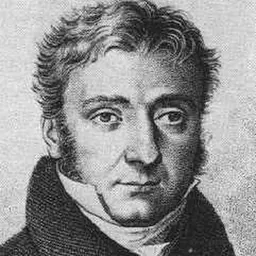
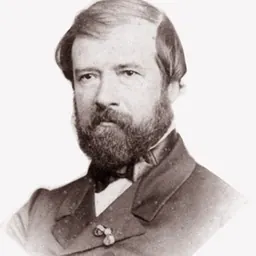

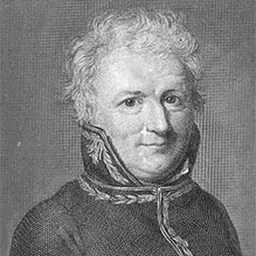
Related people
Same field, nearest in time


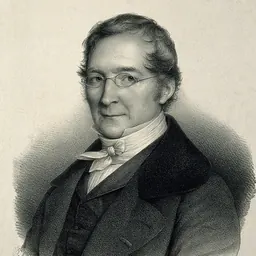

Contemporaries
People whose lives overlapped Alexis Thérèse Petit's



Frequently asked questions
Who was Alexis Thérèse Petit?
French physicist (1791–1820)
When was Alexis Thérèse Petit born?
Alexis Thérèse Petit was born on 2 October 1791 in Vesoul.
When did Alexis Thérèse Petit die?
Alexis Thérèse Petit died on 21 June 1820 in Paris.
What was Alexis Thérèse Petit's occupation?
Alexis Thérèse Petit was a physicist.
What nationality was Alexis Thérèse Petit?
Alexis Thérèse Petit was French.
Sources & further reading
· Wikipedia: Alexis Thérèse Petit
· DBpedia: Alexis Thérèse Petit
Cite this page
APA: Biography.guide. (2026). Alexis Thérèse Petit. https://biography.guide/alexis-therese-petit/
MLA: "Alexis Thérèse Petit." Biography.guide, https://biography.guide/alexis-therese-petit/.
Chicago: "Alexis Thérèse Petit." Biography.guide. https://biography.guide/alexis-therese-petit/.
Data last updated: 2026-09-20 · Spot an error? Report a correction.
Page generated 2026-09-27 04:59 UTC