
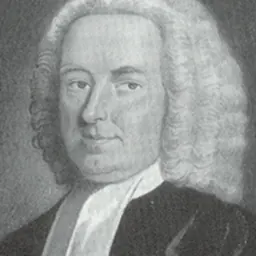
Alexis Clairaut
French mathematician, astronomer, and geophysicist (*1713 – †1765)
About Alexis Clairaut
Lived 1713 – 1765 (aged 52). Alexis Clairaut was a French astronomer, mathematician, physicist and geodesist, known for Apsidal precession, Clairaut's equation and Clairaut's relation.
Alexis Claude Clairaut (; ; 13 May 1713 – 17 May 1765) was a French mathematician, astronomer, and physicist. He was a prominent Newtonian whose work helped to establish the validity of the principles and results that Sir Isaac Newton had outlined in the Principia of 1687. Clairaut was one of the key figures in the expedition to the Lapland that helped to confirm Newton's deduction of the figure of the Earth. In that context, Clairaut deduced what is now known as Clairaut's theorem. He also tackled the gravitational three-body problem, being the first to obtain a satisfactory result for the apsidal precession of the Moon's orbit. In mathematics he is also credited with Clairaut's theorem on mixed partial derivatives, Clairaut's equation, and Clairaut's relation in differential geometry.
Biography
Childhood and early life Clairaut was born in Paris, France, to Jean-Baptiste and Catherine Petit Clairaut. The couple had 20 children, however only a few of them survived childbirth. When only sixteen he finished a treatise on Tortuous Curves, Recherches sur les courbes a double courbure, which, on its publication in 1731, procured his admission into the Royal Academy of Sciences, although he was below the legal age as he was only eighteen. He gave a path-breaking formulae called the distance formulae which helps to find out the distance between any 2 points on the cartesian or XY plane.
Personal life and death Clairaut never married and known for leading an active social life.
Clairaut died in Paris in 1765. The Clairaut crater on the Moon was named after him in 1935.
Contributions
Mathematics In his research on the calculus, Clairaut discovered the equality of mixed partial derivatives (Clairaut's theorem). He gave a condition under which the differential equation was exact, namely. He also established the existence of the integrating factor for first-order linear differential equations. However, he had been anticipated by Nicolas Fatio de Dullier in 1687, and by Johann Bernoulli in a lesson given to L’Hôpital. He began by comparing geometric shapes to measurements of land, a familiar topic, and covered lines, shapes, and even some three dimensional objects. Throughout the book, he copiously related geometry to other branches of mathematics as well as physics and astronomy. Some of the theories and learning methods outlined in the book are still used by teachers today, in geometry and other topics. This textbook was so popular that it went through six editions. The goal of the excursion was to determine the figure of the Earth and to test whether the Earth was an oblate spheroid, as Sir Isaac Newton had claimed in his book Principia, or that it was an oblong, as Giovanni Cassini had thought. Initially, Clairaut disagreed with Newton's conclusion. In the article, he outlines several key problems that effectively disprove Newton's calculations, and provides some solutions to the complications. The issues addressed include calculating gravitational attraction, the rotation of an ellipsoid on its axis, and the difference in density of an ellipsoid on its axes. In 1849 George Stokes showed that Clairaut's result was true whatever the interior constitution or density of the Earth, provided the surface was a spheroid of equilibrium of small eccentricity.
Mathematical astronomy One of the most controversial issues of the 18th century was the problem of three bodies, or how the Earth, Moon, and Sun are attracted to one another. With the use of the recently founded Leibnizian calculus, Clairaut was able to solve the problem using four differential equations. He was also able to incorporate Newton's inverse-square law and law of attraction into his solution, with minor edits to it. However, these equations only offered approximate measurement, and no exact calculations. Another issue still remained with the three body problem; how the Moon rotates on its apsides. Even Newton could account for only half of the motion of the apsides. The Théorie de la lune is strictly Newtonian in character. This contains the explanation of the motion of the apsis. It occurred to him to carry the approximation to the third order, and he thereupon found that the result was in accordance with the observations. This was followed in 1754 by some lunar tables, which he computed using a form of the discrete Fourier transform.
The newfound solution to the problem of three bodies ended up meaning more than proving Newton's laws correct. The unravelling of the problem of three bodies also had practical importance. It allowed sailors to determine the longitudinal direction of their ships, which was crucial not only in sailing to a location, but finding their way home as well. This held economic implications as well, because sailors were able to more easily find destinations of trade based on the longitudinal measures.
In the same work, Clairaut introduced for the first time the theory of potentials, known by that name since the 1828 essay of George Green.
Clairaut subsequently wrote various papers on the orbit of the Moon, and on the motion of comets as affected by the perturbation of the planets, particularly on the path of Halley's comet. He also used applied mathematics to study Venus, taking accurate measurements of the planet's size and distance from the Earth. This was the first precise reckoning of the planet's size.
Clairaut used his own contributions to celestial mechanics and astronomy to assist Émilie du Châtelet in her translation and commentary of Newton's Principia.
Publications Éléments d'algèbre, (In French), 1741.
Don’t just read it —
keep it.
Full-length biographies made to live with: read them, listen on the way to work, watch them tonight.
- E-book
- Audio
- Video
Instant download · yours to keep · every purchase keeps this site free
Important facts
People in Alexis Clairaut's life
Named in this biography and alive at the same time
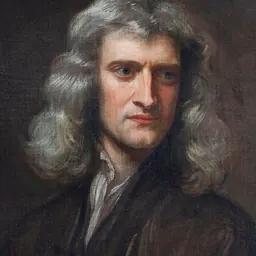

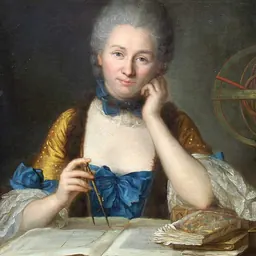
Related people
Same field, nearest in time
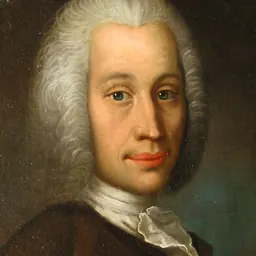

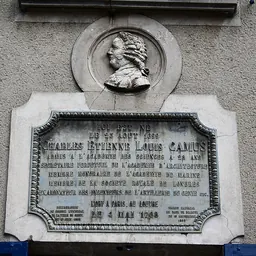


Contemporaries
People whose lives overlapped Alexis Clairaut's




Frequently asked questions
Who was Alexis Clairaut?
French mathematician, astronomer, and geophysicist (*1713 – †1765)
When was Alexis Clairaut born?
Alexis Clairaut was born on 13 May 1713 in Paris.
When did Alexis Clairaut die?
Alexis Clairaut died on 17 May 1765 in Paris.
What was Alexis Clairaut's occupation?
Alexis Clairaut was an astronomer, mathematician, physicist and geodesist.
What was Alexis Clairaut known for?
Alexis Clairaut was known for Apsidal precession, Clairaut's equation, Clairaut's relation, Clairaut's theorem and Clairaut's theorem on equality of mixed partials.
What nationality was Alexis Clairaut?
Alexis Clairaut was French.
Sources & further reading
Cite this page
APA: Biography.guide. (2026). Alexis Clairaut. https://biography.guide/alexis-clairaut/
MLA: "Alexis Clairaut." Biography.guide, https://biography.guide/alexis-clairaut/.
Chicago: "Alexis Clairaut." Biography.guide. https://biography.guide/alexis-clairaut/.
Data last updated: 2026-09-25 · Spot an error? Report a correction.
Page generated 2026-09-27 05:12 UTC