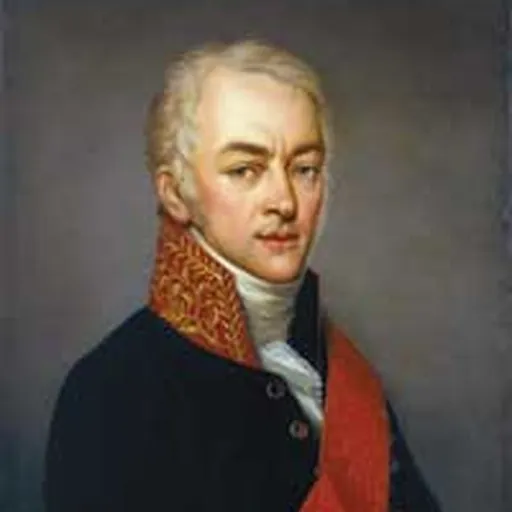
About Alexey Razumovsky
Lived 1748 – 1822 (aged 73). Alexey Razumovsky was a Russian politician.
Count Alexey Kirillovich Razumovsky (; September 23, 1748 – April 4, 1822) was a Russian statesman from the Razumovsky Family. Son of Count Kirill Razumovsky from a marriage with Yekaterina Naryshkina, brother of Andrey Razumovsky; son–in–law of Count Peter Sheremetev (from 1774), father–in–law of Sergey Uvarov (from 1811).
After 1812, he considerably cooled down to the service and for the last two years did not do business at all.
Being, before his appointment as minister, a member of the Masonic lodge and follower of Osip Pozdeev, with whom he had a long correspondence (it was published by Alexander Vasilchikov in his book "The Razumovsky Family"), since 1814, Razumovsky fell under the influence of the Jesuits and, mainly, the famous Count Joseph de Maistre. The latter "literally disposed of him, dictated what should be taught to Russians and what not to be taught"; at his direction, the Greek language, archaeology, natural history, astronomy, chemistry and the history of philosophical systems were thrown out of the original program of the Lyceum, as "not illuminating the mind with useful truths, but darkening with delusions and bewilderments". Introduced theology as the main discipline in all educational institutions. Under the influence of the same de Maistre, Razumovsky introduced new censorship restrictions and began a struggle with the trustee of the Vilna Educational District Adam Czartoryski for the Russification of the Western Region of Russia, of which de Maistre was a supporter. The failure in the fight against Czartoryski and the government's mistrust of the Jesuits forced Razumovsky to ask for resignation from the post of Minister and member of the State Council, which was given to him on August 10, 1816.
For the first two years after that, Razumovsky lived in Moscow and at his estate near Moscow, Gorenki, where he had a botanical garden, which until the 1830s was considered one of the wonders of Moscow. From 1816, he lived in Little Russia, in the town of Pochep, Mglinsky District, where he died. He was buried in the ancestral crypt, but then reburied in the Transfiguration Church of Novgorod–Seversky. According to Vigel, all the sons of Hetman Kirill Razumovsky "were stuffed with French literature, clothed in foreign forms, considered themselves Russian Montmorency, were amiable at court and intolerable outside of it aristocrats". To this, Prince Alexander Vasilchikov adds that the eldest of them, Alexey, was "an exorbitant pride ... and stern in the circle of his family".
Family
Razumovsky was married on February 23, 1774, to one of the richest brides in Russia, Varvara Sheremeteva (January 2, 1750 – May 27, 1824), the second daughter of General–in–Chief Count Pyotr Sheremetev. Around 1784, at the request of her husband, Varvara Petrovna left her family and lived alone in her own house in Moscow – in 1796 a house on Maroseyka (No. 2) was completed. In marriage they had three daughters and two sons. Peter (1775–1835), in 1783 he was registered as a sergeant in the Izmailovsky regiment, studied abroad at the University of Göttingen; adjutant to his grandfather, Hetman Kirill Razumovsky; in 1797, Lieutenant Colonel, later Colonel, Commander of a Grenadier Battalion, in the army of his uncle, Infantry General Ivan Gudovich, a freemason. In 1801, he retired and was granted the title of acting chamberlain. While living in Saint Petersburg, he ran into a lot of debts, which prompted his father to seek to transfer his son to the service in Odessa, in 1806, in the rank of a Real State Councilor, he was appointed an Official for Special Assignments under the Novorossiysk Governor. He died in Odessa on July 18, 1835. Cyril (1777–1829), chamberlain, suffered from insanity, in 1806–1807, he was a prisoner of the Shlisselburg and Peter and Paul Fortresses, later he was transferred to the Spaso–Evfimiev Monastery, after the death of his father he was transported to Kharkov, where he died in 1829. Catherine (1777–1780). Varvara (1778–1864), since 1802, married to Prince Nikolai Repnin–Volkonsky; was a renowned philanthropist who did much for women's education. Catherine (1781–1849), beloved maid of honor of Empress Elizabeth Alekseevna and employee of the Patriotic Society. Since 1811, she was married to the trustee of the Saint Petersburg Educational District and the future Minister of Public Education, Count Sergey Uvarov.
Having got rid of his legal wife, Aleksey Kirillovich settled in his bourgeois woman Marya Sobolevskaya. He had ten illegitimate children, delicately called "pupils" (five sons and five daughters) – Perovskys. Nikolai (1785–1858), (the only one of ten children who bore the patronymic "Ivanovich") the Governor of the Crimea, mayor of Feodosia. Alexey (1787–1836), Russian writer (pseudonym – Anthony Pogorelsky), member of the Russian Academy. Maria (1791–1872), wife of General Maxim Kryzhanovsky, a Lady of Cavalry (1837). Lev (1792–1856), statesman, Minister of Internal Affairs, Minister of Appanages. Vasily (1795–1857), statesman and military leader, Cavalry General, Adjutant General, Governor–General of the Orenburg and Samara Provinces. Elizabeth (Praskovya) (1795–?). Anna (1796–1856), husband – Count Konstantin Tolstoy (1779–1870), son – Alexey Tolstoy. Olga (1798–1833), husband – Mikhail Zhemchuzhnikov, among the sons – Alexey, Alexander, Lev and Vladimir Zhemchuzhnikov. Sophia (1812–1883), husband – Vladimir Lvov. Boris (1815–1881), military and statesman, Adjutant General, member of the State Council.
Awards Order of Saint Alexander Nevsky (April 14, 1808). Order of Saint Vladimir, First Class (October 25, 1811).
Don’t just read it —
keep it.
Full-length biographies made to live with: read them, listen on the way to work, watch them tonight.
- E-book
- Audio
- Video
Instant download · yours to keep · every purchase keeps this site free
Important facts
more
Alexey RazumovskiyPeople in Alexey Razumovsky's life
Named in this biography and alive at the same time


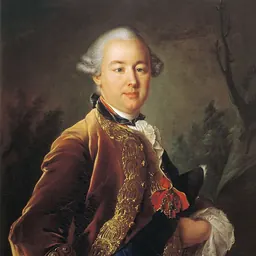
Related people
Same field, nearest in time
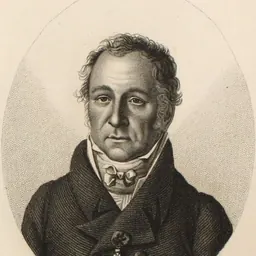



Contemporaries
People whose lives overlapped Alexey Razumovsky's




Frequently asked questions
Who was Alexey Razumovsky?
Russian politician (1748–1822)
When was Alexey Razumovsky born?
Alexey Razumovsky was born on 12 September 1748 in Saint Petersburg.
When did Alexey Razumovsky die?
Alexey Razumovsky died on 23 March 1822 in Pochep.
What was Alexey Razumovsky's occupation?
Alexey Razumovsky was a politician.
What nationality was Alexey Razumovsky?
Alexey Razumovsky was Russian.
Sources & further reading
· Wikipedia: Alexey Razumovsky
· DBpedia: Alexey Razumovsky (born 1748)
Cite this page
APA: Biography.guide. (2026). Alexey Razumovsky. https://biography.guide/alexey-razumovsky/
MLA: "Alexey Razumovsky." Biography.guide, https://biography.guide/alexey-razumovsky/.
Chicago: "Alexey Razumovsky." Biography.guide. https://biography.guide/alexey-razumovsky/.
Data last updated: 2026-09-20 · Spot an error? Report a correction.
Page generated 2026-09-27 05:10 UTC