
About Alexandru Bârlădeanu
Lived 1911 – 1997 (aged 86). Alexandru Bârlădeanu was a Romanian and Russian economist, politician and marxian economist.
Alexandru Bârlădeanu (or Bîrlădeanu; 25 January 1911 – 13 November 1997) was a Romanian Marxian economist and statesman who was prominent during the communist regime until being sidelined in 1968. In his later years, following the collapse of the regime, he served as Senate President.
Biography
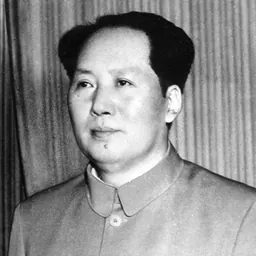
Origins and early career Bârlădeanu was born into a family of teachers in Comrat in the Imperial Russian province of Bessarabia. According to an interview he gave late in life, he was neither Gagauz nor Jewish, as sometimes claimed, but an ethnic Romanian. His great-grandfather came from the Bârlad area but settled in Bessarabia, while his mother was the daughter of a Romanian Orthodox priest who had attended the seminary in Huși. His parents divorced before he turned two. Following the Soviet occupation of Bessarabia, his father, a National Liberal Party–Brătianu affiliate, was deported to Siberia, where he died. He attended primary school in the villages where his mother taught, finishing at Căușeni in 1921, studying in Tighina in 1921–1926 and attending the Boarding High School in Iași from 1926 to 1928, when he earned his baccalauréat. Too poor to enroll at the University of Iași, he returned to Bessarabia. His first job was in 1928, as a functionary at the Tighina school inspectorate. For the following eight years, he was a mathematics tutor for high schoolers and substitute teacher at the commercial school and the apprentices' school in Iași. From 1929 to 1931, he attended Politehnica University of Bucharest sporadically, but did not graduate. His mother was unable to support him, and he returned to the Tighina inspectorate for a time. From 1933 to 1937, he attended the Political Economy section of the University of Iași Law faculty, receiving his doctorate in 1940, having worked as university assistant under Gheorghe Zane for the preceding three years. In 1964, he helped conceive a foreign policy declaration of active neutrality within the communist bloc, wherein Romania was no longer subservient to the Soviet Union but neither embraced the militant outlook of China under Mao Zedong.
He was a member of the Romanian Academy despite not having written any noteworthy scientific publications, elected in 1955 alongside high-ranking party members Ion Gheorghe Maurer and Lothar Rădăceanu, and served as its vice president from 1990 to 1994.
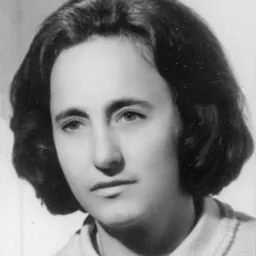
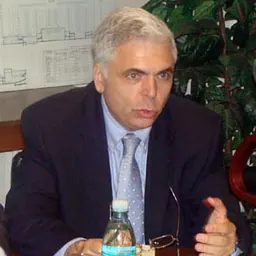
Banishment and return to public life He entered into conflict with Elena Ceaușescu as head of the national council for scientific research, With economic experts like him long sidelined, by the late 1970s, the dictator's wife was far more influential than any civil or military official; of her, Bârlădeanu wrote that "hateful vindictiveness, stupidity, nastiness, insensitivity and brazenness" were her "most obvious" negative qualities. In later years, he and Paul Niculescu-Mizil helped create the myth of a "patriotic faction" within the party where a radical break was marked between early Stalinism and post-1960 developments; Bârlădeanu in particular fostered the image of a benign Gheorghiu-Dej in contrast to Ceaușescu. During the two decades after his fall from grace, he ran into trouble with the authorities twice: once in the 1970s for publishing an article in Contemporanul without approval, and once in the 1980s for discussing with Gheorghe Apostol how Ceaușescu might be removed from the leadership. He also encountered difficulties while selling expensive goods, confiscated during the nationalization process, that he had acquired. the regime responded by placing him under house arrest, Among the positions he held was the Senate Presidency, having been elected in May for a Bucharest seat. That year also saw open conflict between him and Prime Minister Petre Roman and the latter's ally Adrian Severin over the speed of price liberalization and economic privatization, with Bârlădeanu, at the forefront of the FSN's more cautious wing, unsuccessfully pushing for a slower pace. Additionally, in 1990–1991, he was co-president of the committee charged with writing a new constitution, and was for a time honorary director of the FSN's newspaper Azi. He died in Bucharest in 1997.
Don’t just read it —
keep it.
Full-length biographies made to live with: read them, listen on the way to work, watch them tonight.
- E-book
- Audio
- Video
Instant download · yours to keep · every purchase keeps this site free
Important facts
People in Alexandru Bârlădeanu's life
Named in this biography and alive at the same time

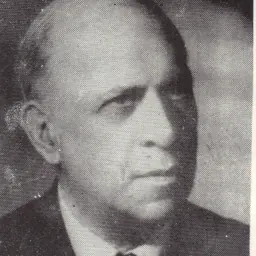

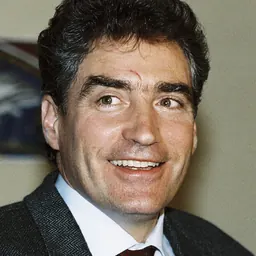
Related people
Same field, nearest in time
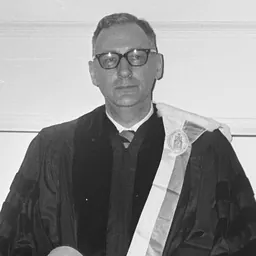



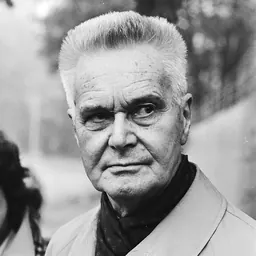
Contemporaries
People whose lives overlapped Alexandru Bârlădeanu's






Frequently asked questions
Who was Alexandru Bârlădeanu?
Romanian economist
When was Alexandru Bârlădeanu born?
Alexandru Bârlădeanu was born on 25 January 1911 in Comrat.
When did Alexandru Bârlădeanu die?
Alexandru Bârlădeanu died on 13 November 1997 in Bucharest.
What was Alexandru Bârlădeanu's occupation?
Alexandru Bârlădeanu was an economist, politician and marxian economist.
What nationality was Alexandru Bârlădeanu?
Alexandru Bârlădeanu was Romanian and Russian.
Sources & further reading
· Wikipedia: Alexandru Bârlădeanu
· DBpedia: Alexandru Bârlădeanu
Cite this page
APA: Biography.guide. (2026). Alexandru Bârlădeanu. https://biography.guide/alexandru-barladeanu/
MLA: "Alexandru Bârlădeanu." Biography.guide, https://biography.guide/alexandru-barladeanu/.
Chicago: "Alexandru Bârlădeanu." Biography.guide. https://biography.guide/alexandru-barladeanu/.
Data last updated: 2026-09-26 · Spot an error? Report a correction.
Page generated 2026-09-27 05:14 UTC