
About Alexandre Ribot
Lived 1842 – 1923 (aged 80). Alexandre Ribot was a French politician, jurist, lawyer, engineer, head of government and author.
Alexandre-Félix-Joseph Ribot ( , ; 7 February 184213 January 1923) was a French politician and four-time Prime Minister of France.
Early life and early career
Ribot was born on 7 February 1842, in Saint-Omer. After graduating from the University of Paris, where he was lauréat of the faculty of law, he was admitted to the bar. He was secretary of the conference of advocates and one of the founders of the Sociéte de legislation comparée. In 1875 and 1876, he was director of criminal affairs and secretary-general at the ministry of justice.
Representative In 1877, he entered politics, becoming a member of the committee of legal resistance during the Broglie ministry; in 1878, he returned to the chamber as a moderate republican member for Boulogne, in his native département of Pas-de-Calais.
His impassioned yet reasoned eloquence gave him an influence which was increased by his articles in the Parlement in which he opposed violent measures against the unauthorized congregations. He devoted himself especially to financial questions, and in 1882 was reporter of the budget. He became one of the most prominent republican opponents of the Radical party, distinguishing himself by his attacks on the short-lived Gambetta ministry. He refused to vote the credits demanded by the Ferry cabinet for the Tonkin expedition, and helped Georges Clemenceau overthrow the ministry in 1885. At the general election of that year he was a victim of the Republican rout in the Pas-de-Calais, and did not re-enter the chamber until 1887.
After the fall of Jules Méline's ministry in 1898, Ribot tried in vain to form a cabinet of "conciliation." Ar the end of 1898, he was elected president of the commission of education, where he advocated for secular education; religious teaching policies from Pierre Waldeck-Rousseau on the religious teaching congregations split the Republican party, and Ribot was among the seceders.
In 1902, Ribot was elected the minister of Foreign Affairs. While in tenue, he canceled the Egypt's debt to France, at the cost of accessing its natural resources.
An adversary to the anti-clerical Combes, he helped bring about the fall of his cabinet, on 13 January 1905. Though, he recognized its improvements from the Concordat of 1801, and supported its Associations culturelles.
On 9 June 1914, Ribot became Prime Minister and Minister of Justice, but ended on 10 June. In addition, on December the 27th 1892, a law on conciliation and arbitration was passed which was put forth (as noted by one study) “as a popular measure in favor of the working people.”
Cabinets Ribot's 1st Ministry, 6 December 189211 January 1893 Alexandre Ribot – President of the Council and Minister of Foreign Affairs Charles de Freycinet – Minister of War Émile Loubet – Minister of the Interior Maurice Rouvier – Minister of Finance Léon Bourgeois – Minister of Justice Auguste Burdeau – Minister of Marine and Colonies Charles Dupuy – Minister of Public Instruction, Fine Arts, and Worship Jules Develle – Minister of Agriculture Jules Viette – Minister of Public Works Jules Siegfried – Minister of Commerce and Industry
Changes 13 December 1892 – Pierre Tirard succeeds Rouvier as Minister of Finance. Ribot's 2nd Ministry, 11 January 18934 April 1893 Alexandre Ribot – President of the Council and Minister of the Interior Jules Develle – Minister of Foreign Affairs Julien Léon Loizillon – Minister of War Pierre Tirard – Minister of Finance Léon Bourgeois – Minister of Justice Adrien Barthélemy Louis Henri Rieunier – Minister of Marine Charles Dupuy – Minister of Public Instruction, Fine Arts, and Worship Albert Viger – Minister of Agriculture Jules Siegfried – Minister of Commerce, Industry, and the Colonies Ribot's 3rd Ministry, 26 January 18951 November 1895 Alexandre Ribot – President of the Council and Minister of Finance Gabriel Hanotaux – Minister of Foreign Affairs Émile Zurlinden – Minister of War Georges Leygues – Minister of the Interior Ludovic Trarieux – Minister of Justice Armand Louis Charles Gustave Besnard – Minister of Marine Raymond Poincaré – Minister of Public Instruction, Fine Arts, and Worship Antoine Gadaud – Minister of Agriculture Émile Chautemps – Minister of Colonies Ludovic Dupuy-Dutemps – Minister of Public Works André Lebon – Minister of Posts and Telegraphs and Minister of Commerce and Industry Ribot's 4th Ministry, 9 June 191413 June 1914 Alexandre Ribot – President of the Council and Minister of Justice Léon Bourgeois – Minister of Foreign Affairs Théophile Delcassé – Minister of War Paul Peytral – Minister of the Interior Étienne Clémentel – Minister of Finance Jean-Baptiste Abel – Minister of Labour and Social Security Provisions Émile Chautemps – Minister of Marine Arthur Dessoye – Minister of Public Instruction and Fine Arts Adrien Dariac – Minister of Agriculture Maurice Maunoury – Minister of Colonies Jean Dupuy – Minister of Public Works Marc Réville – Minister of Posts and Telegraphs and Minister of Commerce and Industry Ribot's 5th Ministry, 20 March 191712 September 1917 Alexandre Ribot – President of the Council and Minister of Foreign Affairs Paul Painlevé – Minister of War Louis Malvy – Minister of the Interior Joseph Thierry – Minister of Finance Albert Thomas – Minister of Armaments and War Manufacturing Léon Bourgeois – Minister of Labour and Social Security Provisions René Viviani – Minister of Justice Lucien Lacaze – Minister of Marine Théodore Steeg – Minister of Public Instruction and Fine Arts Fernand David – Minister of Agriculture Maurice Viollette – Minister of General Supply and Maritime Transports André Maginot – Minister of Colonies Georges Desplas – Minister of Public Works and Transport Étienne Clémentel – Minister of Posts and Telegraphs and Minister of Commerce and Industry
Changes 4 July 1917 – The office of Minister of Maritime Transports is abolished. Maurice Viollette remains Minister of General Supply. 10 August 1917 – Charles Chaumet succeeds Lacaze as Minister of Marine. 1 September 1917 – Théodore Steeg succeeds Malvy as Minister of the Interior
Don’t just read it —
keep it.
Full-length biographies made to live with: read them, listen on the way to work, watch them tonight.
- E-book
- Audio
- Video
Instant download · yours to keep · every purchase keeps this site free
Important facts
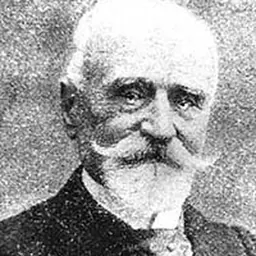
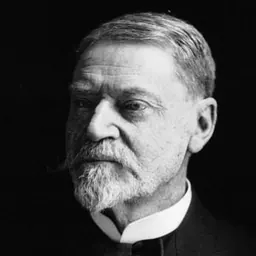
People in Alexandre Ribot's life
Named in this biography and alive at the same time






Related people
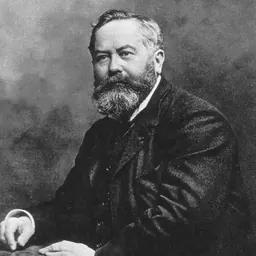
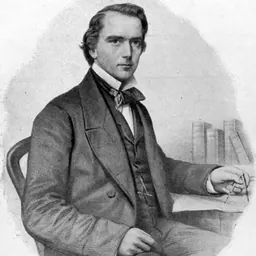
Same field, nearest in time



Contemporaries
People whose lives overlapped Alexandre Ribot's
Frequently asked questions
Who was Alexandre Ribot?
French politician (1842-1923)
When was Alexandre Ribot born?
Alexandre Ribot was born on 7 February 1842 in Saint-Omer.
When did Alexandre Ribot die?
Alexandre Ribot died on 13 January 1923 in Paris.
What was Alexandre Ribot's occupation?
Alexandre Ribot was a politician, jurist, lawyer, engineer, head of government and author.
What nationality was Alexandre Ribot?
Alexandre Ribot was French.
Sources & further reading
Cite this page
APA: Biography.guide. (2026). Alexandre Ribot. https://biography.guide/alexandre-ribot/
MLA: "Alexandre Ribot." Biography.guide, https://biography.guide/alexandre-ribot/.
Chicago: "Alexandre Ribot." Biography.guide. https://biography.guide/alexandre-ribot/.
Data last updated: 2026-09-20 · Spot an error? Report a correction.
Page generated 2026-09-27 05:21 UTC