
Alexandre Piny
French Dominican theologian and philosopher
About Alexandre Piny
Lived 1640 – 1709 (aged 68–69). Alexandre Piny was a French catholic theologian and philosopher.
Alexandre Piny (1640 – 28 January 1709) was a French Dominican theologian, spiritual director, and ascetical writer associated with the seventeenth-century French school of spirituality. A prominent advocate of contemplative prayer, abandonment to divine providence, and pur amour (“pure love”), he became one of the most influential Dominican spiritual authors of late seventeenth-century France. Later historians of spirituality, especially Henri Bremond, described him as a major representative of the theology of pure love in the period preceding and surrounding the Quietist controversies.
Piny’s writings belong to the wider current of early modern Catholic contemplative theology associated with figures such as François de Sales, Jean-Pierre de Caussade, Jean Nicolas Grou, François Malaval, and François Fénelon. Although some of his language resembled that used by writers later associated with Quietism, historians generally regard his teaching as remaining within the bounds of Catholic orthodoxy.
Life
Piny was born in 1640 at Barcelonnette in Provence, France. He entered the Dominican Order while still young and undertook theological studies within the order. He later taught theology at Aix-en-Provence, where he gained a reputation for learning and personal sanctity.
In 1676 he was summoned to Paris, where he served as master of novices in Dominican houses of formation. Contemporary and later accounts portray him above all as a spiritual director rather than a speculative theologian, noted for his humility, recollection, and practical guidance of souls.
Piny spent much of his later life engaged in preaching, spiritual direction, and writing. Following the condemnations associated with the Quietist controversy in the 1680s and 1690s, he reportedly withdrew from public theological disputes and devoted himself increasingly to the interior and pastoral life.
He died in Paris on 28 January 1709.
Spiritual theology
Piny’s spirituality stands within the confluence of Dominican Thomism, the French school of spirituality, and the tradition of affective and contemplative mysticism descending from medieval writers such as Johannes Tauler, Henry Suso, and the Rhineland mystics. Later scholars have especially noted the influence upon him of Thomas Aquinas and the Dominican mystical theologian Louis Chardon.
A central theme of Piny’s teaching is pur amour (“pure love”), understood as the soul’s disinterested love of God beyond self-interest, spiritual ambition, or attachment to consolation. Because of this emphasis, Bremond referred to him as le maître du pur amour (“the master of pure love”).
Piny argued that perfection consists not primarily in extraordinary mystical phenomena but in continual fidelity to God through simplicity, abandonment, and inward recollection. His writings consistently stress detachment from self-will, conformity to divine providence, interior silence, and hidden sanctity within ordinary life. He understood contemplative prayer less as an exceptional mystical privilege than as a progressive transformation of the will through charity and surrender to God.
Like many seventeenth-century writers on contemplation, Piny taught forms of simplified prayer that moved beyond elaborate discursive meditation toward a more loving and direct attention to God. His spirituality therefore bears affinities to that of François Malaval, whose contemplative theology likewise became entangled in anti-Quietist polemics. Evelyn Underhill’s introduction to Malaval’s A Simple Method of Raising the Soul to Contemplation situates such writers within the wider French contemplative revival of the seventeenth century.
Relation to Quietism
Piny wrote during the period of intense controversy surrounding Miguel de Molinos, Madame Guyon, and the debates over contemplative passivity and pure love that culminated in the conflict between Jacques-Bénigne Bossuet and François Fénelon.
Although some historians have grouped him among writers influenced by the contemplative tendencies associated with Quietism, scholars generally distinguish his doctrine from the condemned teachings of Molinos. Piny did not reject ecclesiastical authority, sacramental practice, vocal prayer, or active virtue. Rather, his theology sought to subordinate all spiritual exercises to the primacy of divine charity and interior surrender to God.
His writings reflect a specifically Dominican and Thomistic understanding of contemplation, emphasizing the transformation of the will by grace rather than the annihilation of moral or spiritual activity. For this reason, modern historians often describe him as an important representative of orthodox French contemplative theology rather than as a Quietist properly speaking.
Works
Among Piny’s principal works were the Cursus philosophicus (Lyon, 1670), the Compendium Summae Sancti Thomae (Lyon, 1680), La Clef du pur amour (Lyon, 1682), and La Vie cachée (Paris, 1685). He also wrote L’Oraison du cœur, Retraite sur le pur amour, Le Plus parfait, Les trois différentes manières pour se rendre intérieurement Dieu présent, État du pur amour, Lettres spirituelles, and La Suite du pur amour.
His books circulated widely in religious communities during the eighteenth century and continued to be recommended by later Catholic spiritual writers interested in contemplative prayer and abandonment to God.
Legacy
Piny exercised a lasting influence upon French Catholic spirituality, especially within traditions emphasizing abandonment, recollection, and contemplative simplicity. Although overshadowed in modern scholarship by better-known figures such as Fénelon and Madame Guyon, historians of spirituality continue to regard him as an important witness to the contemplative revival of seventeenth-century France.
Twentieth-century Thomist theologians, including Reginald Garrigou-Lagrange, helped renew scholarly interest in earlier Dominican mystical theology and occasionally identified Piny as part of a neglected but significant contemplative tradition within the Dominican Order.
Don’t just read it —
keep it.
Full-length biographies made to live with: read them, listen on the way to work, watch them tonight.
- E-book
- Audio
- Video
Instant download · yours to keep · every purchase keeps this site free
Important facts
People in Alexandre Piny's life
Named in this biography and alive at the same time
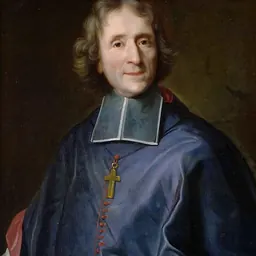



Related people
Same field, nearest in time


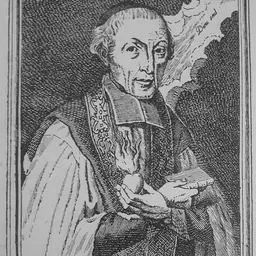

Contemporaries
People whose lives overlapped Alexandre Piny's





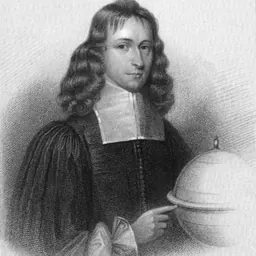
Frequently asked questions
Who was Alexandre Piny?
French Dominican theologian and philosopher (1640-1709)
When was Alexandre Piny born?
Alexandre Piny was born in 1640 in Barcelonnette.
When did Alexandre Piny die?
Alexandre Piny died on 28 January 1709 in Paris.
What was Alexandre Piny's occupation?
Alexandre Piny was a catholic theologian and philosopher.
What nationality was Alexandre Piny?
Alexandre Piny was French.
Sources & further reading
Cite this page
APA: Biography.guide. (2026). Alexandre Piny. https://biography.guide/alexandre-piny/
MLA: "Alexandre Piny." Biography.guide, https://biography.guide/alexandre-piny/.
Chicago: "Alexandre Piny." Biography.guide. https://biography.guide/alexandre-piny/.
Data last updated: 2026-09-20 · Spot an error? Report a correction.
Page generated 2026-09-27 04:57 UTC